Utilization of Bivalirudin as an Alternative Treatment for Suspected Heparin Resistance and Ongoing Intra-Procedural Stent Thrombosis in Complex Percutaneous Coronary Interventions: A Case Study
-
By
-
Xiang Wang
-
Miao Dai
-
July 9, 2026
Utilization of Bivalirudin as an Alternative Treatment for Suspected Heparin Resistance
Overview
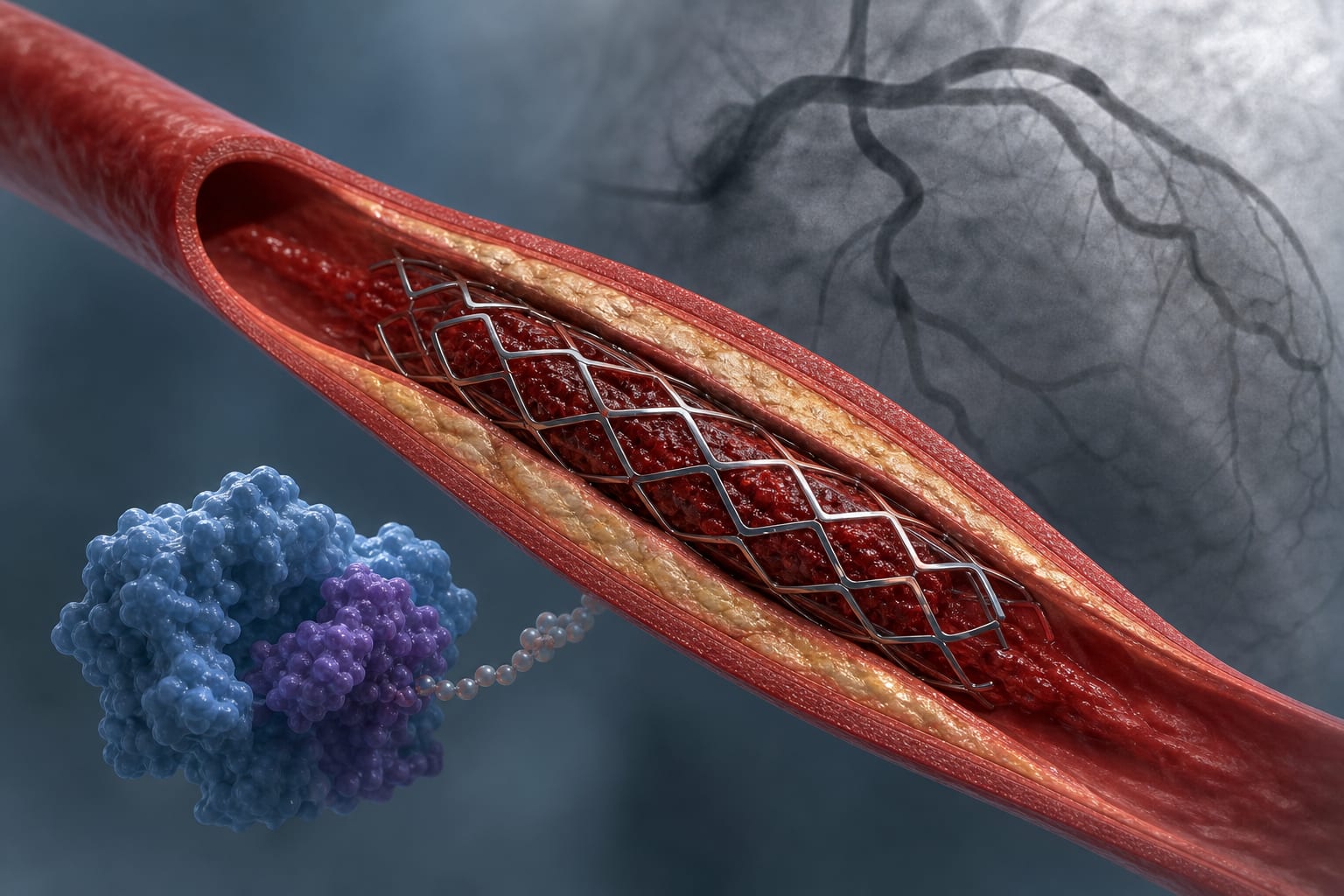
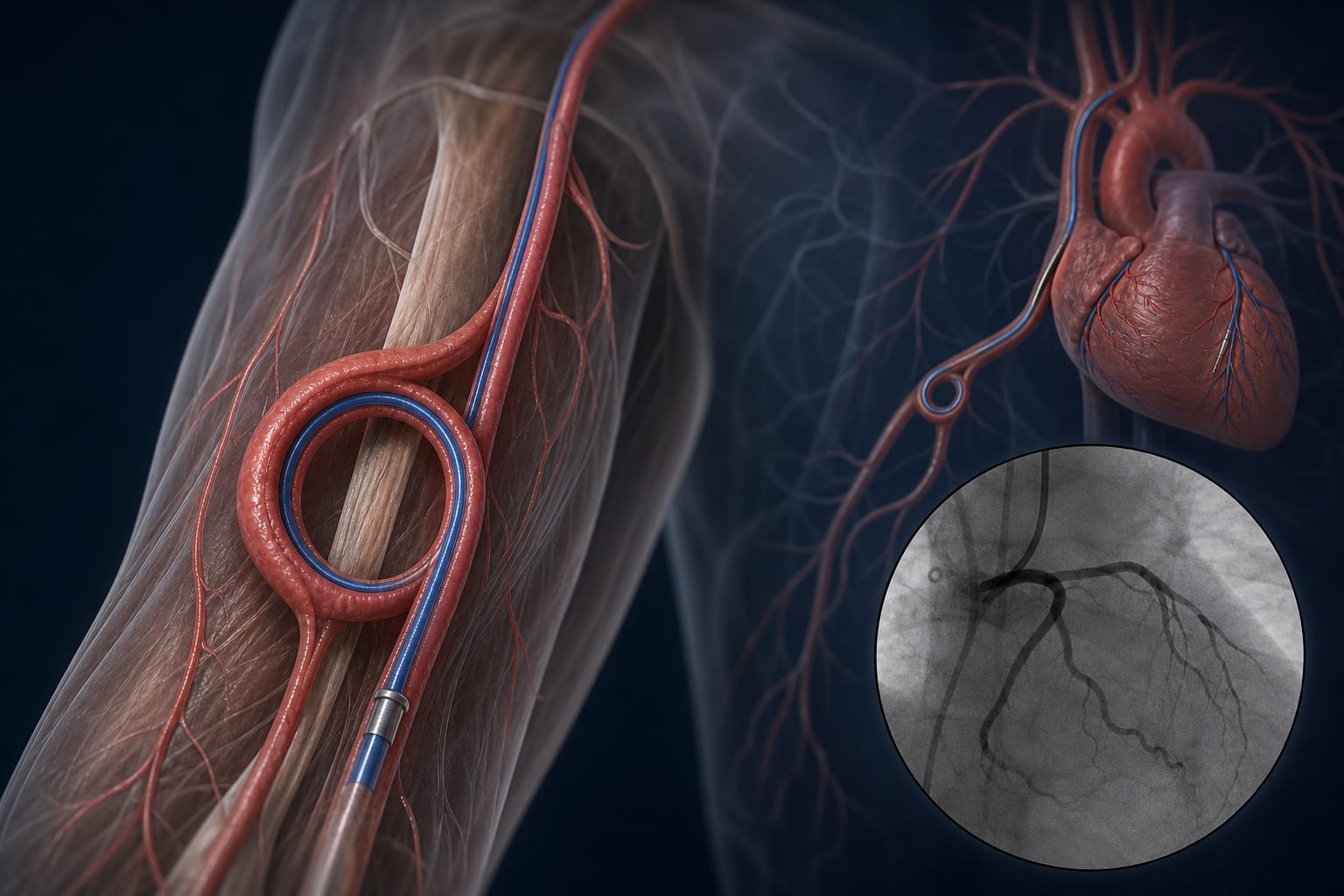
This case study demonstrates the use of bivalirudin in a patient with suspected heparin resistance and recurrent intra-stent thrombosis during complex PCI. The switch to bivalirudin resulted in rapid therapeutic anticoagulation and a reduction in thrombus burden.
Background
Heparin resistance (HR) is a challenge in percutaneous coronary interventions (PCI), leading to inadequate anticoagulation and increased risk of thrombotic complications. Understanding alternative anticoagulation strategies, such as bivalirudin, is crucial for managing patients with HR during complex PCI scenarios.
Data Highlights
| Parameter | Value |
|---|---|
| Cumulative UFH Dose | 11,000 U |
| ACT before UFH | 118 s |
| ACT after UFH | 132 s |
| ACT after bivalirudin | 320 s |
Key Findings
- Bivalirudin was used as a rescue therapy for refractory heparin resistance during PCI.
- The patient experienced recurrent intra-stent thrombosis despite aggressive antiplatelet therapy.
- Switching to bivalirudin resulted in rapid achievement of therapeutic anticoagulation.
- Marked reduction in thrombus burden was observed after the switch to bivalirudin.
- Heparin resistance can lead to catastrophic thrombotic complications during PCI.
Clinical Implications
This case highlights the use of bivalirudin as an alternative in managing heparin resistance during complex PCI.
Conclusion
The use of bivalirudin in this case illustrates its application for managing heparin resistance in high-risk PCI settings.
Related Resources & Content
- Clinical Research in Cardiology, 2026 -- Duration of dual antiplatelet therapy and risk of stent thrombosis in patients undergoing complex PCI: a meta-analysis
- Clinical Research in Cardiology -- Assessment of the Implementation of Second-Generation Bioresorbable Vascular Scaffolds in Complex Anatomical and Clinical Situations
- Frontiers in Cardiovascular Medicine -- Detected residual venous thrombi and catheter-directed management of intermediate-risk pulmonary thromboembolism
- 2025 ACC/AHA/ACEP/NAEMSP/SCAI Guideline for the Management of Patients With Acute Coronary Syndromes | JACC
- Bivalirudin during Primary PCI in Acute Myocardial Infarction | New England Journal of Medicine
- Troubleshooting heparin resistance - PMC
- Clinical Research in Cardiology — Evaluation of Safety and Effectiveness of Percutaneous Coronary Interventions Based on a No-Stent Approach in Stable Coronary Artery Disease Patients: A Single-Center Prospective Study (SCRAP Study)
- 2025 ACC/AHA/ACEP/NAEMSP/SCAI Guideline for the Management of Patients With Acute Coronary Syndromes: A Report of the American College of Cardiology/American Heart Association Joint Committee on Clinical Practice Guidelines | JACC
- Bivalirudin during Primary PCI in Acute Myocardial Infarction | New England Journal of Medicine
- Troubleshooting heparin resistance - PMC
Based on findings from:
Bivalirudin as rescue therapy for suspected heparin resistance and recurrent intra-procedural stent thrombosis during complex percutaneous coronary intervention: a case report
Xiang Wang, Miao Dai. Frontiers In Cardiovascular Medicine, 2026.
https://www.frontiersin.org/journals/cardiovascular-medicine/articles/10.3389/fcvm.2026.1864489/full
This content is an AI-generated, fully rewritten summary based on a published scholarly article. It does not reproduce the original text and is not a substitute for the original publication. Readers are encouraged to consult the source for full context, data, and methodology.