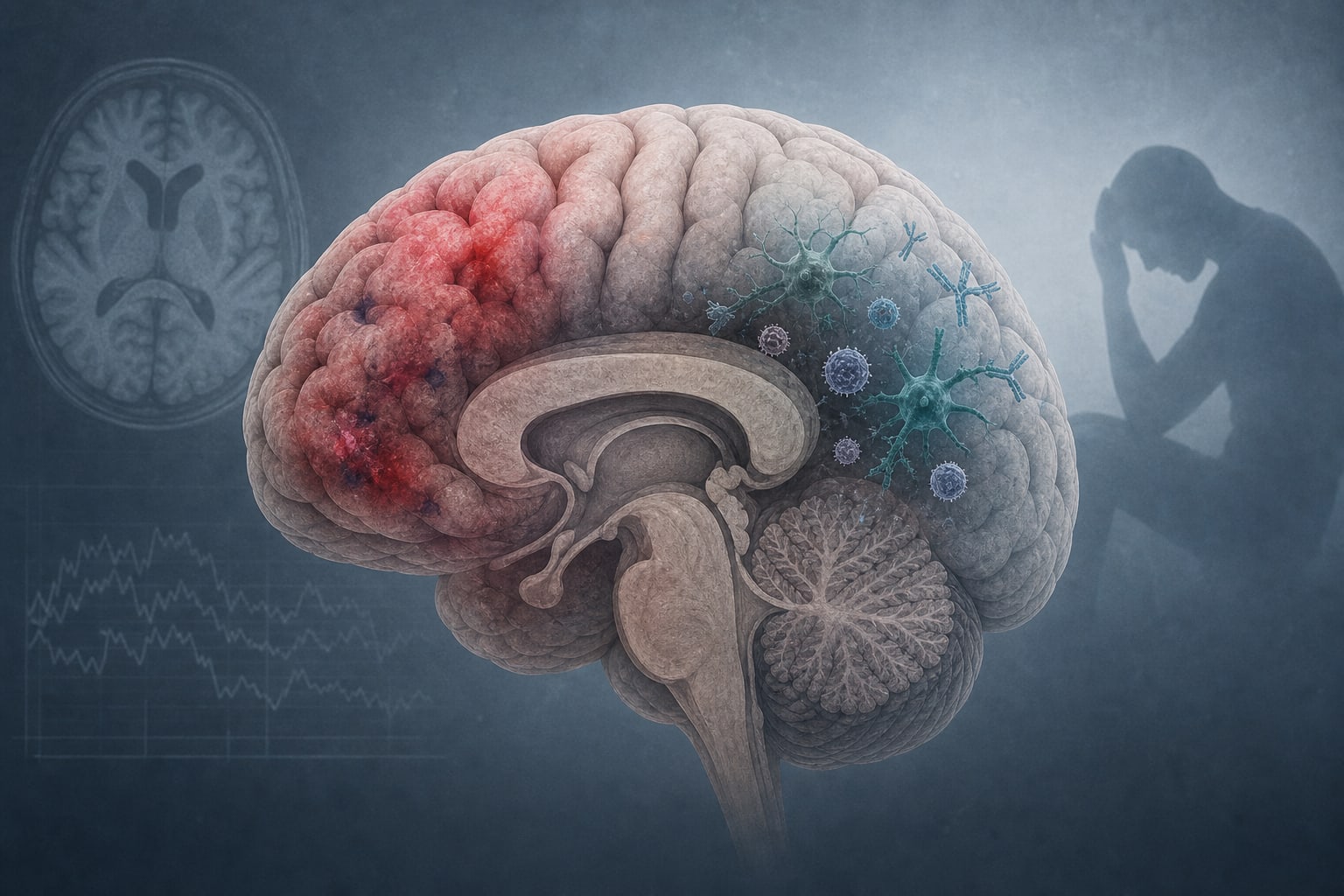
Characteristics, Causes, and Prognosis of Neurological Patients Presenting with Psychiatric Symptoms Initially
Overview
This study investigates patients with neurological disorders presenting with psychiatric symptoms as the initial manifestation. It identifies key predictors of poor outcomes, including hyponatremia and viral encephalitis.
Background
Neurological disorders can often present with psychiatric symptoms, complicating diagnosis and treatment. This study addresses a gap in the literature regarding the clinical features and prognosis of patients with psychiatric symptoms as the initial presentation of neurological disorders.
Data Highlights
Characteristic
Value
Patients screened
16,473
Patients included
76
Mean age
55.8 ± 18.2 years
Female percentage
42.1%
Acute-onset behavioral disturbance
92.1%
Isolated psychiatric symptoms
31.6%
Leading etiology: CNS infections
55.3%
Viral encephalitis percentage
40.8%
Poor outcome rate
42.1%
Key Findings
76 patients with psychiatric symptoms as initial presentation were identified.
Common etiologies included CNS infections (55.3%), with viral encephalitis being the most prevalent (40.8%).
Hyponatremia on admission was an independent predictor of poor outcome (OR, 3.9).
Patients with viral encephalitis and PSIP had higher rates of hyponatremia (41.9% vs 15.2%).
A risk score combining hyponatremia, viral encephalitis, and ICU admission effectively stratified patients' outcomes.
32 patients (42.1%) experienced a poor outcome defined as modified Rankin Scale score >2 at discharge.
Clinical Implications
The findings highlight the importance of recognizing hyponatremia and viral encephalitis in patients presenting with psychiatric symptoms.
Conclusion
PSIP is a significant clinical challenge, with viral and autoimmune encephalitis being common underlying causes.
Acidic gum beat sugar-free at cranking out nitric oxide from beetroot juice — exactly backward from what test-tube studies predicted. Also this week: a sleep gene that ignores amyloid, and jackfruit sap moonlighting as a bone-building drug delivery system.