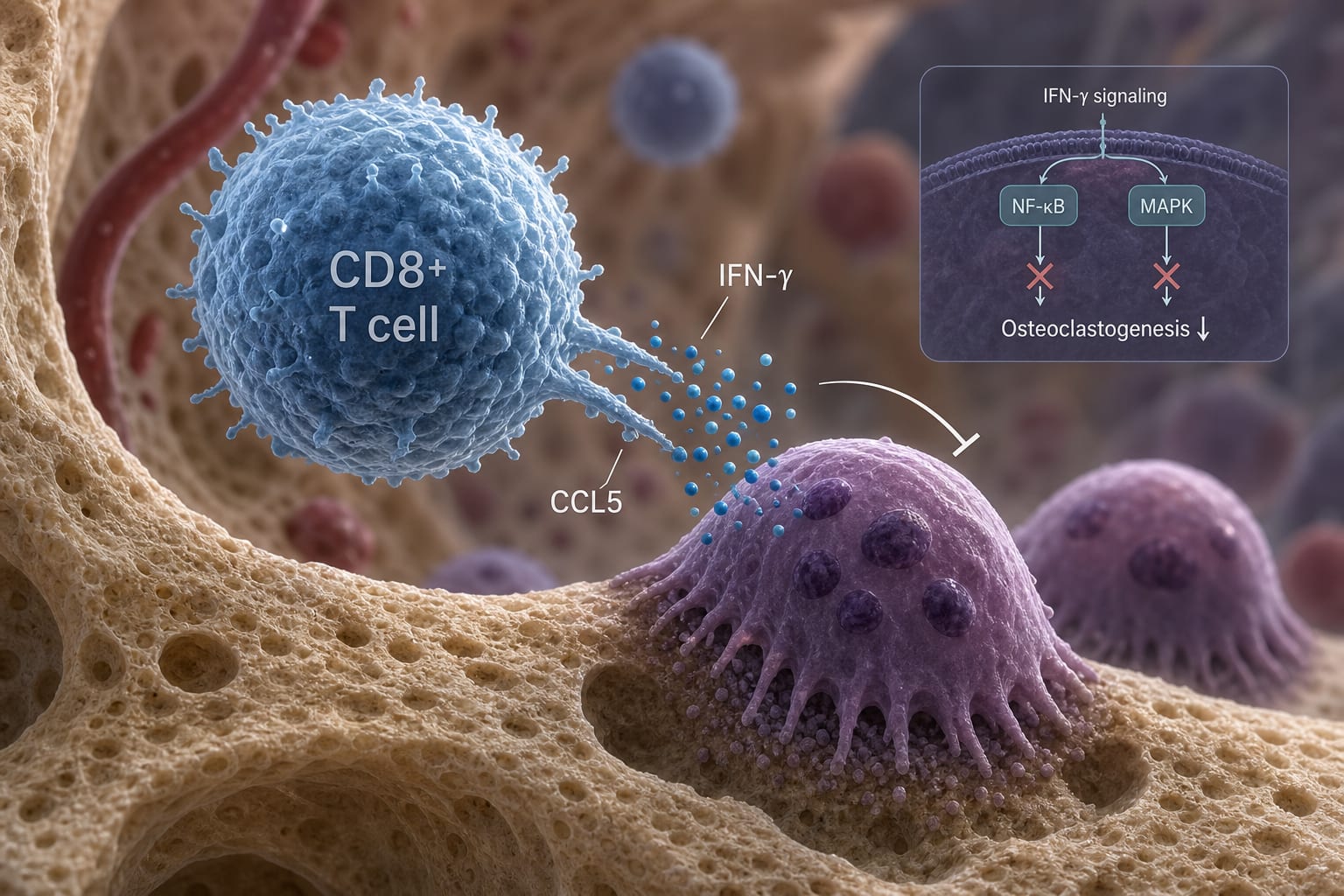
Clinical Report: Senescence of Immune Cells and Its Role in Chronic Bone Disorders
Overview
This review highlights the significant role of immune cell senescence in chronic bone disorders, linking it to age-related inflammation and bone metabolism disruption. It emphasizes the need for targeted interventions to address immune cell senescence in conditions such as osteoporosis and rheumatoid arthritis.
Background
Chronic bone diseases are increasingly prevalent due to global population aging, leading to significant public health challenges. These disorders are influenced not only by traditional factors like hormonal changes and mechanical loading but also by the remodeling of immune function. Understanding the interplay between immune cell senescence and bone health is crucial for developing effective treatment strategies.
Data Highlights
No numerical data or trial data were provided in the source material.
Key Findings
Immune cell senescence is linked to chronic low-grade inflammation and disordered bone metabolism.
Senescent immune cells exhibit reduced proliferative capacity and impaired functions, disrupting the osteoimmune microenvironment.
The impact of immune cell senescence varies across diseases, being more direct in osteoporosis and rheumatoid arthritis.
Current intervention strategies focus on macrophage polarization and immune-mediated clearance of senescent cells.
Future research should utilize advanced techniques like single-cell sequencing to better understand immune cell senescence in chronic bone diseases.
Clinical Implications
Clinicians should consider the role of immune cell senescence in the management of chronic bone diseases, particularly in tailoring treatment strategies for osteoporosis and rheumatoid arthritis. Interventions targeting immune cell function may enhance treatment outcomes and improve patient quality of life.
Conclusion
Addressing immune cell senescence presents a promising avenue for improving the management of chronic bone disorders. Continued research is essential to translate these findings into clinical practice.
Researchers urge caution in interpreting joint replacement predictors, noting that surgery reflects access and decision-making as well as disease biology.