Size and location of intracranial hemorrhage in acute stroke presentations: correlation with baseline NIHSS and relevance to direct-to-angiography workflows - Report - MDSpire
Conexiant’s news site is now MDSpire News. Learn more
Advertisement
Assessment of Intracranial Hemorrhage Size and Location in Acute Stroke Cases: Its Relationship with Initial NIHSS Scores and Implications for Direct-to-Angiography Protocols
Clinical Report: Assessment of Intracranial Hemorrhage Size and Location
Overview
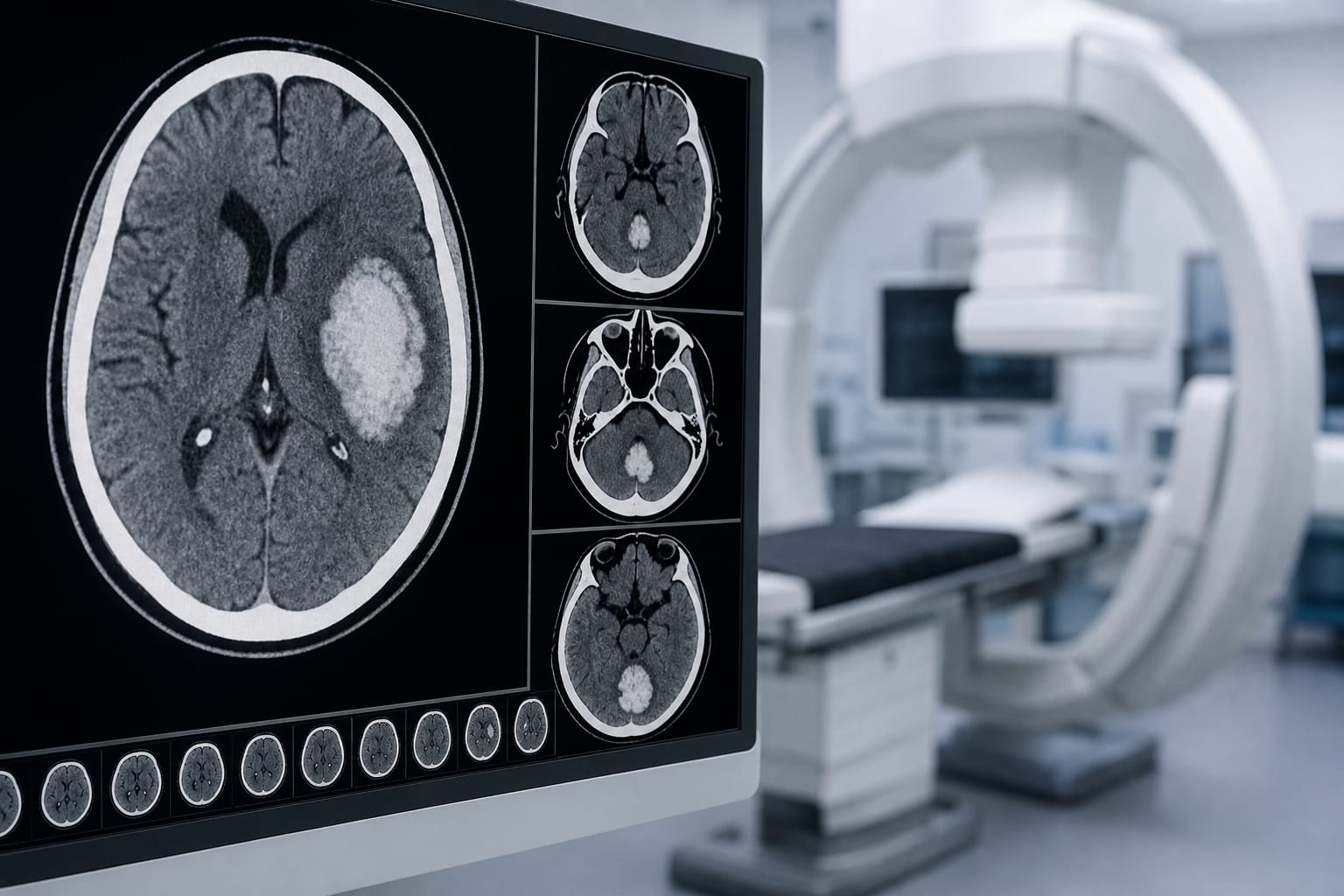
This study characterizes intracranial hemorrhage (ICH) in acute stroke cases, focusing on the relationship between hemorrhage size, location, and initial NIHSS scores.
Background
Intracranial hemorrhage is a significant cause of morbidity and mortality in stroke patients. Accurate assessment of ICH is crucial for timely and appropriate treatment, particularly in the context of direct-to-angiography protocols that aim to expedite care.
Data Highlights
Hemorrhage Type
Percentage
Intraparenchymal
89%
Subarachnoid
7%
Intraventricular
3%
Subdural
<1%
Key Findings
Intraparenchymal hemorrhage accounted for 89% of cases in the study cohort.
The median volume of hemorrhage was 18 mL, with a significant correlation to NIHSS scores (Spearman ρ = 0.56, p < 0.001).
Patients with NIHSS ≥7 had larger hemorrhages (median 38 mL) compared to those with NIHSS <7 (median 6 mL).
Lobar hemorrhages exhibited the greatest volumes, while infratentorial hemorrhages, particularly in the brainstem, caused severe deficits despite smaller volumes.
Only 2.8% of patients with NIHSS ≥7 had isolated infratentorial hemorrhage.
Clinical Implications
The findings highlight the importance of considering both volume and location when assessing ICH in acute stroke patients.
Conclusion
This study examines the relationship between ICH characteristics and stroke severity.
Baptist Health will bring together leading physicians, researchers and healthcare professionals from South Florida and across the country for the 14th Annual Baptist Health Miami Neuroscience Symposium, taking place Nov. 4-6, 2026, at Hilton Miami Dadeland and virtually via Zoom.