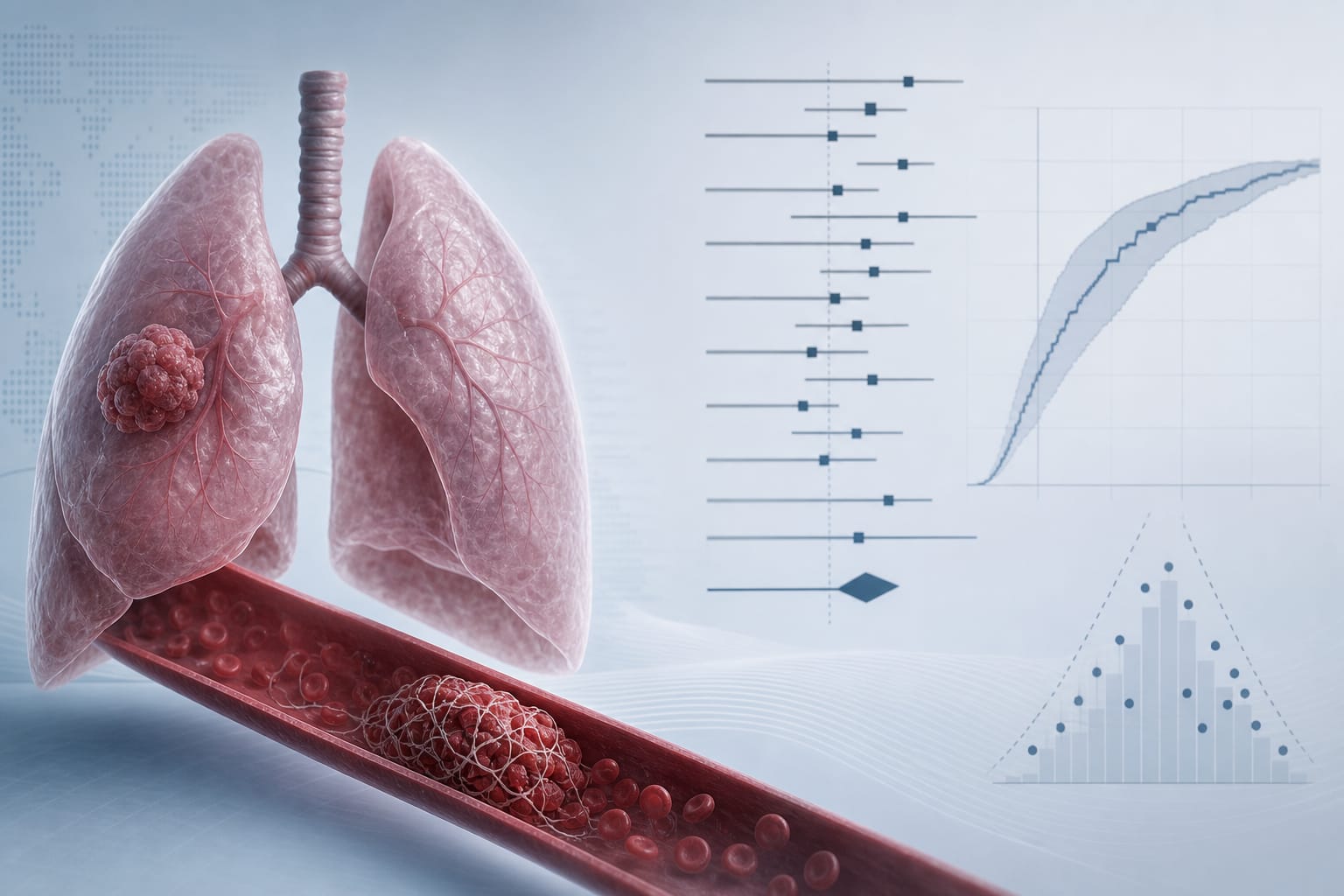
Clinical Report: Radiation Therapy Enhances Outcomes for NSCLC Patients Treated with Nivolumab
Overview
This study evaluates the impact of prior radiation therapy (RT) on progression-free survival (PFS) and overall survival (OS) in patients with advanced non-small cell lung cancer (NSCLC) treated with nivolumab. Findings suggest that RT may enhance outcomes for these patients, although the overall efficacy remains variable.
Background
Non-small cell lung cancer (NSCLC) is a leading cause of cancer-related mortality, often diagnosed at advanced stages. Immune checkpoint inhibitors like nivolumab have improved survival rates, yet not all patients respond favorably. Understanding the role of RT in conjunction with immunotherapy is crucial for optimizing treatment strategies.
Data Highlights
No specific numerical data was provided in the source material.
Key Findings
RT can induce tumor-specific immune effects, potentially enhancing the efficacy of ICIs like nivolumab.
Prior studies indicated that adding RT to nivolumab treatment has not consistently shown survival benefits.
Patients with oligoprogression receiving RT during nivolumab treatment were included in the study cohort.
RT administered before nivolumab may correlate with improved PFS and OS, although results are context-dependent.
Heterogeneity in RT approaches and timing may influence treatment outcomes.
Clinical Implications
Clinicians should consider the timing and type of RT when treating NSCLC patients with nivolumab, as these factors may affect patient outcomes. Further research is needed to clarify the optimal integration of RT with immunotherapy in this patient population.
Conclusion
The study underscores the potential of RT to enhance outcomes in NSCLC patients treated with nivolumab, though further investigation is warranted to establish definitive treatment protocols.