Comparing manual vs. automated machine learning and deep learning models for predicting one-year mortality in elderly hip fracture patients - Report - MDSpire
Advertisement
Comparing manual vs. automated machine learning and deep learning models for predicting one-year mortality in elderly hip fracture patients
Clinical Report: Evaluating Manual and Automated Approaches in Machine Learning and Deep Learning for Forecasting One-Year Mortality in Older Adults with Hip Fractures
Overview
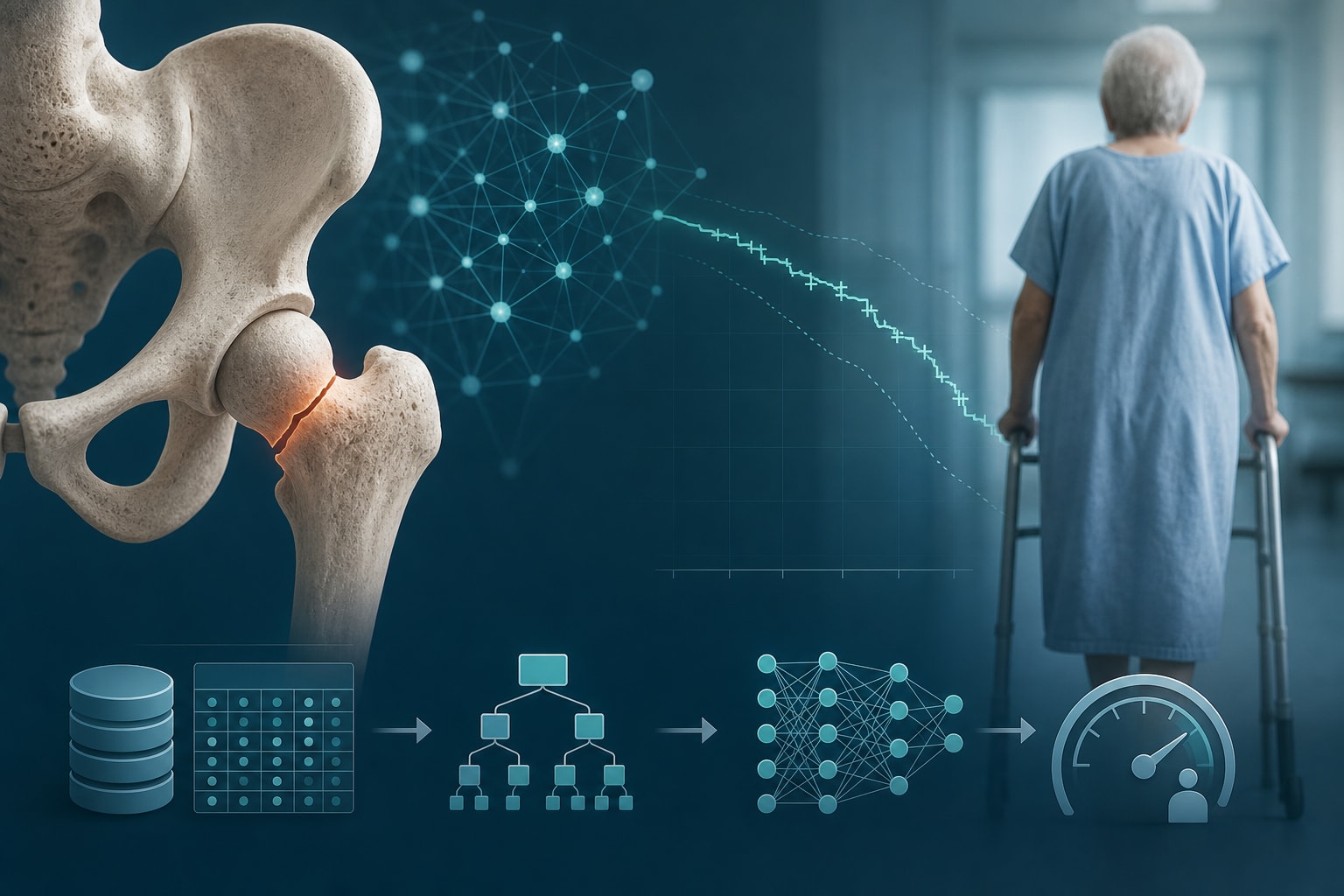
This study evaluates machine learning (ML) and deep learning (DL) algorithms for predicting one-year mortality in elderly hip fracture patients. The manually optimized Extreme Gradient Boosting (XGB) algorithm outperformed other models, while an automated ML approach showed comparable results, indicating potential for broader clinical application.
Background
Hip fractures in older adults are associated with high mortality rates, necessitating accurate risk prediction to improve perioperative care. Traditional methods may fall short in predictive accuracy, highlighting the need for advanced data-driven approaches. Machine learning techniques have shown promise in enhancing clinical risk prediction models, making them vital for healthcare optimization.
Data Highlights
Model
AUC
Accuracy
F1-score
Precision
NPV
Manually Optimized XGB
0.846
0.791
0.667
0.773
0.798
Automated ML Model
0.844
N/A
N/A
Higher Recall
N/A
Key Findings
The XGB algorithm achieved the highest AUC of 0.846 for predicting one-year mortality.
Key predictors included serum albumin and urea levels, patient age, intraoperative hypothermia, and chronic disease count.
The automated ML model demonstrated comparable performance to the XGB model with an AUC of 0.844.
Automated ML frameworks can democratize access to predictive analytics in clinical settings.
ML models significantly enhance predictive accuracy for one-year mortality among elderly hip fracture patients.
Clinical Implications
Clinicians can leverage advanced ML models, particularly the XGB algorithm, to improve risk stratification for elderly patients undergoing hip fracture surgery. The availability of automated ML tools may empower healthcare providers with limited technical expertise to develop effective predictive models, enhancing patient care.
Conclusion
The study underscores the potential of ML and DL approaches in improving mortality predictions for elderly hip fracture patients. The findings advocate for the integration of these advanced methodologies into clinical practice to optimize patient outcomes.