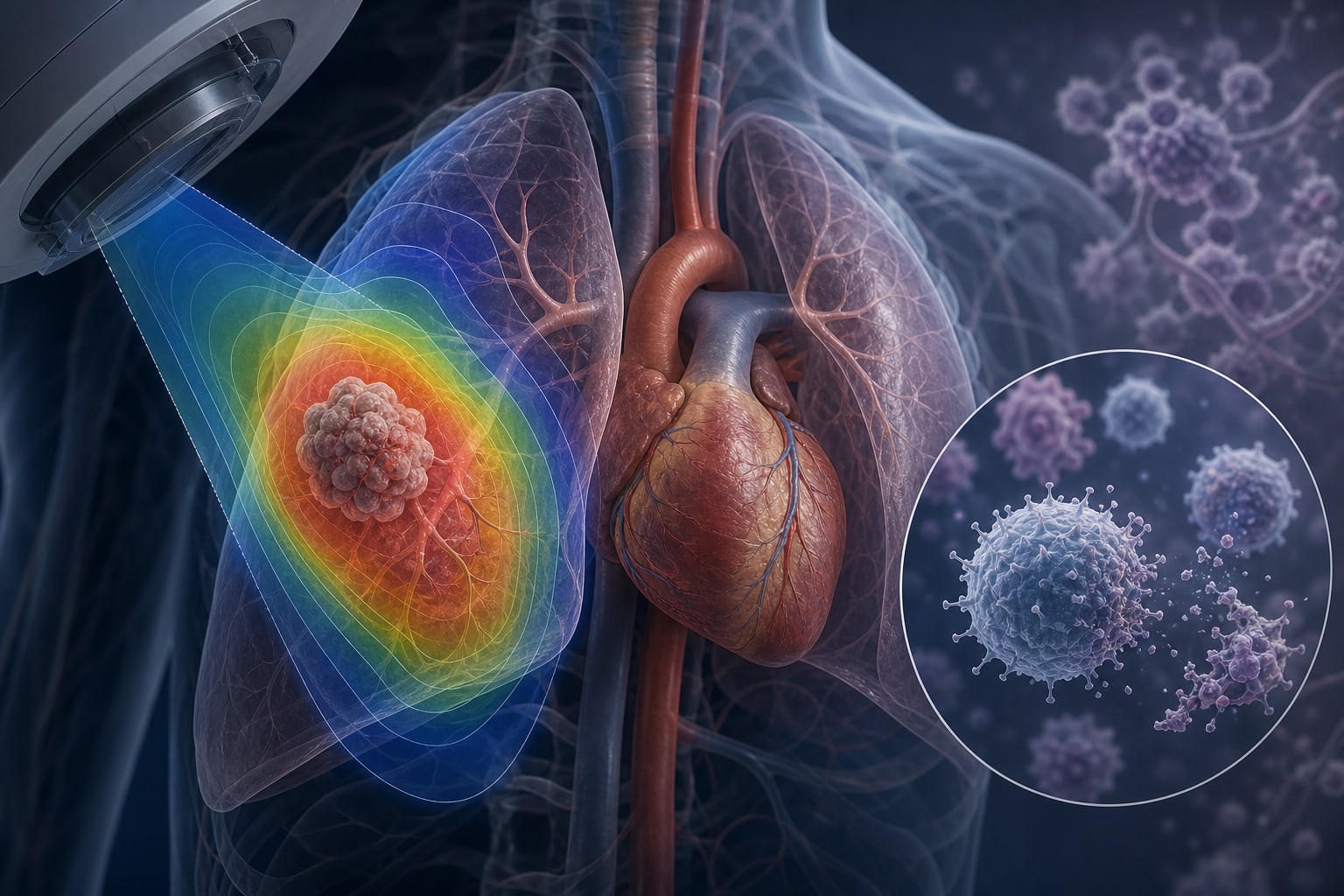
Validation of SCORE2 and SCORE2-OP for Cardiovascular Risk in Cancer Patients
Overview
This study validated and recalibrated the SCORE2 and SCORE2-OP cardiovascular risk prediction models in a cohort of 1622 cancer patients. SCORE2 initially underestimated 10-year cardiovascular risk but showed improved accuracy after recalibration, supporting its use for risk stratification in cancer populations.
Background
Cardiovascular disease (CVD) is a leading cause of morbidity and mortality among cancer survivors, partly due to cardiotoxic cancer treatments and shared risk factors. Accurate CVD risk prediction is essential for targeted prevention and management in this growing population. The 2022 ESC cardio-oncology guidelines recommend SCORE2 and SCORE2-OP models for risk assessment, but these tools had not been validated in cancer patients prior to this study. Given the high competing risk of non-CVD mortality in cancer patients, recalibration of these models may be necessary to improve their predictive performance.
Data Highlights
Parameter
Value
Number of cancer patients analyzed
1622
Mean age
65.2 years
Female
52%
Median follow-up
8.8 years (IQR 1.9–12.6)
CVD events (MI, stroke, CVD death)
252 (16%)
Non-CVD deaths
708
Initial SCORE2 E/O ratio (men)
0.91
Initial SCORE2 E/O ratio (women)
0.63
SCORE2 C-statistic
0.693 (95% CI 0.643–0.743)
SCORE2 C-statistic excluding early deaths
0.730 (95% CI 0.676–0.784)
SCORE2-OP C-statistic
0.586 (95% CI 0.529–0.643)
SCORE2-OP C-statistic excluding early deaths
0.648 (95% CI 0.577–0.720)
Key Findings
SCORE2 underestimated 10-year CVD risk in cancer patients before recalibration, especially in women (E/O ratio 0.63).
Recalibration using multiplicative adjustment factors improved SCORE2 calibration and discrimination.
SCORE2 showed moderate discrimination with C-statistics around 0.69–0.73 after recalibration and excluding early deaths.
SCORE2-OP had lower discrimination (C-statistics 0.59–0.65) compared to SCORE2 in this cancer cohort.
During follow-up, 16% of cancer patients experienced a CVD event, underscoring the need for accurate risk stratification.
Further external validation in cancer subgroups and incorporation of cancer-specific factors are needed to optimize risk prediction.
Clinical Implications
Clinicians can consider using the recalibrated SCORE2 model to estimate 10-year cardiovascular risk in cancer patients, aiding in early identification of high-risk individuals for preventive interventions. However, caution is warranted as SCORE2-OP showed lower predictive performance, and additional validation in diverse cancer populations is necessary. Tailored risk assessment tools incorporating cancer-specific variables may further improve cardiovascular care in oncology.
Conclusion
The recalibrated SCORE2 model provides a valuable tool for cardiovascular risk stratification in cancer patients, addressing previous underestimation of risk. This supports its integration into cardio-oncology practice to enhance prevention and management of cardiovascular complications.
References
European Society of Cardiology 2022 -- Cardio-oncology guidelines
HUNT Study -- Trøndelag Health Study design and data
Norwegian Cancer Registry -- Cancer diagnosis and treatment data
by Mari Nordbø Gynnild, Joris Holtrop, Steven H J Hageman, Victoria Vinje, Jannick A N Dorresteijn, Frank L J Visseren, Espen Holte, Håvard Dalen, Torgeir Wethal, Torbjørn Omland