Gait analysis in cerebral palsy (2005–2025): a bibliometric mapping of research trends, collaboration networks, and emerging technologies - Report - MDSpire
Advertisement
Gait analysis in cerebral palsy (2005–2025): a bibliometric mapping of research trends, collaboration networks, and emerging technologies
Clinical Report: Trends in Gait Analysis for Cerebral Palsy (2005–2025)
Overview
This bibliometric study analyzes the evolution of research on gait analysis in cerebral palsy (CP) from 2005 to 2025, highlighting a significant increase in publications and emerging technologies. Key themes include the growing interest in wearable sensors and artificial intelligence, although intervention studies linking gait analysis to patient outcomes remain limited.
Background
Gait dysfunction is a significant issue in cerebral palsy, affecting mobility and quality of life. The increasing volume of research in this area reflects advancements in technology and methodologies for gait analysis.
Data Highlights
Year
Publications
2005
26
2025
112
Key Findings
1,404 publications identified from 2005 to 2025, with a growth from 26 to 112 annually.
The USA produced the most papers (376), with Gait & Posture being the leading journal (207 articles).
Keyword clustering revealed persistent themes such as 'crouch gait', 'reliability', and 'gross motor function'.
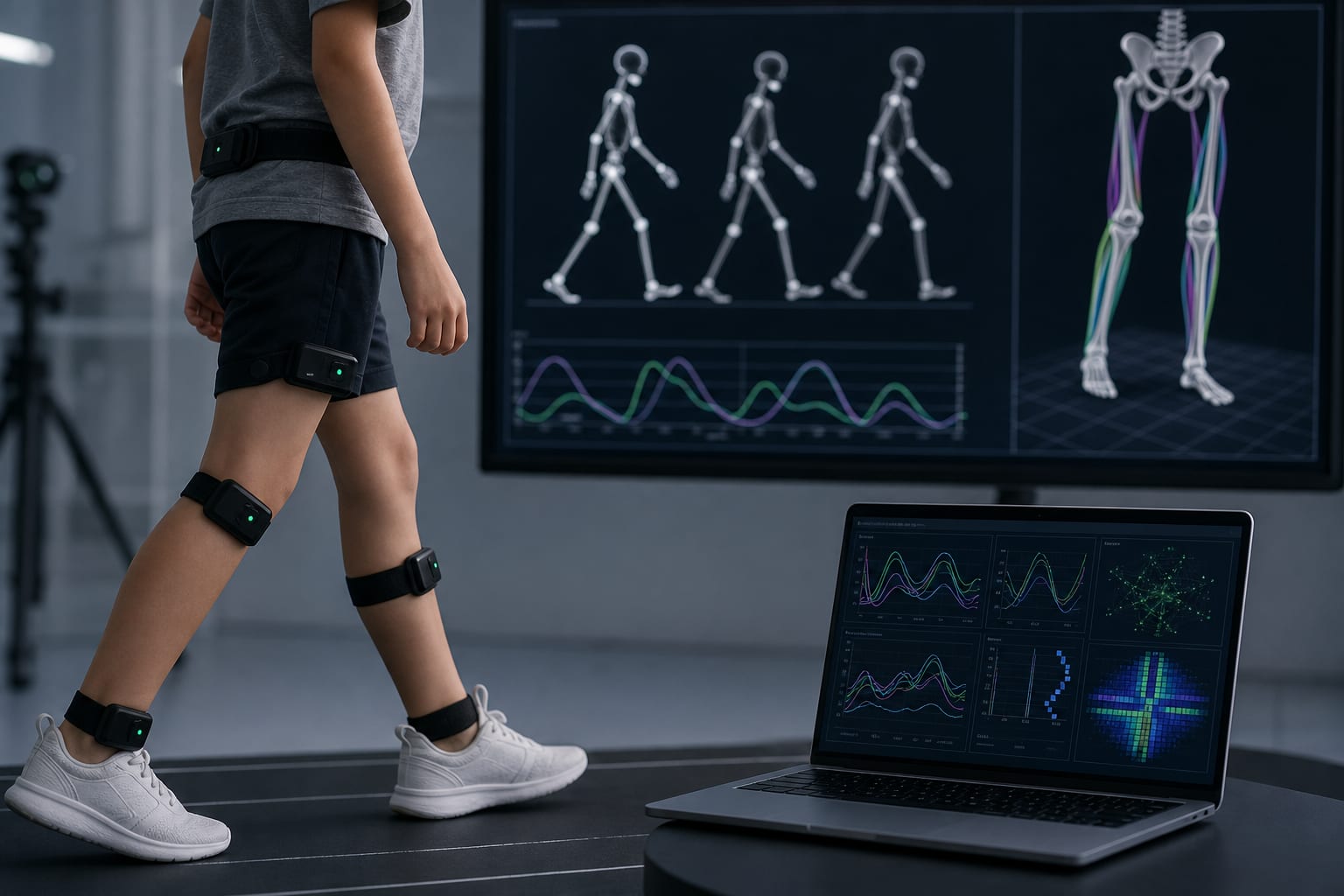
Recent bursts in research focus on 'wearable sensors', 'musculoskeletal modeling', and 'artificial intelligence'.
Intervention studies linking gait analysis to patient-centered outcomes are underrepresented.
Clinical Implications
Future research should prioritize multi-center validation and real-world implementation studies to bridge the gap between gait measurement and clinical decision-making.
Conclusion
This bibliometric analysis highlights the maturation of the field of gait analysis in cerebral palsy, identifying gaps in intervention research.