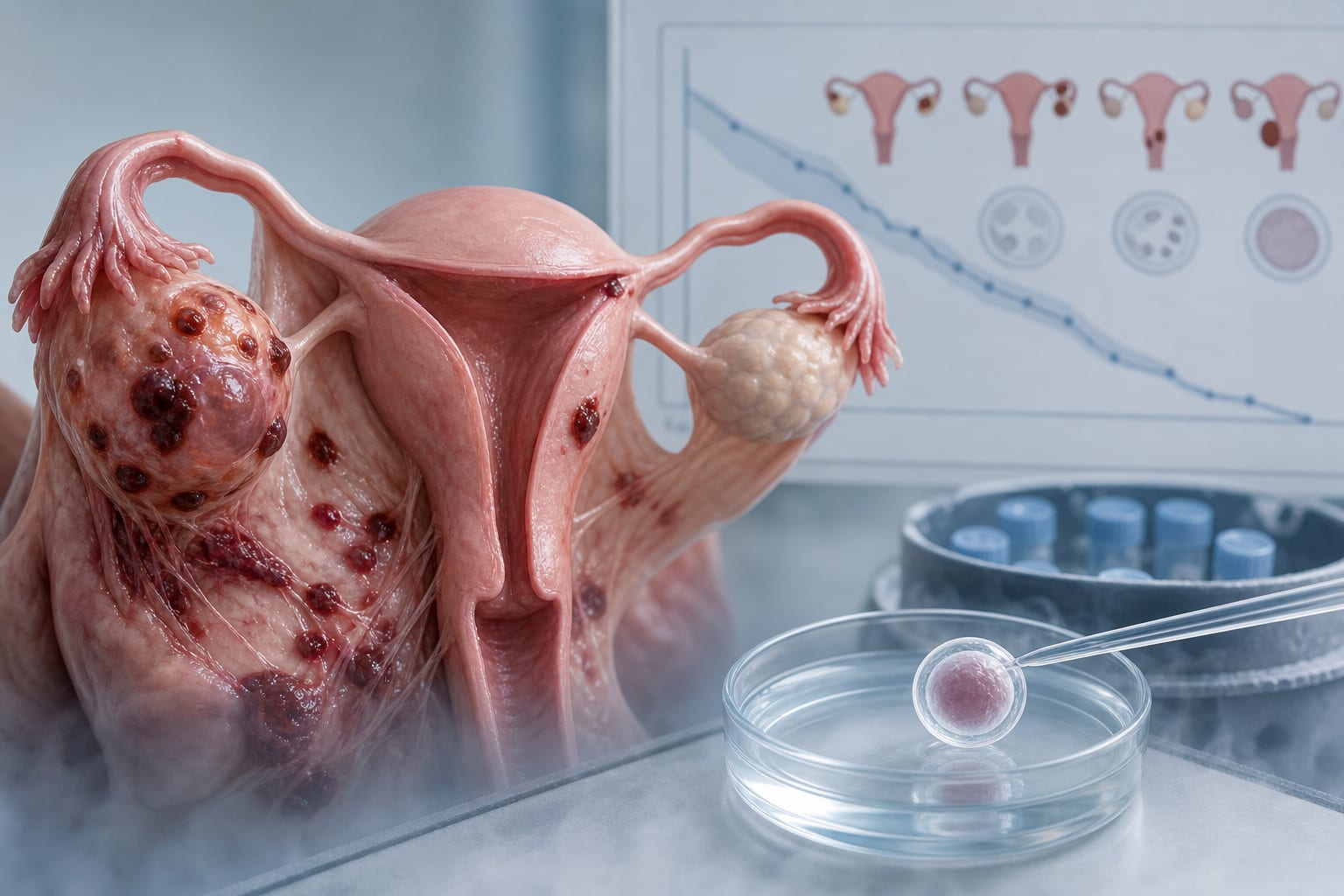
Clinical Report: The Importance of Endometriosis Subtypes on Fertility
Overview
This study emphasizes the significance of endometriosis subtypes in assessing ovarian reserve and embryo quality, suggesting that fertility preservation strategies may be warranted, particularly for patients with endometriomas. The findings highlight the need for personalized treatment approaches based on the specific subtype of endometriosis.
Background
Endometriosis affects approximately 10% of women of reproductive age and is a leading cause of infertility. The condition is characterized by the presence of endometrial-like tissue outside the uterus, which can lead to various reproductive challenges. Understanding the impact of different endometriosis subtypes on ovarian reserve and fertility outcomes is crucial for optimizing treatment strategies.
Data Highlights
Replace with qualitative insights on the impact of endometriosis subtypes on fertility if numerical data is not available.
Key Findings
Endometriosis is linked to a significant reduction in fertility rates, with monthly fecundity dropping to 2-5% in affected women.
Ovarian endometriomas are associated with diminished ovarian reserve, evidenced by lower AMH levels.
Surgical treatment of endometriomas may lead to further reduction in ovarian reserve due to potential iatrogenic damage.
Different endometriosis subtypes require tailored management strategies to optimize fertility outcomes.
Fertility preservation through cryopreservation is recommended for women with diminished ovarian reserve due to endometriosis.
Clinical Implications
Healthcare providers should assess the specific subtype of endometriosis in patients to inform treatment decisions and fertility preservation options. Early intervention and personalized management strategies can help mitigate the impact of endometriosis on reproductive potential.
Conclusion
The study underscores the importance of recognizing endometriosis subtypes in clinical practice to enhance fertility outcomes. Personalized approaches to treatment and fertility preservation are essential for women affected by this condition.