Clinical Report: Evaluation of Magnetic Thermoradiotherapy in Preclinical A549 Models
Overview
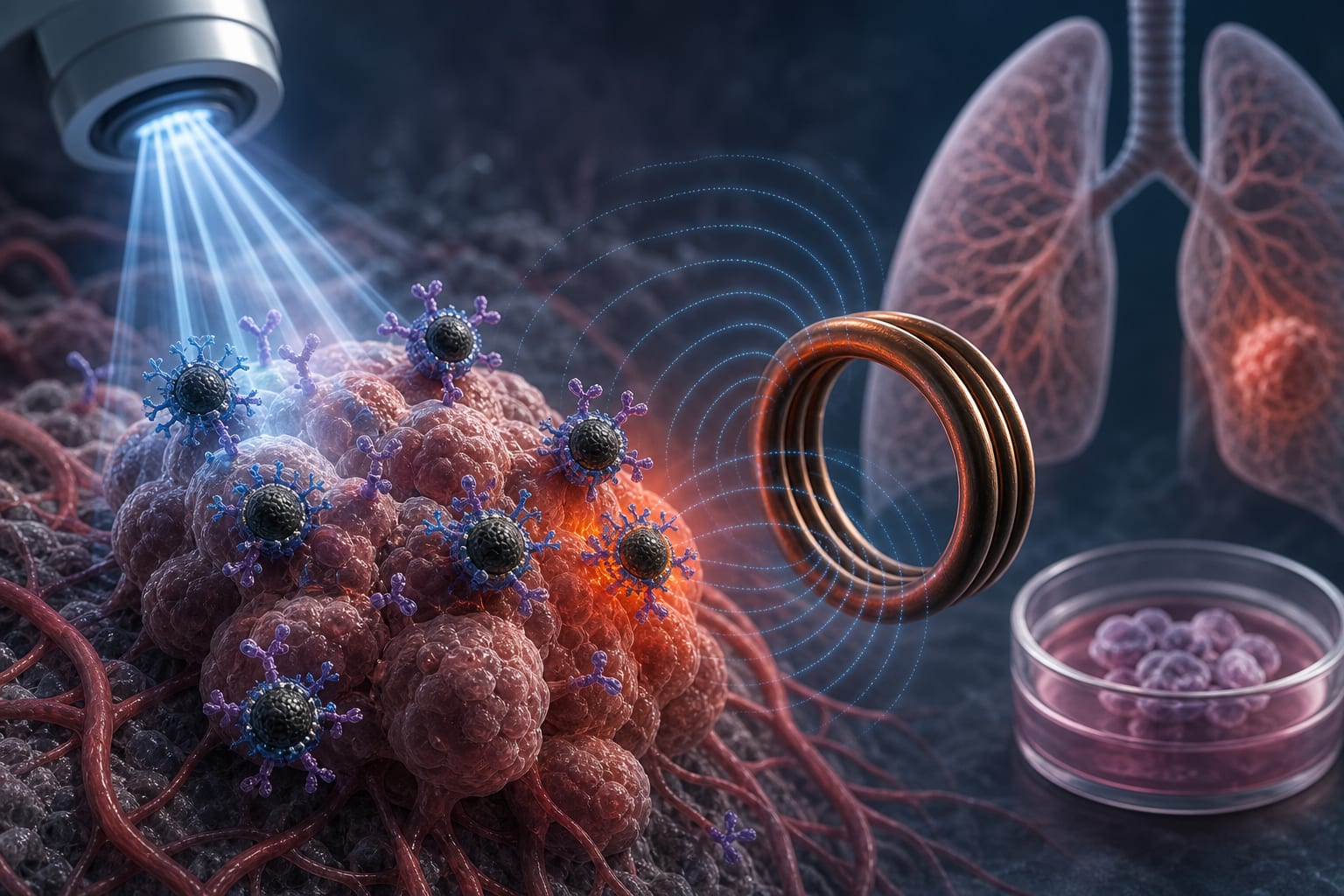
This study evaluates a novel strategy combining X-ray irradiation, magnetic fluid hyperthermia, and engineered magnetic nanoparticles to enhance lung cancer treatment efficacy. The findings indicate significant reductions in lung cancer cell viability and improved therapeutic outcomes in preclinical models.
Background
Lung cancer remains a leading cause of cancer-related mortality, with non-small cell lung cancer (NSCLC) accounting for the majority of cases. Traditional treatments, including radiotherapy, face challenges in effectively targeting tumors while preserving healthy tissue. Advances in nanotechnology, particularly the use of magnetic nanoparticles, present new opportunities to improve treatment precision and efficacy.
Data Highlights
No numerical data available in the provided source.
Key Findings
The engineered Fe@C−PEI−IgG−GOX nanoparticles significantly reduced lung cancer cell viability in vitro.
Glucose oxidase activity catalyzed the oxidation of glucose, generating hydrogen peroxide that negatively affected cancer cell survival.
In vivo studies showed improved therapeutic outcomes when combining radiotherapy with magnetic fluid hyperthermia and the GOX-containing nanoplatform.
The multimodal approach resulted in enhanced therapeutic efficacy and prolonged time to the protocol-defined endpoint.
The study highlights the potential of targeted magnetic nanoplatforms in lung cancer treatment.
Clinical Implications
The findings suggest that integrating magnetic thermoradiotherapy with conventional radiotherapy could enhance treatment outcomes for lung cancer patients. Clinicians may consider exploring this multimodal approach in future therapeutic strategies, pending further preclinical optimization.
Conclusion
This study underscores the promise of a GOX-based, targeted magnetic nanoplatform combined with radiotherapy and magnetic fluid hyperthermia as an effective strategy for lung cancer treatment. Further research is warranted to optimize and mechanistically understand this approach.
by Agnieszka Stawarska, Magdalena Bamburowicz-Klimkowska, Artur Kasprzak, Monika Ruzycka-Ayoush, Michal Bystrzejewski, Maria Wojewodzka, Michal Wieteska, Ireneusz P. Grudzinski