Clinical Report: Advancements in Cardiovascular Clinical Trials by 2025
Overview
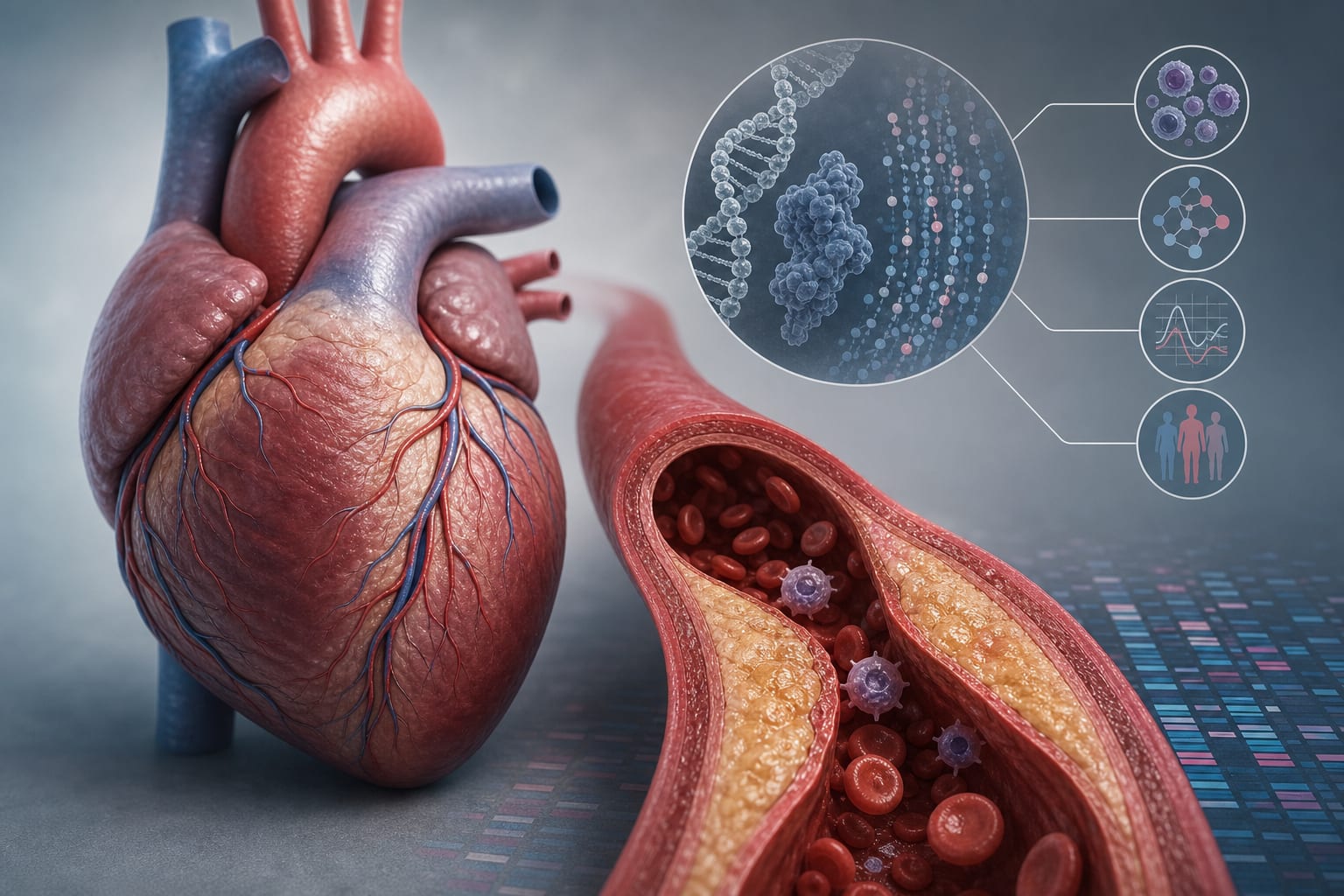
This editorial discusses the ongoing advancements in cardiovascular clinical trials, particularly focusing on precision medicine strategies to address residual cardiovascular risks. It highlights the importance of targeting inflammation and utilizing novel biomarkers.
Background
Cardiovascular disease remains the leading cause of morbidity and mortality globally, with coronary heart disease (CHD) being a significant contributor. Despite advancements in treatment, there is a pressing need to address residual risks beyond traditional cholesterol-lowering strategies. Understanding the multifactorial nature of CHD, including inflammation and metabolic disorders, is crucial for developing effective interventions.
Data Highlights
No specific numerical data or trial results are provided in the source material.
Key Findings
Major risk factors for CHD include age, sex, family history, hypercholesterolemia, hypertension, diabetes, obesity, and lifestyle.
Inflammation plays a critical role in all stages of CHD pathogenesis, including atherosclerosis and heart failure.
New treatments targeting residual risk, such as anti-inflammatory therapies and triglyceride-lowering agents, are under development.
The MACT II trial is evaluating an aspirin-free strategy combining ticagrelor and colchicine based on inflammation markers.
Precision medicine approaches are being enhanced through biomarker science and multi-omics technologies.
Emerging studies are exploring the role of microRNAs and other biomarkers in early detection and risk stratification for cardiovascular events.
Clinical Implications
The integration of novel therapeutic strategies and precision medicine approaches is evolving. Clinicians should be aware of the changing landscape of cardiovascular treatments.
Conclusion
Advancements in cardiovascular clinical trials are ongoing. Continued research into precision medicine and inflammation-targeted therapies is necessary.
In a phase 2b trial, the highest dose produced an estimated 12% mean weight reduction vs 1% with placebo, although gastrointestinal adverse events were common.