Case Report: Possible spatially-distinct de novo invasive cervical carcinoma in the setting of isolated persistent HPV16 after ALA-PDT-mediated histological clearance of CIN3 - Report - MDSpire
Conexiant’s news site is now MDSpire News. Learn more
Advertisement
Case Study: Potentially Spatially-Separated De Novo Invasive Cervical Carcinoma Following Isolated Persistent HPV16 After Histological Clearance of CIN3 via ALA-PDT
Clinical Report: Potentially Spatially-Separated De Novo Invasive Cervical Carcinoma
Overview
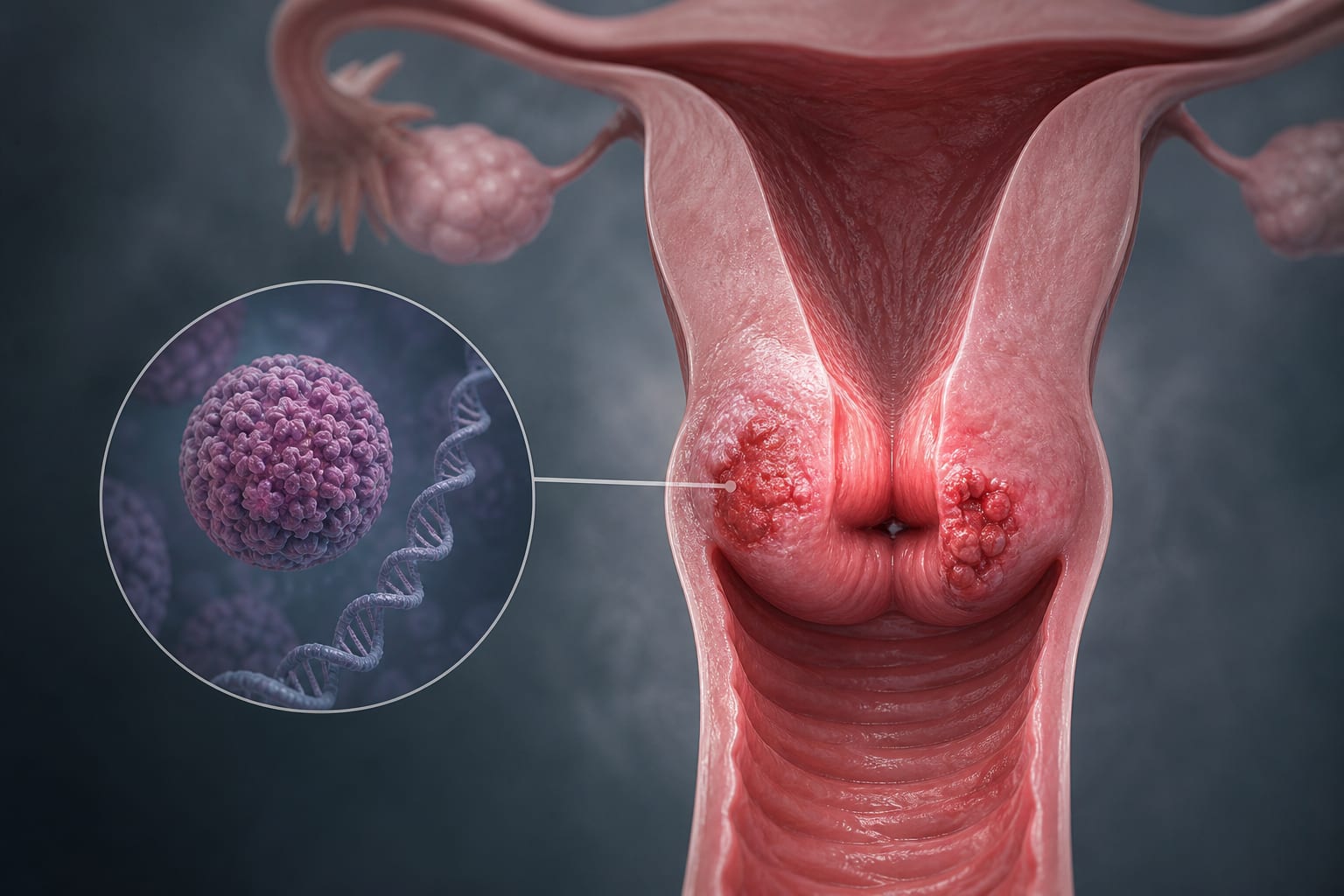
This case report highlights the risk of de novo invasive cervical carcinoma in a patient with isolated persistent HPV16 following histological clearance of CIN3 via ALA-PDT.
Background
Cervical intraepithelial neoplasia grade 3 (CIN3) is a high-grade precancerous condition, and 5-aminolaevulinic acid-mediated photodynamic therapy (ALA-PDT) is an organ-preserving treatment option for young patients. Despite successful treatment, persistent high-risk HPV, particularly HPV16, poses a risk for malignant transformation.
Data Highlights
No numerical data or trial data provided in the article.
Key Findings
A 32-year-old woman developed invasive squamous cell carcinoma after histological remission of CIN3.
The carcinoma was located in a cervical quadrant spatially separate from the initial CIN3 lesions.
Persistent isolated HPV16 infection was documented despite the resolution of CIN3.
Long-term loss to follow-up (LTFU) was noted, with the patient not returning for surveillance for 20 months.
The case suggests a potential link between persistent HPV16 and de novo malignant transformation.
Clinical Implications
Healthcare providers should emphasize the importance of regular follow-up for patients treated for CIN3, especially those with persistent HPV16.
Conclusion
This case underscores the potential risks associated with persistent HPV16 after CIN3 treatment.
The goal of this clinical trial is to learn if Adaptive Radiation Therapy (ART) is safe and effective in treating patients with locally advanced pancreatic cancer.