Case Report: Recurrent gestation-limited intractable abdominal colic with elevated phthalate and paraben biomarkers: a hypothesis-generating observation - Report - MDSpire
Advertisement
Case Report: Recurrent gestation-limited intractable abdominal colic with elevated phthalate and paraben biomarkers: a hypothesis-generating observation
Clinical Report: Persistent Pregnancy-Related Abdominal Colic Linked to Elevated Biomarkers
Overview
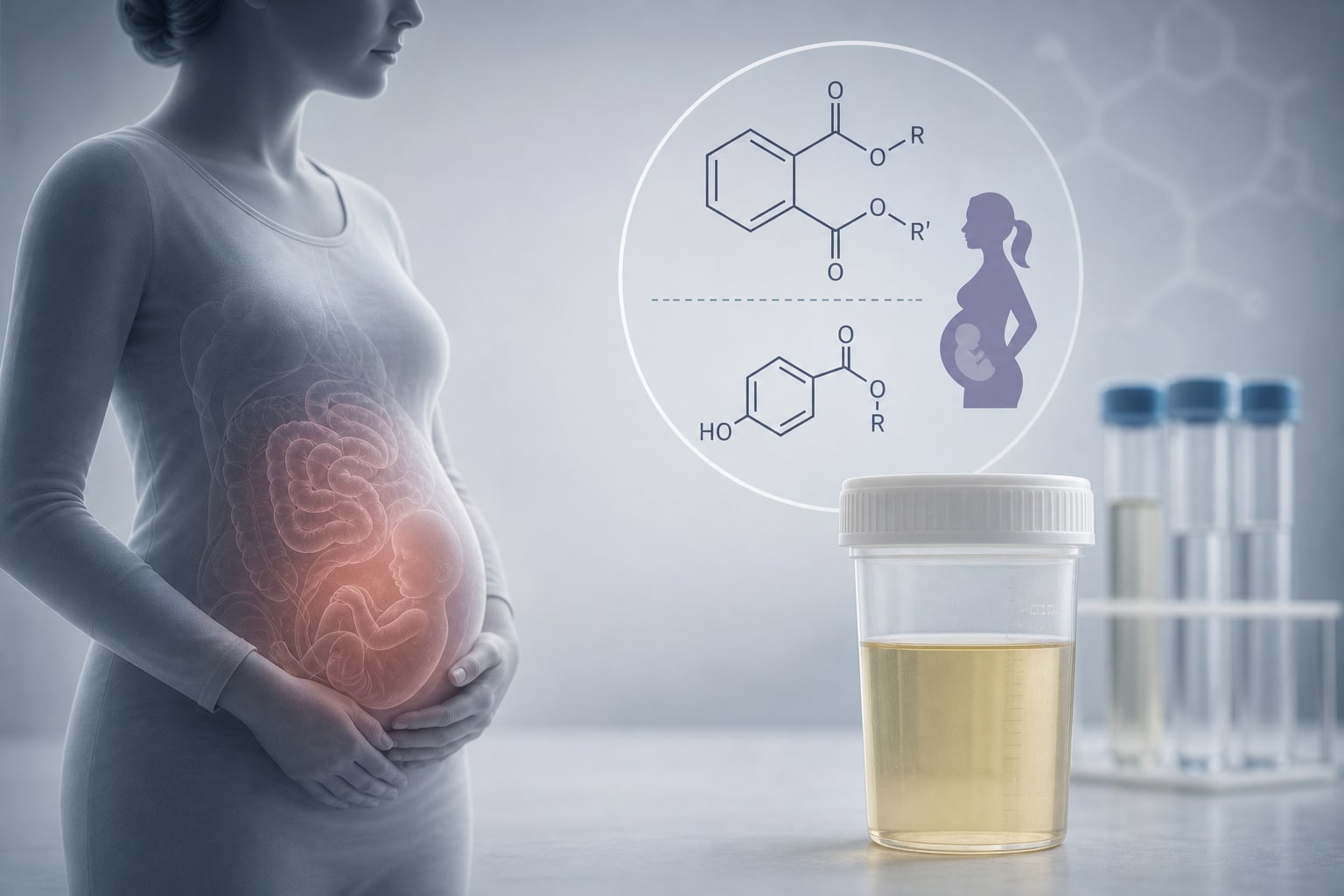
This case study presents a 35-year-old woman with recurrent pregnancy-related abdominal colic linked to elevated biomarkers of phthalates and parabens. Following a preconception intervention, her symptoms did not recur in a subsequent pregnancy.
Background
Recurrent abdominal colic during pregnancy is a rare and challenging clinical scenario, often leading to pregnancy terminations. Endocrine-disrupting chemicals (EDCs) like phthalates and parabens are known to interfere with reproductive health, yet their specific role in pregnancy-related gastrointestinal syndromes remains uncertain.
Data Highlights
Biomarker
Initial Level (μg/g Cr)
Follow-up Level (μg/g Cr)
Monoethyl phthalate
2136.48
Below limits
Methylparaben
233.40
Below limits
Propylparaben
53.80
Below limits
Key Findings
A 35-year-old woman experienced recurrent severe abdominal colic during five pregnancies.
Symptoms began at 11–12 weeks gestation and resolved within 1–2 weeks after pregnancy termination.
Initial urine biomonitoring revealed elevated levels of monoethyl phthalate, methylparaben, and propylparaben.
A preconception intervention led to a decline in biomarker levels and a subsequent healthy pregnancy without recurrence of colic.
Clinical Implications
Clinicians should consider environmental EDC exposure in patients with unexplained pregnancy-related morbidities.
Conclusion
This case study presents findings related to elevated EDC biomarkers and recurrent abdominal colic during pregnancy.