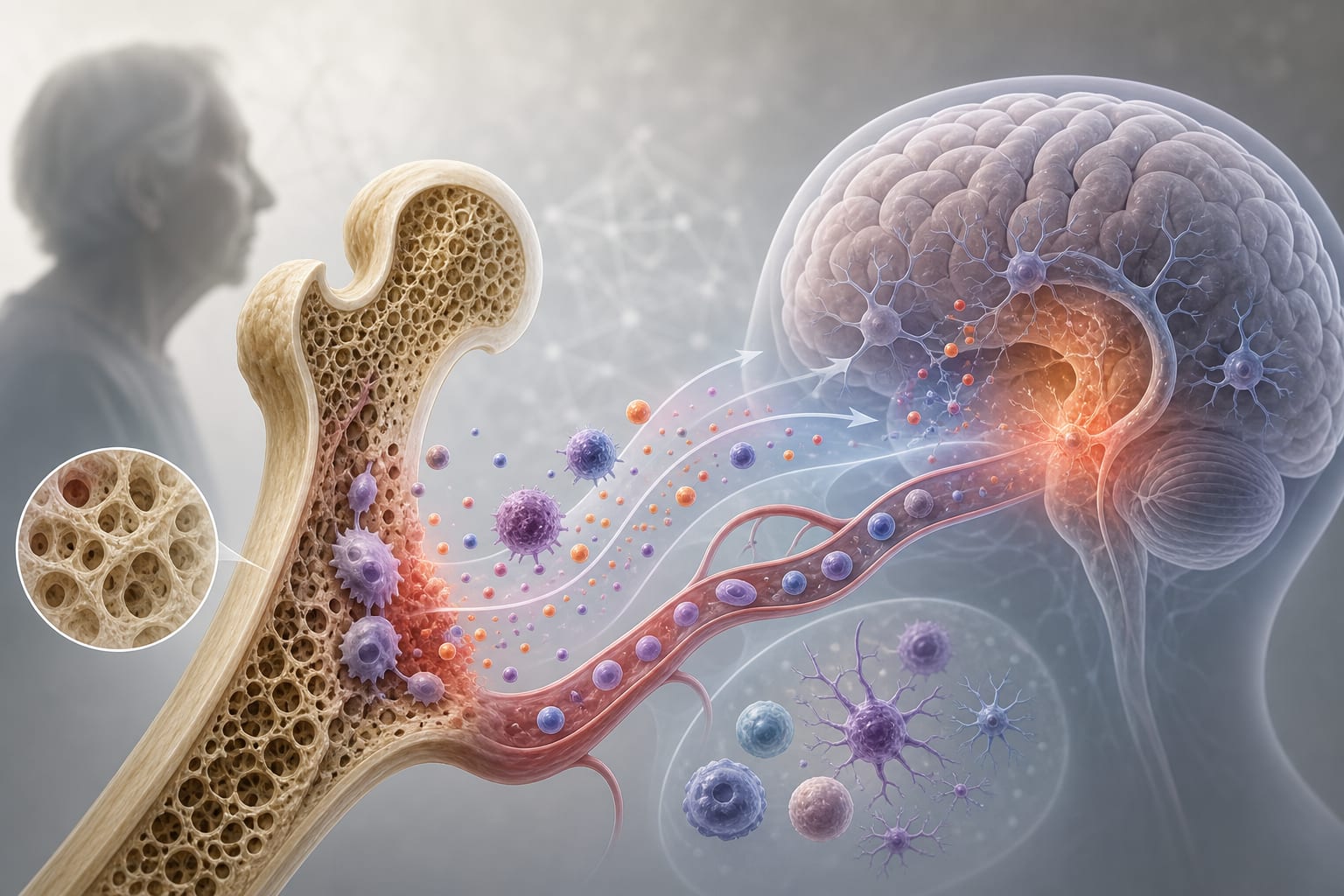
Osteoimmuno-brain axis: a bridge connecting osteoporosis and cognitive decline and its clinical significance in dementia and Alzheimer’s disease - Report - MDSpire
Clinical Report: The Osteoimmune-Brain Connection in Aging
Overview
This review highlights the interconnectedness of osteoporosis and cognitive dysfunction, particularly Alzheimer's disease, through the osteoimmune-brain axis, as discussed in the source material. It emphasizes the role of immune system interactions in mediating the relationship between skeletal and cerebral pathology.
Background
Osteoporosis and Alzheimer's disease are prevalent age-related disorders that significantly impact healthcare systems. The bidirectional relationship between these conditions suggests shared pathophysiological mechanisms, as indicated by epidemiological studies, rather than a direct causal link. Understanding this connection is crucial for developing targeted prevention strategies.
Data Highlights
No numerical data provided in the source material.
Key Findings
Osteoporosis and Alzheimer's disease frequently co-occur in the elderly population.
The osteoimmune-brain axis mediates the relationship between skeletal and cerebral pathology.
Bone-derived factors, such as osteocalcin and sclerostin, influence brain function and may contribute to cognitive impairment.
Chronic low-grade inflammation is a common feature in both osteoporosis and Alzheimer's disease.
Microglia and bone marrow-derived macrophages exhibit similar dysfunctional activation states in both conditions.
Clinical Implications
Healthcare professionals should consider the potential interplay between osteoporosis and cognitive decline in elderly patients.
Conclusion
The review provides a theoretical foundation for understanding the complex relationship between osteoporosis and cognitive impairment.