Sex-Related Differences in Conduit Strategy and Early Outcomes After Sternum-Sparing On-Pump Multivessel CABG via Left Anterior Thoracotomy - Report - MDSpire
Advertisement
Sex-Related Differences in Conduit Strategy and Early Outcomes After Sternum-Sparing On-Pump Multivessel CABG via Left Anterior Thoracotomy
Clinical Report: Gender-Based Variations in Conduit Approaches and Outcomes
Overview
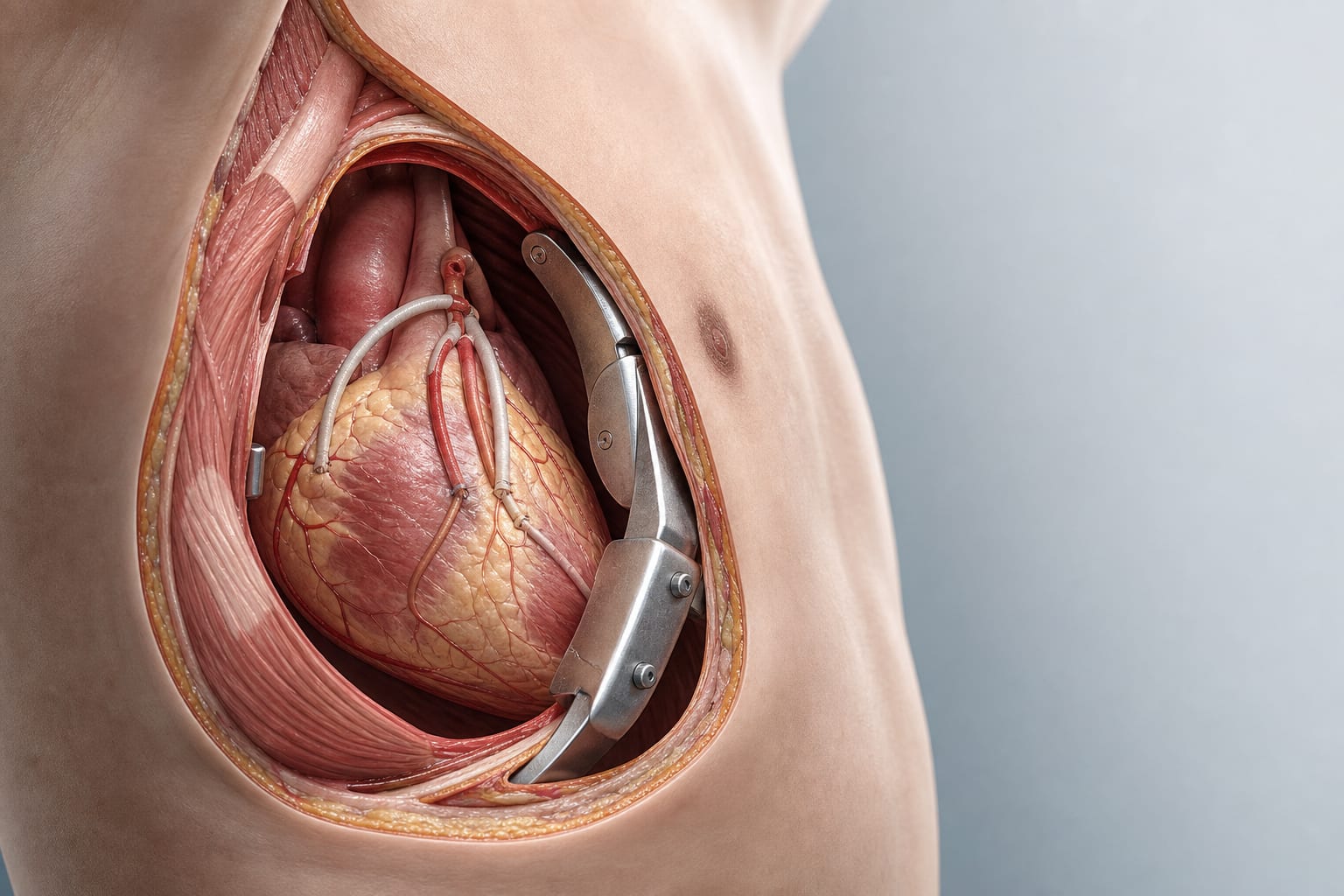
This study evaluates sex-related differences in baseline characteristics, operative strategies, and in-hospital outcomes in patients undergoing sternum-sparing multivessel CABG. Despite differences in demographics and conduit selection, early postoperative outcomes were similar between men and women.
Background
Understanding sex-related disparities in cardiac surgery is crucial for optimizing patient outcomes. Previous studies have indicated that women may have different baseline risk profiles and postoperative complications compared to men. This research focuses on minimally invasive CABG techniques, which are gaining traction for their potential benefits in recovery and outcomes.
Data Highlights
{'P-values': "Ensure consistent formatting and clarify '<0.001' as statistically significant."}
Key Findings
Women undergoing CABG were older and had a higher EuroSCORE II compared to men.
Diabetes mellitus was more prevalent in women (44.2% vs 34.0%).
Men had a higher rate of total arterial grafting (35.8% vs 21.7%) and radial artery use (62.2% vs 35.5%).
Operative and cardiopulmonary bypass times were longer in men.
In-hospital outcomes such as mortality and stroke did not differ significantly between sexes.
Clinical Implications
Clinicians should be aware of the demographic differences in patients undergoing CABG, particularly regarding age and comorbidities like diabetes. The similar early postoperative outcomes suggest that sternum-sparing techniques may be safely applied to both men and women, despite the differences in conduit selection.
Conclusion
This study highlights the importance of recognizing sex-related differences in CABG while demonstrating that sternum-sparing multivessel CABG can achieve comparable outcomes for both genders.