Clinical Report: Amazing Advancements in Anterior Segment Diagnostics
Overview
This report reviews recent advancements in anterior segment diagnostics, highlighting the role of anterior segment optical coherence tomography (AS-OCT) and corneal tomography in improving disease identification and management. These technologies enhance the clinician's ability to diagnose and monitor conditions such as keratoconus and ocular surface tumors.
Background
The anterior segment of the eye is crucial for vision, and accurate diagnostics are essential for identifying vision-threatening diseases. Recent technological advancements, particularly in imaging, have transformed the diagnostic landscape, allowing for better assessment and management of ocular conditions. Understanding these innovations is vital for ophthalmologists to optimize patient care.
Data Highlights
No numerical data provided in the source material.
Key Findings
AS-OCT provides high-resolution images of anterior segment structures, aiding in the diagnosis of corneal pathology and ocular surface tumors.
Characteristics of intraepithelial ocular surface squamous neoplasia (OSSN) can be identified using AS-OCT, differentiating between intraepithelial and invasive tumors.
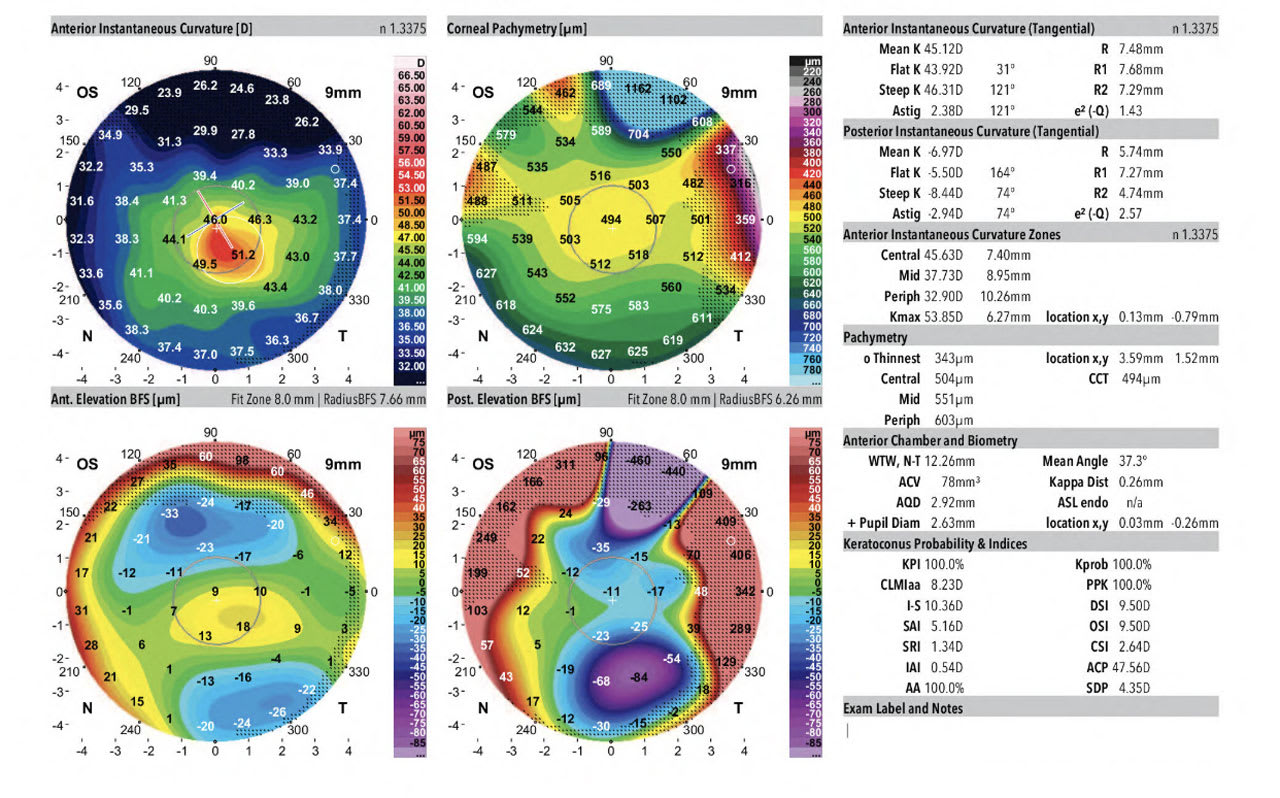
Corneal tomography, using Scheimpflug imaging, can detect early signs of keratoconus and assess corneal health.
The Belin/Ambrósio Enhanced Ectasia Display helps evaluate refractive surgery candidates at risk for keratoconus.
High-resolution OCT allows for epithelial mapping, which is beneficial in diagnosing keratoconus and monitoring disease progression.
Clinical Implications
Clinicians should incorporate AS-OCT and corneal tomography into their diagnostic toolkit to enhance the accuracy of disease identification and treatment planning. These technologies can significantly impact decision-making regarding interventions for conditions like keratoconus and ocular surface tumors.
Conclusion
The advancements in anterior segment diagnostics represent a significant leap forward in ophthalmic care, enabling more precise and informed clinical decisions. Embracing these technologies will ultimately improve patient outcomes in ocular health.
In this year’s keynote speech, Craig Norman and Patrick Caroline took a walk down memory lane to examine the last 2 and a half decades of both the Global Specialty Lens Symposium and specialty contact lenses.