Clinical Report: Exploring the Role of RAC1 in Glioblastoma
Overview
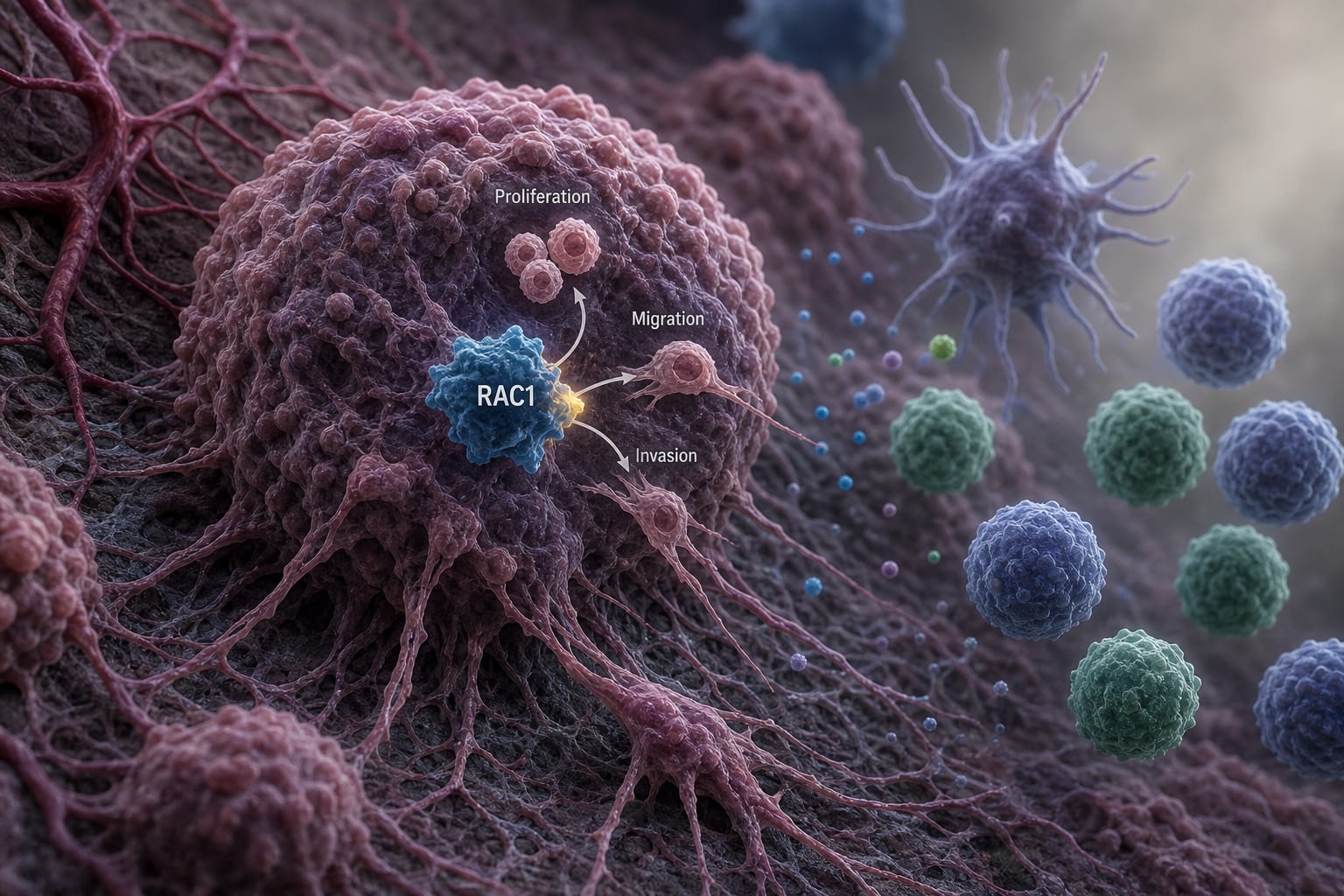
RAC1 is identified as a key prognostic biomarker in glioblastoma (GBM), with its expression linked to tumor cell states and immune microenvironment characteristics. The study suggests that targeting RAC1 may enhance therapeutic strategies, particularly with CDK4/6 inhibitors, in specific tumor subpopulations.
Background
Glioblastoma (GBM) is the most common and aggressive primary brain tumor, presenting significant treatment challenges and a median survival of only 15 months. Understanding the molecular mechanisms underlying GBM is crucial for developing effective therapies. RAC1, a member of the Rho GTPase family, has been implicated in various tumorigenic processes, making it a potential target for therapeutic intervention.
Data Highlights
Analysis Type
Finding
Prognostic Value
HR = 2.61, P = 0.003 for RAC1 in GBM
Cell Proliferation
NSC23766 suppressed GBM cell proliferation
Immune Pathway Activation
RAC1-high cells showed PI3K-AKT-mTOR activation
Drug Sensitivity
Palbociclib inhibited GBM cell viability in a dose-dependent manner
Key Findings
RAC1 expression is upregulated in various cancers, with GBM showing the highest prognostic accuracy.
Lasso-Cox regression confirmed RAC1 as a significant prognostic marker across overall survival (OS), disease-specific survival (DSS), and progression-free interval (PFI).
Single-cell RNA sequencing revealed RAC1 enrichment in NPC-like tumor states, indicating its role in immune evasion.
RAC1-high cells exhibited activation of the IFN-gamma pathway but lacked PD-L1 expression, suggesting potential resistance to immune checkpoint inhibitors.
Palbociclib demonstrated dose- and time-dependent inhibition of GBM cell viability, indicating its potential as a therapeutic agent.
Clinical Implications
The identification of RAC1 as a prognostic biomarker in GBM highlights its potential role in guiding treatment strategies. Targeting RAC1 may provide therapeutic benefits, particularly in conjunction with CDK4/6 inhibitors, for specific tumor subpopulations that are resistant to traditional immunotherapy.
Conclusion
RAC1 serves as a critical biomarker for prognosis and therapeutic stratification in glioblastoma, suggesting that targeted therapies may improve outcomes for patients with specific tumor characteristics.