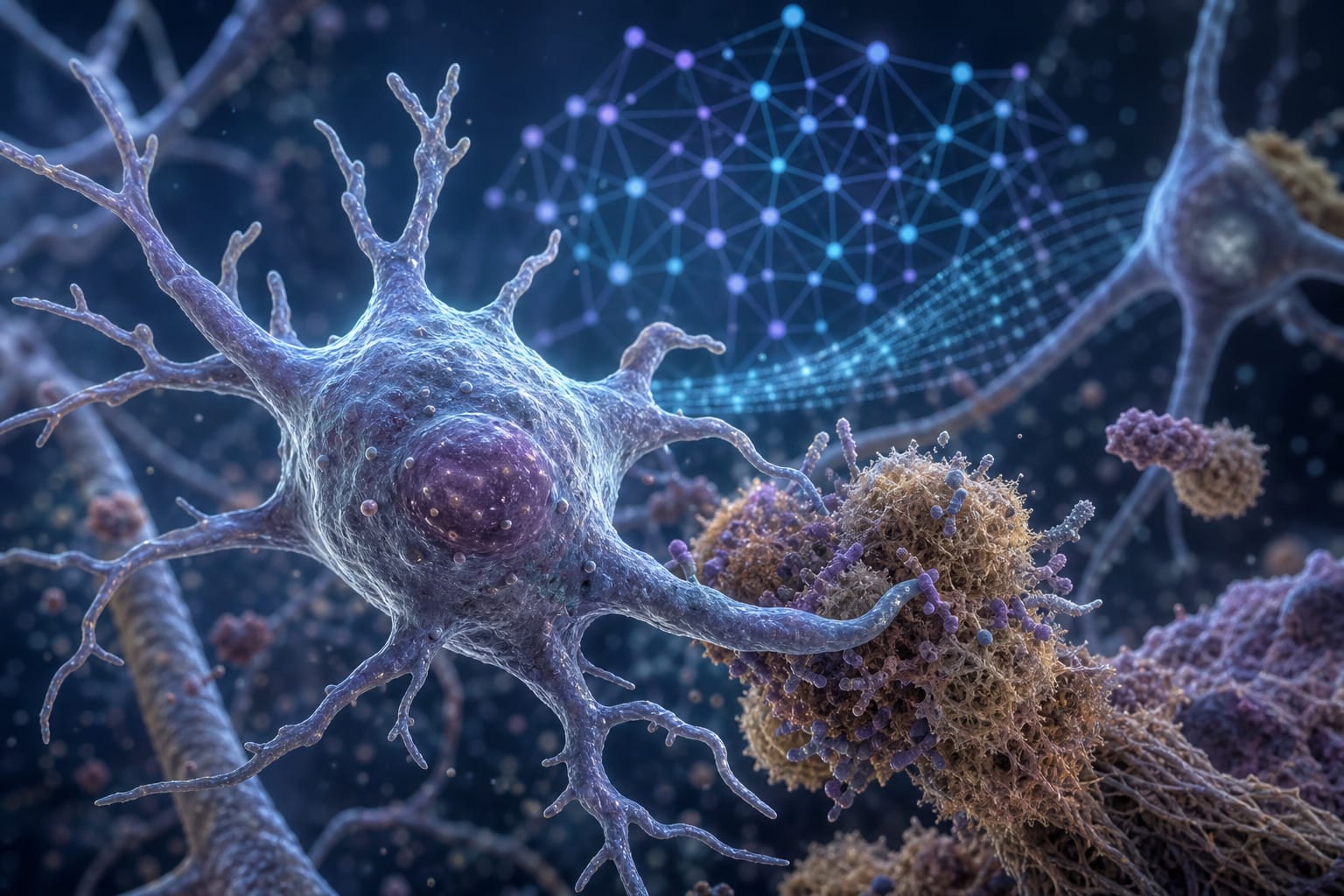
Clinical Report: Insights from AI on Protein Misfolding and Immune Responses
Overview
This report reviews the role of artificial intelligence in understanding protein misfolding and innate immune responses in neurodegenerative disorders. It highlights how AI can enhance the prediction of protein structures and the mechanisms of neuroinflammation, particularly in both adult and pediatric neurodegenerative diseases.
Background
Neurodegenerative diseases, such as Alzheimer's and Parkinson's, are characterized by protein misfolding and chronic neuroinflammation, leading to significant cognitive and physical dysfunction. The innate immune system, particularly microglia, plays a crucial role in regulating these processes. Understanding the interplay between protein misfolding and immune responses is essential for developing effective diagnostic and therapeutic strategies.
Data Highlights
Replace with qualitative insights or findings related to AI's impact on protein misfolding and immune responses.
Key Findings
AI has advanced protein structure prediction, aiding in understanding misfolded proteins.
Misfolded proteins act as damage-associated molecular patterns (DAMPs) that trigger neuroinflammatory responses.
Deep learning models like AlphaFold and I-TASSER are significant in predicting protein conformations.
AI can simulate the aggregation process of misfolded proteins and their association with disease progression.
Pediatric neurodegenerative disorders, though rare, share molecular features with adult forms and can benefit from AI-driven diagnostics.
Clinical Implications
The integration of AI in neurodegenerative research may lead to improved diagnostic tools and treatment methods, particularly for pediatric conditions. Clinicians should consider the potential of AI to enhance understanding of disease mechanisms and inform therapeutic strategies.
Conclusion
AI represents a promising frontier in the study of neurodegenerative diseases, offering insights into the complex relationship between protein misfolding and immune responses. Continued exploration in this area may yield significant advancements in clinical practice.
Aviva Abosch, M.D., Ph.D., a neurosurgeon at Baptist Health Miami Neuroscience Institute, part of Baptist Health Brain and Spine Care, was installed as the Esernia Endowed Chair in Surgical Treatment of Adult Epilepsy and Movement Disorders.