Clinical Report: Mast Cells Expressing CTSG Contribute to Immunotherapy Resistance in Colorectal Cancer
Overview
This study identifies a subset of mast cells expressing cathepsin G (CTSG) that correlates with immunotherapy resistance in colorectal cancer (CRC).
Background
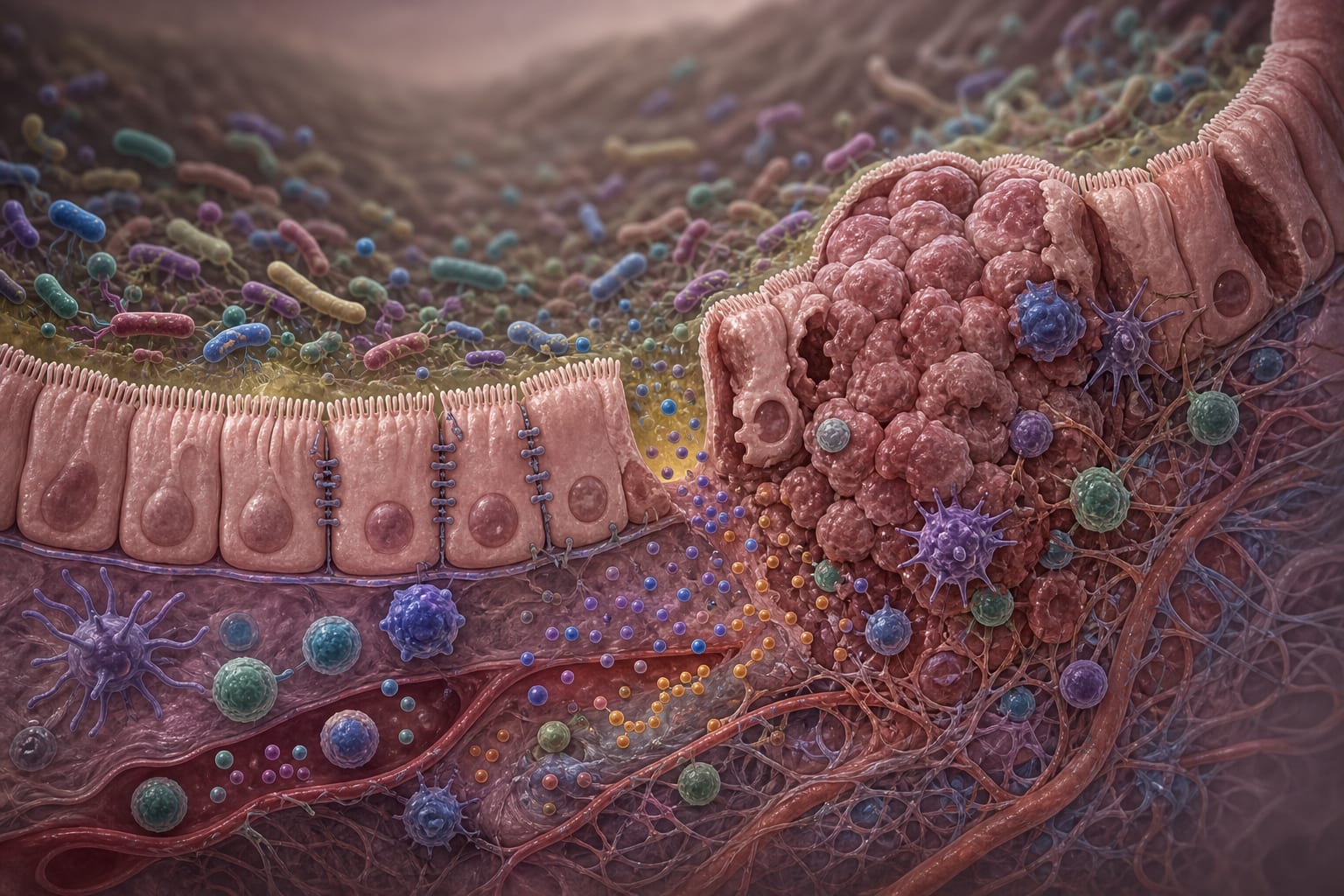
Colorectal cancer (CRC) is a leading cause of cancer-related mortality, with immune checkpoint inhibitors (ICIs) showing limited efficacy in microsatellite-stable (MSS) cases. Understanding the tumor microenvironment (TME) and the role of immune cells, such as mast cells, is critical for improving therapeutic outcomes. The presence of mast cells in CRC has been linked to both favorable and unfavorable prognoses, highlighting their complex role in tumor biology.
Data Highlights
No numerical data available in the source material.
Key Findings
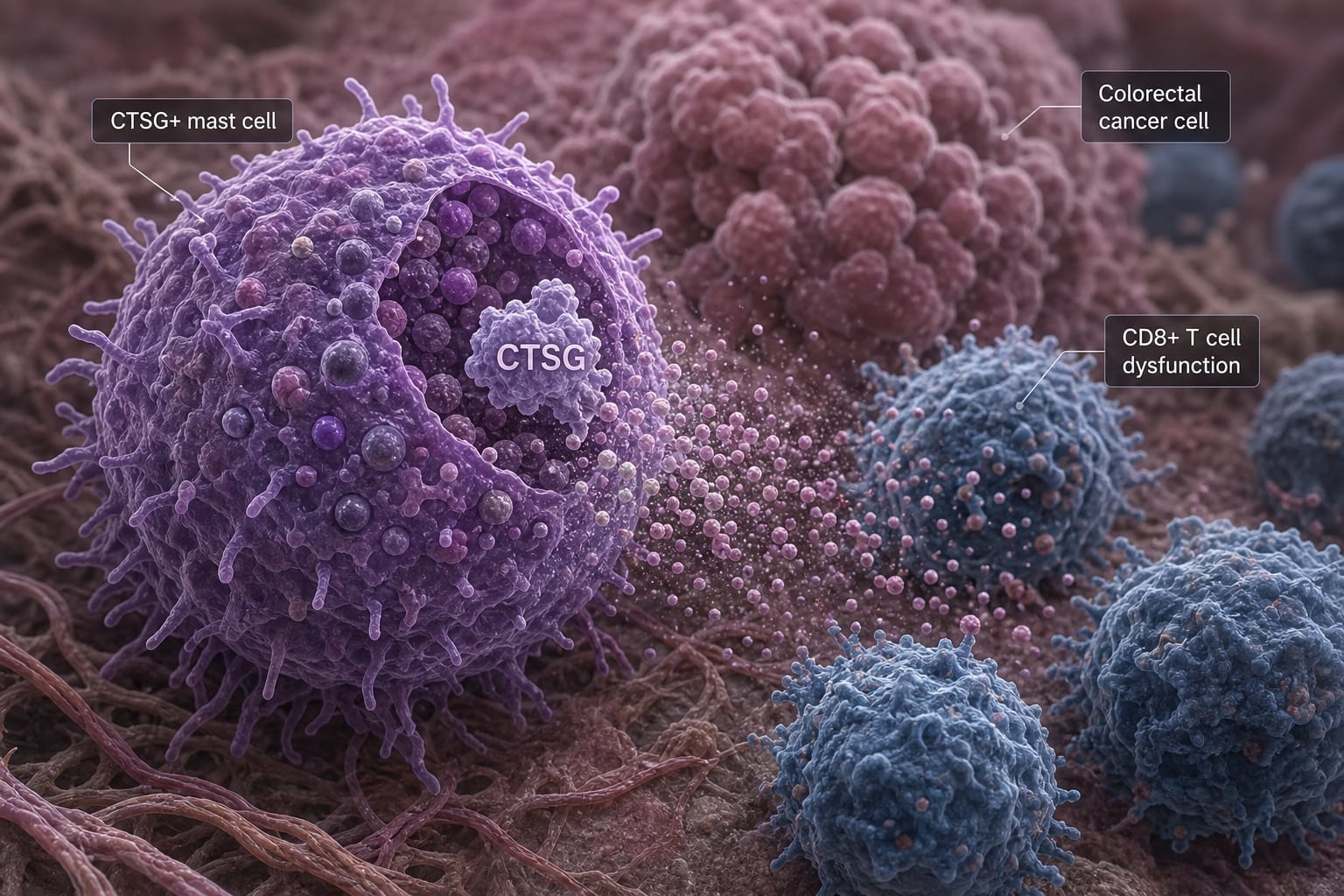
A subset of mast cells expressing CTSG is associated with poor prognosis and immunotherapy resistance in CRC.
Mast cell deficiency led to reduced tumor growth and increased immune cell infiltration in a murine CRC model.
CTSG from mast cells promotes tumor metabolic adaptation and limits CD8+ T cell recruitment.
The interaction between mast cells and tumor cells is mediated by protease-activated receptor 2 (PAR2) signaling.
Pharmacological inhibition of CTSG enhances CD8+ T cell recruitment and improves the efficacy of anti-PD-1 therapy.
Clinical Implications
Understanding the role of mast cells in the tumor microenvironment could inform future therapeutic approaches.
Conclusion
The study highlights the importance of CTSG+ mast cells in CRC.