Reduced CARS2 expression elicits a low-grade pro-inflammatory signature in THP-1 macrophages - Report - MDSpire

Reduced CARS2 expression elicits a low-grade pro-inflammatory signature in THP-1 macrophages

  • By

  • Anh-Thu Dang

  • Paulina Lau

  • Sébastien Soubeyrand

  • Ruth McPherson

  • June 5, 2026

  • 0 min

Share

Clinical Report: Decreased Expression of CARS2 Induces Pro-Inflammatory Profile

Overview

Revise to clarify the significance of the findings regarding NF-κB and STAT1 pathways.

Background

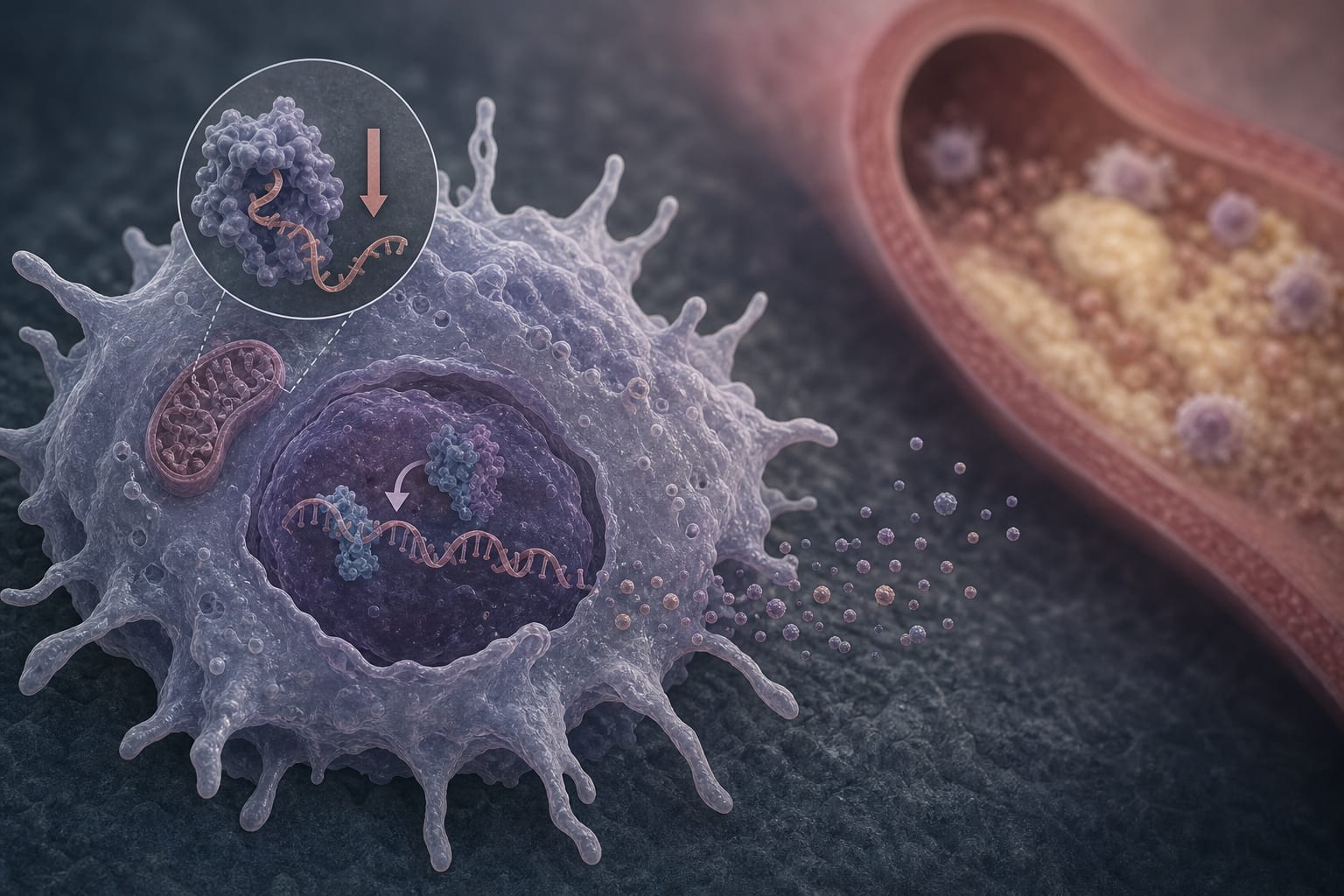
CARS2, a mitochondrial cysteinyl aminoacyl-tRNA synthetase, has been linked to coronary artery disease through genetic studies. Understanding its role in macrophage inflammation is crucial, as macrophages are key players in the pathophysiology of atherosclerosis and other inflammatory diseases. This research highlights the potential non-canonical functions of CARS2 beyond its mitochondrial role.

Data Highlights

Revise to indicate the absence of specific numerical data rather than stating 'no numerical data'.

Key Findings

  • CARS2 suppression in THP-1 macrophages leads to an interferon-like response.
  • Reduced CARS2 levels are associated with increased expression and secretion of inflammatory cytokines.
  • NF-ΚB activity was modestly diminished in CARS2-suppressed cells.
  • Suppression of CARS2 did not significantly alter mitochondrial function or content.
  • Reduced reactive oxygen species (ROS) levels were observed without affecting mitochondrial integrity.

Clinical Implications

The findings suggest that targeting CARS2 may provide a novel approach to modulate inflammatory responses in macrophages, which could have implications for treating coronary artery disease. Understanding the mechanisms of CARS2's anti-inflammatory role could lead to new therapeutic strategies.

Conclusion

Reiterate the need for further research with specific focus areas to enhance clarity.

Related Resources & Content

  1. Frontiers in Medicine, 2026 -- SHP2 in TAMs promoted the survival of gastric adenocarcinoma via suppressing the P38/ERK1/2/SP1/BRD4/STING induced inflammation and ROS
  2. Frontiers in Cardiovascular Medicine, 2026 -- Cathepsin B ablation alleviates VSMC phenotypic switching by modulating alternative macrophage polarization through the NLRP3 signaling pathway
  3. Frontiers in Immunology, 2026 -- Palmitic and oleic acids induce macrophage foam cell formation through C/EBPβ activation
  4. Basic Research in Cardiology, 2024 -- Inflammatory Signaling Pathways Involving the CD40–CD40L–TRAF Cascade in Diabetes and Hypertension: Findings from Animal and Human Research
  5. Multifaceted mitochondria in innate immunity | npj Metabolic Health and Disease, 2024
  6. The ABCs of the 2023 AHA/ACC/ACCP/ASPC/NLA/PCNA guideline for the management of patients with chronic coronary disease - PMC
  7. Canakinumab Anti-Inflammatory Thrombosis Outcomes Study - American College of Cardiology
  8. Multifaceted mitochondria in innate immunity | npj Metabolic Health and Disease
  9. The ABCs of the 2023 AHA/ACC/ACCP/ASPC/NLA/PCNA guideline for the management of patients with chronic coronary disease - PMC
  10. Canakinumab Anti-Inflammatory Thrombosis Outcomes Study - American College of Cardiology

Original Source(s)

Related Content