Therapeutic Interaction Features of AI Chatbots in Depression Interventions: Systematic Review and Meta-Analysis - Report - MDSpire

Therapeutic Interaction Features of AI Chatbots in Depression Interventions: Systematic Review and Meta-Analysis

  • By

  • Ting Huang

  • Shuangyu Li

  • Yanzhong Wang

  • Wei Liu

  • June 30, 2026

  • 0 min

Share

Clinical Report: Exploring the Therapeutic Features of AI Chatbots in Managing Depression

Overview

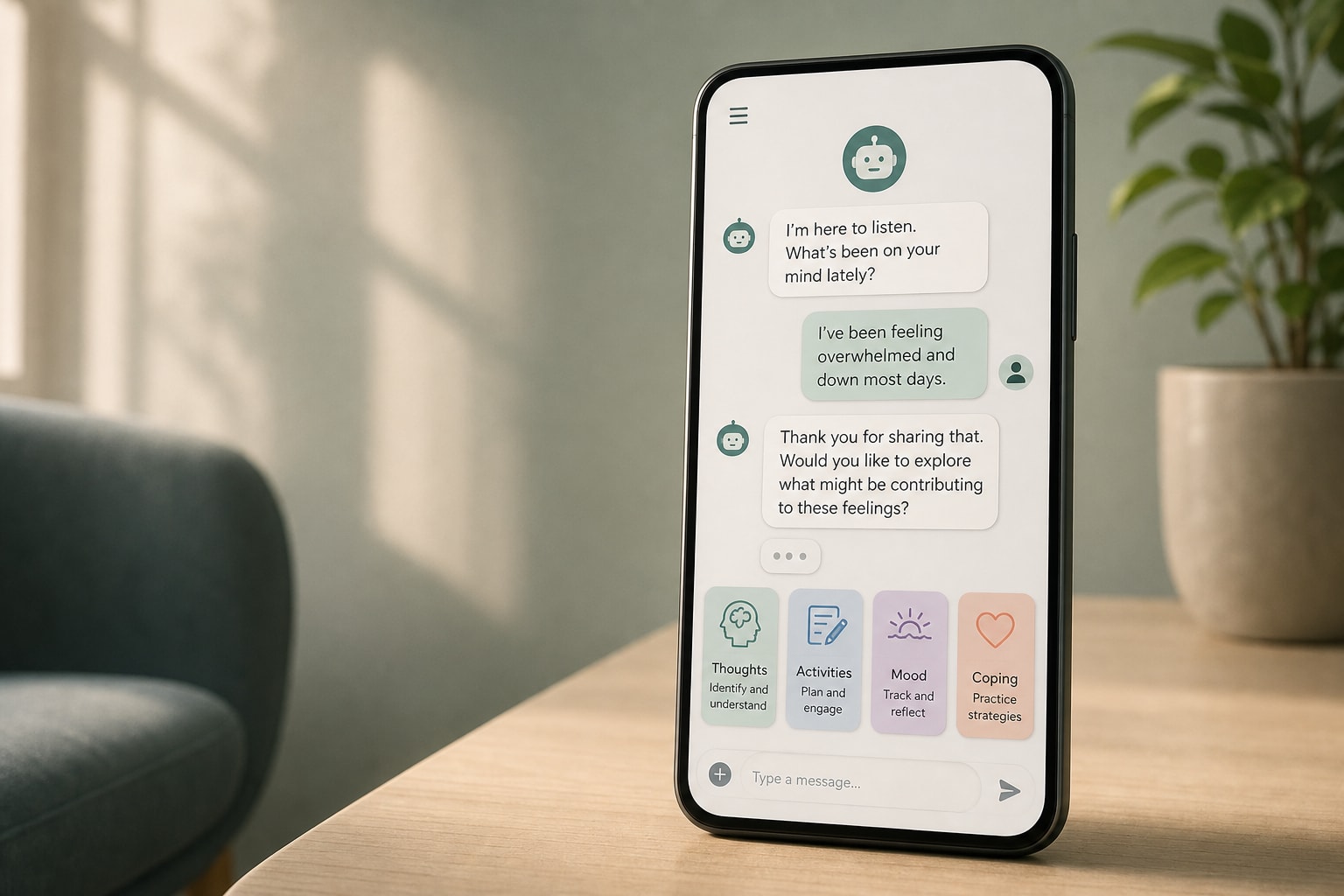
This systematic review and meta-analysis evaluates the effectiveness of AI chatbots in managing depression.

Background

Depression is a leading cause of disability globally, affecting over 280 million people. Traditional treatment options face barriers such as workforce shortages and stigma, prompting the exploration of digital mental health interventions (DMHIs) as accessible alternatives.

Data Highlights

No specific numerical data provided in the source material.

Key Findings

  • AI chatbots can provide continuous support and sustained interaction for individuals with depression.
  • High dropout rates and low retention remain significant challenges for DMHIs.
  • Engagement and clinical effectiveness should be evaluated together in digital interventions.

Clinical Implications

Healthcare professionals should consider integrating AI chatbots into treatment plans for patients with mild to moderate depression. Continuous support from these digital interventions may enhance patient engagement and accessibility to mental health resources.

Conclusion

Further research is needed to optimize the effectiveness of AI chatbots and address retention challenges.

Related Resources & Content

  1. World Health Organization, WHO, 2025 -- Principaux repères sur la dépression
  2. Kazdin AE, Rabbitt SM, 2013 -- Novel models for delivering mental health services and reducing the burdens of mental illness
  3. Lattie EG et al., 2019 -- Digital mental health interventions for depression, anxiety, and enhancement of psychological well-being among college students: systematic review
  4. Eysenbach G, 2005 -- The law of attrition
  5. Journal of Medical Internet Research (JMIR) — Efficacy, User Engagement, and Acceptability of Cognitive Behavioral Therapy–Oriented Psychological Chatbots for Adults With Depressive and/or Anxiety Symptoms: Systematic Review and Meta-Analysis of Randomized Controlled Trials
  6. BMC Psychiatry (Springer) — Exploring the Role of Agency in Psychotherapy: Experiences of Individuals with Mental Health Challenges in Interactions with AI Chatbots and Human Therapists
  7. Frontiers in Digital Health — A pilot study of human–AI conversational interaction and its impact on loneliness and wellbeing
  8. BMC Psychiatry (Springer) — A pilot randomized controlled trial of AI-delivered vs. human-delivered iCBT for depression in young adults
  9. Efficacy, User Engagement, and Acceptability of Cognitive Behavioral Therapy–Oriented Psychological Chatbots
  10. Exploring the Role of Agency in Psychotherapy
  11. A pilot study of human–AI conversational interaction and its impact on loneliness and wellbeing
  12. A pilot randomized controlled trial of AI-delivered vs. human-delivered iCBT for depression in young adults
  13. Principaux repères sur la dépression
  14. Overview | Depression in adults: treatment and management | Guidance | NICE
  15. Efficacy of a Conversational AI Agent for Psychiatric Symptoms and Digital Therapeutic Alliance: A Randomized Clinical Trial | Trials | JAMA Network Open | JAMA Network
  16. Randomized Trial of a Generative AI Chatbot for Mental Health Treatment | NEJM AI
  17. Systematic review and meta analysis of chatbots in the management of depressive and anxiety symptoms | npj Digital Medicine
  18. WHO releases AI ethics and governance guidance for large multi-modal models

Original Source(s)

Related Content