Clinical Report: Influence of Clonal Structure and Potential Biallelic Inactivation of TET2 Mutations in Myelodysplastic Syndromes
Overview
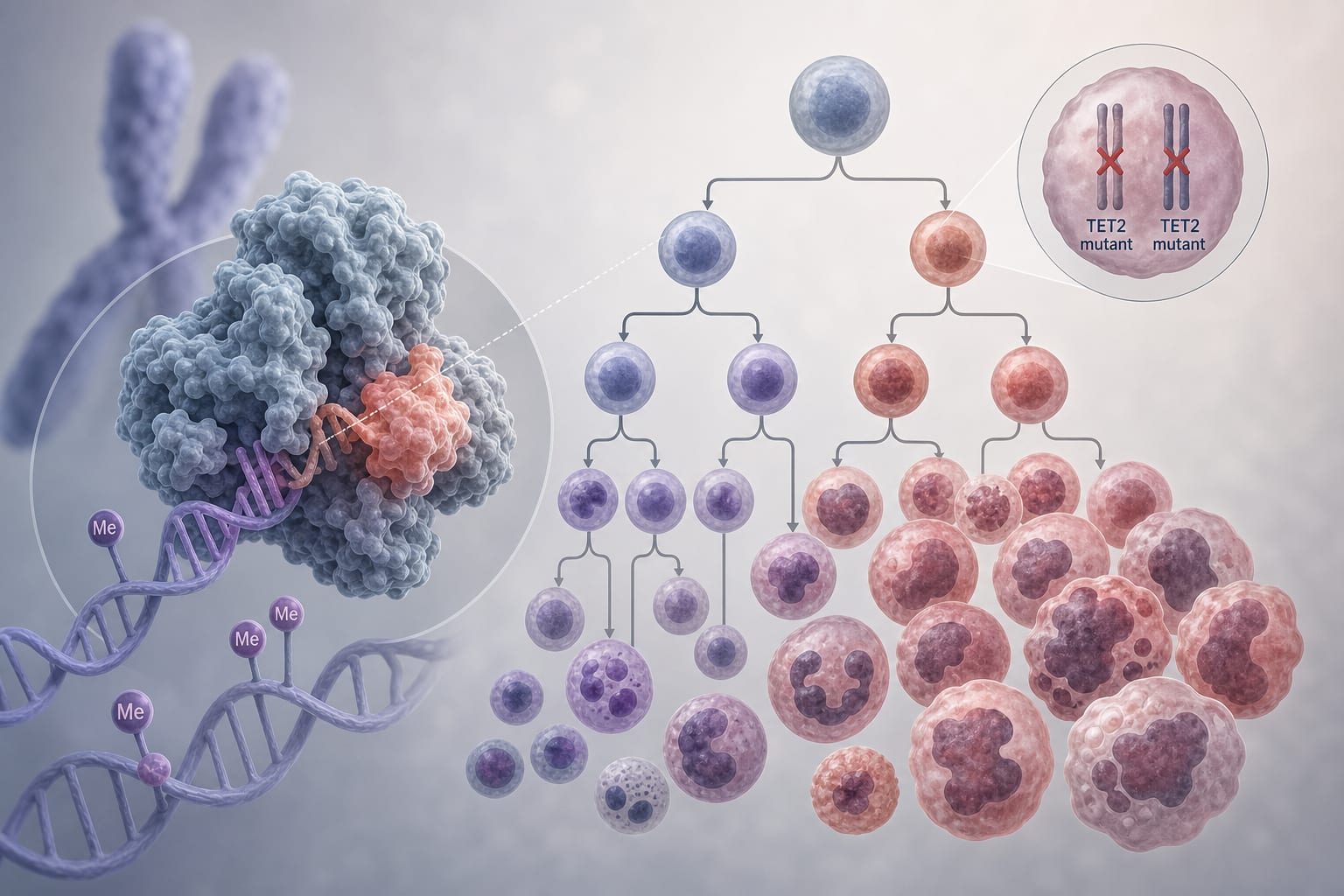
This study investigates the clinical and prognostic relevance of TET2 clonal hierarchy and probable biallelic TET2 inactivation in myelodysplastic syndromes (MDS). Findings indicate that ancestral TET2 mutations are associated with younger age and lower risk classifications, while secondary mutations correlate with higher-risk subtypes and co-mutations.
Background
TET2 mutations are prevalent in myelodysplastic neoplasms, yet their prognostic implications are debated. Understanding the clonal structure of TET2 mutations may provide insights into disease progression and patient outcomes in MDS. This research aims to clarify the role of TET2 mutation status and its clonal hierarchy in MDS prognosis.
Data Highlights
Characteristic
Ancestral TET2MT
Secondary TET2MT
Age (years)
63
68
Monocyte Count (×10^9/L)
0.27
0.19
IPSS-M Risk
Lower
Higher
Co-mutations (mean)
2.98
4.83
Key Findings
TET2 was the third most common mutation in the institutional cohort, with 29% of cases harboring multiple TET2 lesions.
Ancestral TET2 mutations were linked to younger age and lower IPSS-M risks.
Secondary TET2 mutations were associated with higher-risk WHO 2022 criteria subtypes.
Patients with ancestral TET2 mutations had fewer co-mutations compared to those with secondary mutations.
Common co-mutations in secondary TET2 cases included ASXL1, RUNX1, and TP53.
Clinical Implications
The findings suggest that the clonal hierarchy of TET2 mutations may influence patient characteristics and risk stratification in MDS. Clinicians should consider the type of TET2 mutation when assessing prognosis and treatment strategies.
Conclusion
This study highlights the importance of TET2 clonal structure in understanding the clinical outcomes of MDS. Further research is needed to explore the implications of these findings in clinical practice.