Cancer-related microangiopathic hemolytic anemia (CR-MAHA) in a metastatic breast cancer patient with a germ-line ATM single nucleotide variant and an ESR1 fusion variant: insights from a case report on early diagnosis and improved outcomes - Report - MDSpire

Cancer-related microangiopathic hemolytic anemia (CR-MAHA) in a metastatic breast cancer patient with a germ-line ATM single nucleotide variant and an ESR1 fusion variant: insights from a case report on early diagnosis and improved outcomes

  • By

  • Fengting Yan

  • Aimee Wu

  • Yufei Wang

  • Tanya Wahl

  • Zirui Wang

  • Cesar Gutierrez

  • Josiah Wagner

  • Alexa Dowdell

  • Alexandra Bartlett

  • Christopher Carney

  • Daniel Landis

  • Brian Piening

  • Henry Kaplan

  • July 7, 2026

  • 0 min

Share

Clinical Report: Microangiopathic Hemolytic Anemia Associated with Cancer

Overview

This case study highlights a patient with metastatic breast cancer who developed cancer-related microangiopathic hemolytic anemia (CR-MAHA). Genomic testing revealed variants.

Background

Cancer-related microangiopathic hemolytic anemia (CR-MAHA) is a rare paraneoplastic syndrome that can significantly affect prognosis if not identified early. It is characterized by hemolytic anemia due to microangiopathic changes, often linked to various malignancies.

Data Highlights

No numerical data or trial data presented in the article.

Key Findings

  • CR-MAHA is associated with various cancers, including breast cancer.
  • The patient presented with back pain and fatigue, leading to the diagnosis of CR-MAHA.
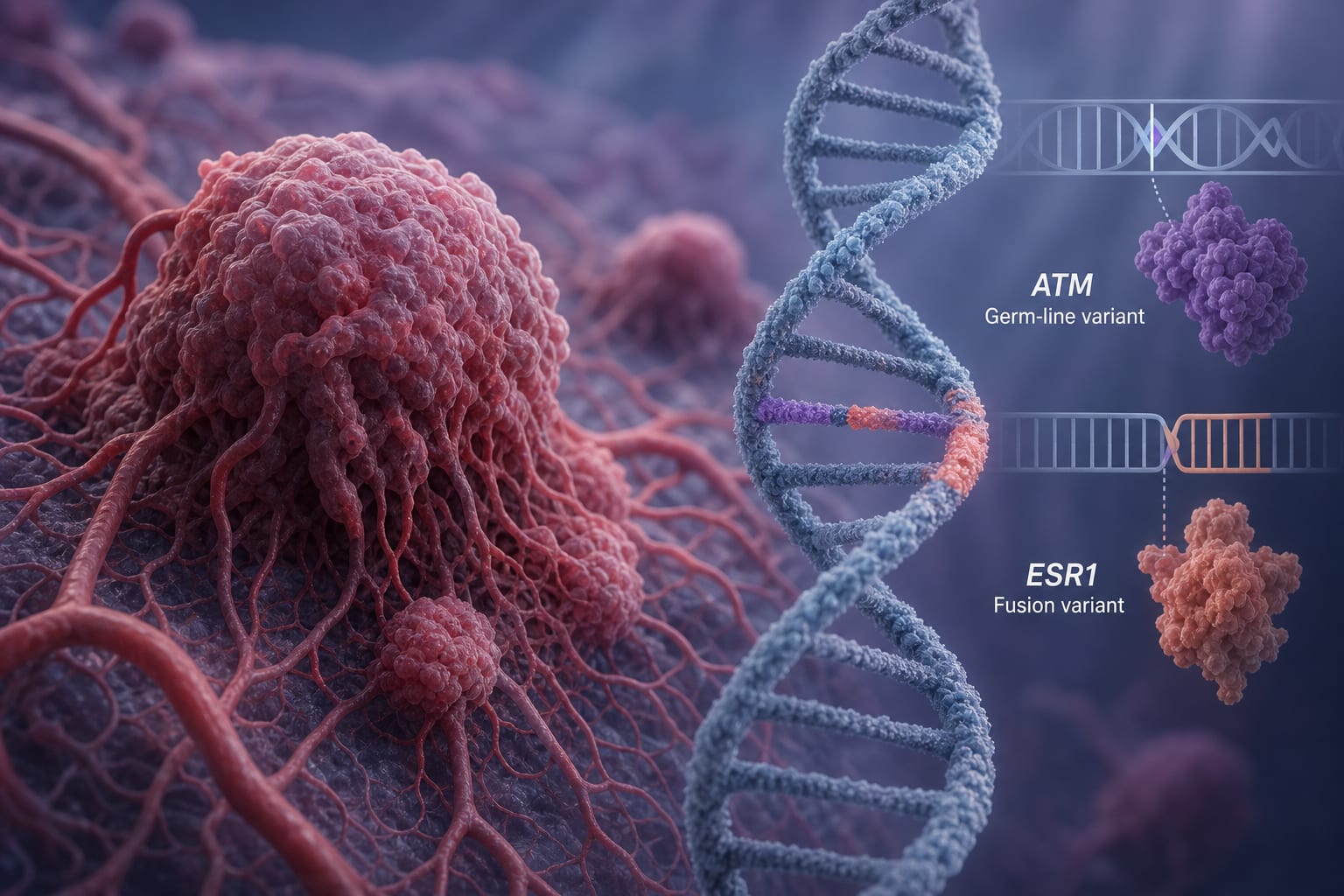
  • Genomic testing identified a germ-line ATM variant and an ESR1 fusion variant in the patient.
  • Prompt treatment resulted in resolution of hemolytic anemia.
  • Further investigation of genomic alterations in CR-MAHA patients is needed.

Clinical Implications

Clinicians should consider CR-MAHA in cancer patients presenting with hemolytic anemia and thrombocytopenia.

Conclusion

This case highlights the recognition of CR-MAHA in cancer patients and the role of genomic testing.

Related Resources & Content

  1. Blood Cancer Journal, 2023 -- Multi-Omics Analysis of Three Hematological Cancers in a Patient Identifies Their Origin from Clonal Hematopoietic Stem Cells
  2. Frontiers in Oncology, 2026 -- Case Report: Persistent severe thrombocytopenia after adjuvant ado-trastuzumab emtansine with sequential bone marrow findings and romiplostim support
  3. The ASCO Post, 2022 -- Cell-Free DNA Profiling in Patients With Advanced Cancers May Lead to Early Detection of Myeloid Malignancies
  4. Blood Cancer Journal, 2025 -- Profiling Genomic and Immunogenomic Features of Extramedullary Acute Myeloid Leukemia Uncovers Actionable Clonal Divergence and Common Immune Modifications
  5. Tumour-Associated Microangiopathic Haemolytic Anaemia with Thrombocytopenia: A Narrative Review and Case Study | MDPI
  6. Endocrine Treatment and Targeted Therapy for Hormone Receptor–Positive, Human Epidermal Growth Factor Receptor 2–Negative Metastatic Breast Cancer: ASCO Guideline Update - PMC
  7. Management of individuals with heterozygous germline pathogenic variants in ATM: A clinical practice resource of the American College of Medical Genetics and Genomics (ACMG) - PubMed
  8. Tumour-Associated Microangiopathic Haemolytic Anaemia with Thrombocytopenia: A Narrative Review and Case Study | MDPI
  9. Endocrine Treatment and Targeted Therapy for Hormone Receptor–Positive, Human Epidermal Growth Factor Receptor 2–Negative Metastatic Breast Cancer: ASCO Guideline Update - PMC
  10. Management of individuals with heterozygous germline pathogenic variants in ATM: A clinical practice resource of the American College of Medical Genetics and Genomics (ACMG) - PubMed

Original Source(s)

Related Content