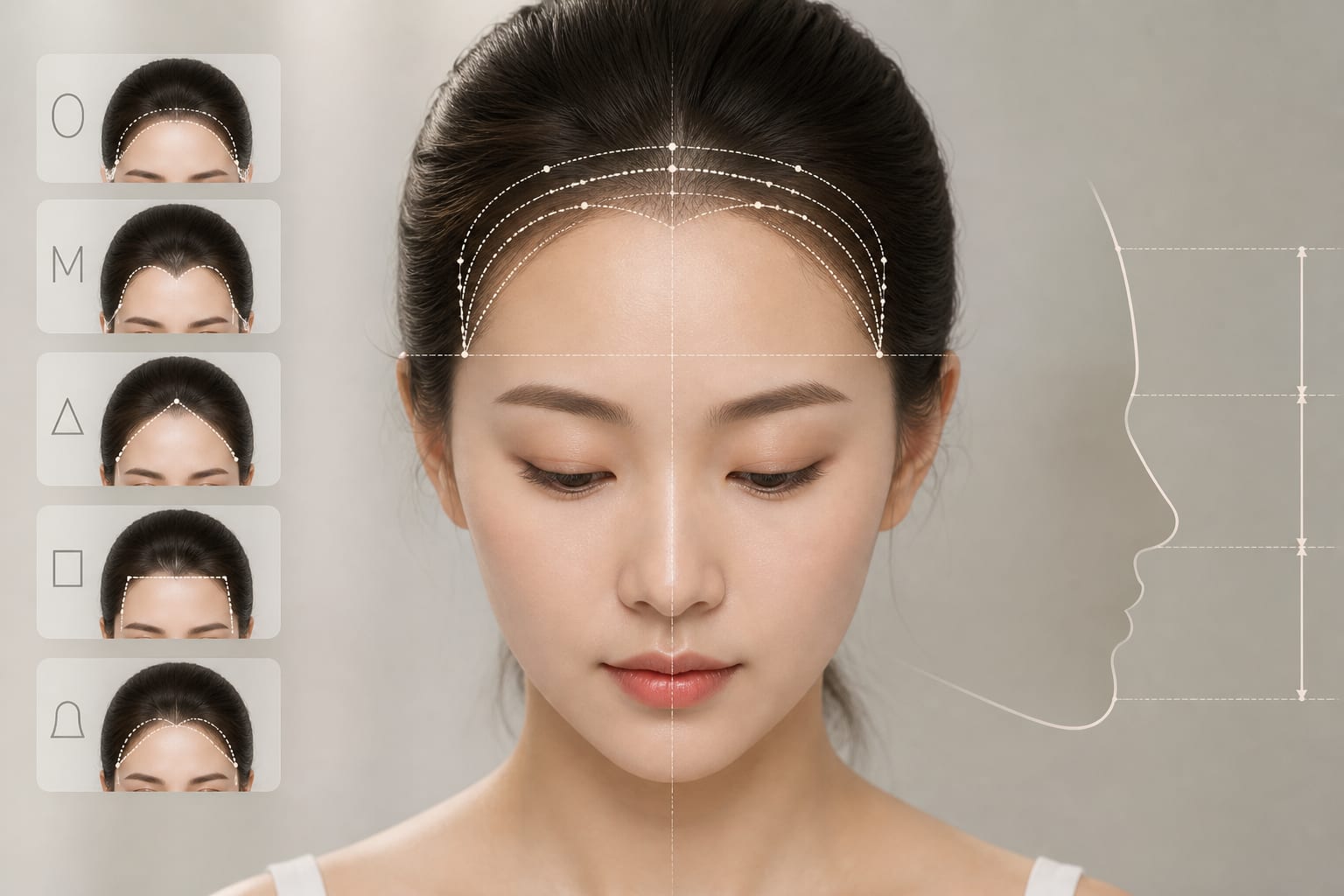
Clinical Report: Establishing Optimal Anterior Hairline Shape and Hair Density Ratio
Overview
This study identifies the preferred anterior hairline contours and hair-bearing proportions among Chinese women, providing quantitative data for surgical and non-surgical hair restoration planning.
Background
The anterior hairline significantly influences facial aesthetics and can affect perceptions of femininity and youthfulness in women. Understanding the ideal hairline shapes and proportions is crucial for optimizing hair restoration techniques.
Data Highlights
Contour Type
Rating (0-10)
Round
Higher
Triangular
Higher
M-shaped
Higher
Rectangular
Lower
Bell-shaped
Lower
Key Findings
Round, triangular, and M-shaped hairline contours received significantly higher aesthetic ratings compared to rectangular and bell-shaped contours (p < 0.001).
The preferred hair-bearing proportion was identified with a height ratio (HR) of 0.505 (IQR 0.455–0.584).
The width ratio (WR) preferred by participants was 0.373 (IQR 0.356–0.387).
Participants rated overall appearance, naturalness, attractiveness, youthfulness, and agreeableness for each hairline configuration.
These findings provide quantitative evidence for individualized planning in hair transplantation and aesthetic interventions.
Clinical Implications
The results of this study can guide clinicians in tailoring hair restoration procedures to meet the aesthetic preferences of Chinese women.
Conclusion
The study establishes preferences for anterior hairline shapes and proportions among Chinese women.
Two patients presented months after minimally invasive facial procedures with persistent findings that ultimately revealed retained foreign bodies, according to a recent case series.