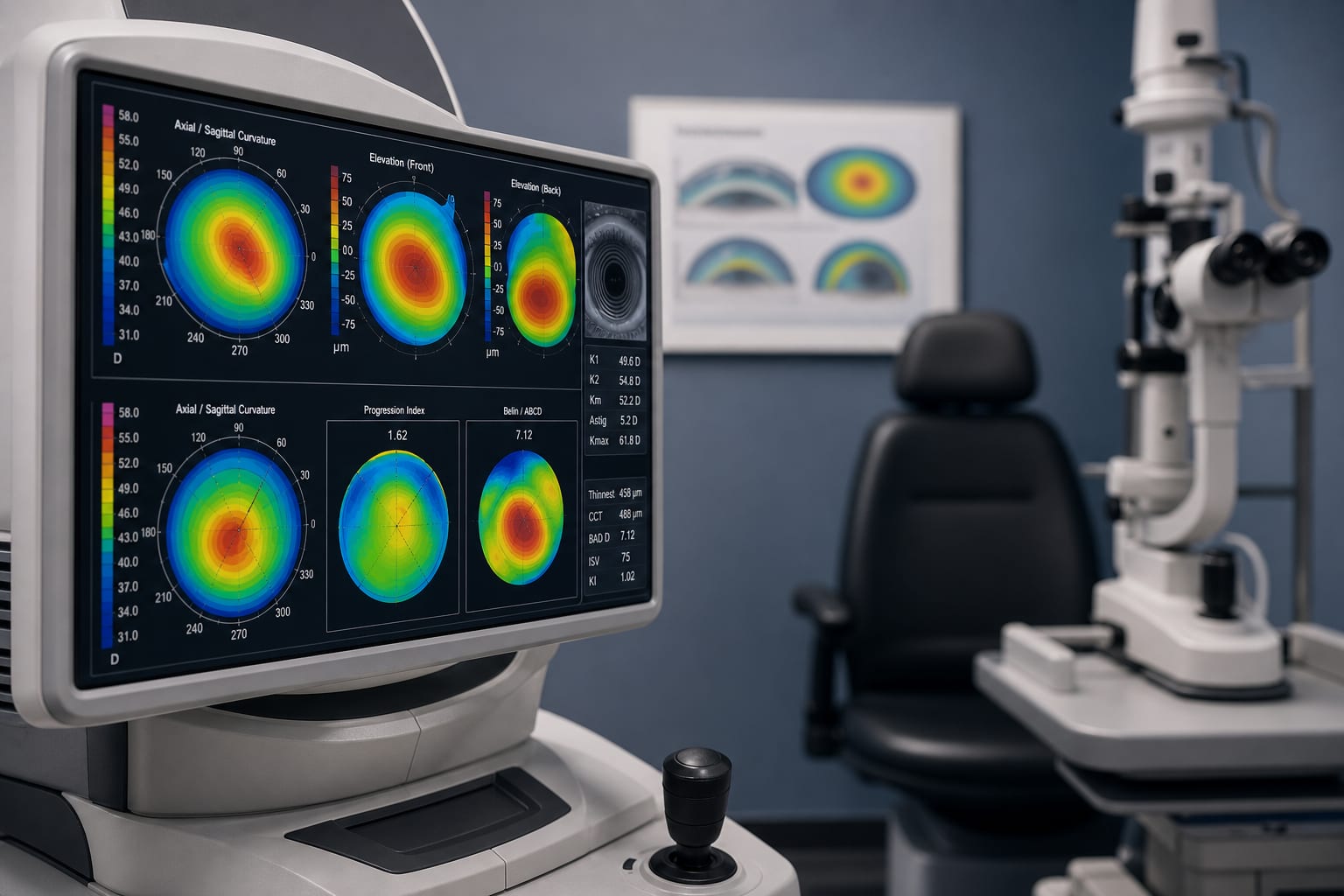
Clinical Report: Advances in Keratoconus Management
Overview
Recent advancements in keratoconus management, particularly corneal crosslinking, have significantly improved patient outcomes. Early detection and innovative techniques, including the newly approved epi-on crosslinking, are reducing the need for corneal transplants.
Background
Keratoconus is a progressive degenerative disease of the cornea that can lead to severe vision impairment. Historically, patients often required corneal transplants due to late diagnosis. Advances in detection and treatment, particularly through crosslinking technology, are transforming the management of this condition, emphasizing the importance of early intervention.
Data Highlights
No specific numerical data provided in the source material.
Key Findings
- Corneal crosslinking has revolutionized keratoconus treatment, preventing progression to transplants.
- Early detection and proactive management are crucial for effective treatment outcomes.
- The recent approval of epi-on crosslinking offers a less invasive option with potentially reduced recovery time.
- Collaboration between optometrists and ophthalmologists is essential for timely referrals and treatment.
- Only 15% to 20% of eligible keratoconus patients currently receive crosslinking treatment.
Clinical Implications
Healthcare professionals should prioritize early detection of keratoconus to facilitate timely intervention with crosslinking. The introduction of epi-on crosslinking may enhance patient compliance and recovery, warranting consideration in treatment plans.
Conclusion
The evolution of keratoconus management through innovative treatments like crosslinking represents a significant advancement in ophthalmic care, with the potential to improve patient quality of life.
Related Resources & Content
- Kendall E. Donaldson, Ophthalmology Management, 2025 -- Advances in Keratoconus Management
- Kenneth Beckman, Ophthalmology Management, 2025 -- The Latest in Keratoconus Treatment
- Contact Lens Spectrum, 2018 -- THE CONTINUUM OF CARE FOR KERATOCONUS
- Ophthalmology Management, 2022 -- VISUAL REHABILITATION FOR KERATOCONUS
- Icahn School of Medicine at Mount Sinai, 2024 -- Corneal Ectasia Preferred Practice Pattern
- Glaukos, 2025 -- FDA Approval of Epioxa™
- Corneal Ectasia Preferred Practice Pattern® - Icahn School of Medicine at Mount Sinai
- Glaukos Announces FDA Approval of Epioxa™
- Long-term results of accelerated corneal collagen crosslinking in paediatric patients with progressive keratoconus: 10-year follow-up | Eye
Based on findings from:
Advances in Keratoconus Management
Ophthalmology Management, 2026.
https://www.ophthalmologymanagement.com/issues/2026/ophthalmology-management-30th-anniversary/advances-in-keratoconus-management
This content is an AI-generated, fully rewritten summary based on a published scholarly article. It does not reproduce the original text and is not a substitute for the original publication. Readers are encouraged to consult the source for full context, data, and methodology.