Conexiant’s news site is now MDSpire News. Learn more
Advertisement
High-Tech Contact Lenses
From the promise of tailored drug delivery to augmented reality and continuous health monitoring, there have been numerous avenues of research investigating the high-tech contact lenses of the future.
Recent advancements in contact lens technology include the integration of AI for design, innovative power sources, and new manufacturing methods. Clinical trials are underway for various sensor technologies, particularly those measuring intraocular pressure. However, challenges remain in biocompatibility, manufacturing, and patient acceptance.
Background
The evolution of contact lenses has significant implications for ocular health and patient care. High-tech contact lenses are being researched for tailored drug delivery, augmented reality, and continuous health monitoring. Understanding these advancements is crucial for healthcare professionals involved in vision care.
Data Highlights
No numerical data or trial results were provided in the source material.
Key Findings
Proof-of-concept contact lens sensors are entering clinical trials, notably for intraocular pressure measurement.
MXenes, a class of materials, are being explored for their electrical and hydrophilic properties in contact lenses.
Research shows MXene coatings can block up to 93% of electromagnetic waves while maintaining visible light transmission.
Challenges in powering contact lens devices include toxicity concerns of conventional batteries and the need for miniaturization.
Wireless power delivery methods are being developed, but they present challenges related to heat generation and antenna size.
Clinical Implications
Healthcare professionals should be aware of ongoing research and clinical trials related to high-tech contact lenses.
Conclusion
High-tech contact lenses face significant challenges that must be addressed before widespread adoption.
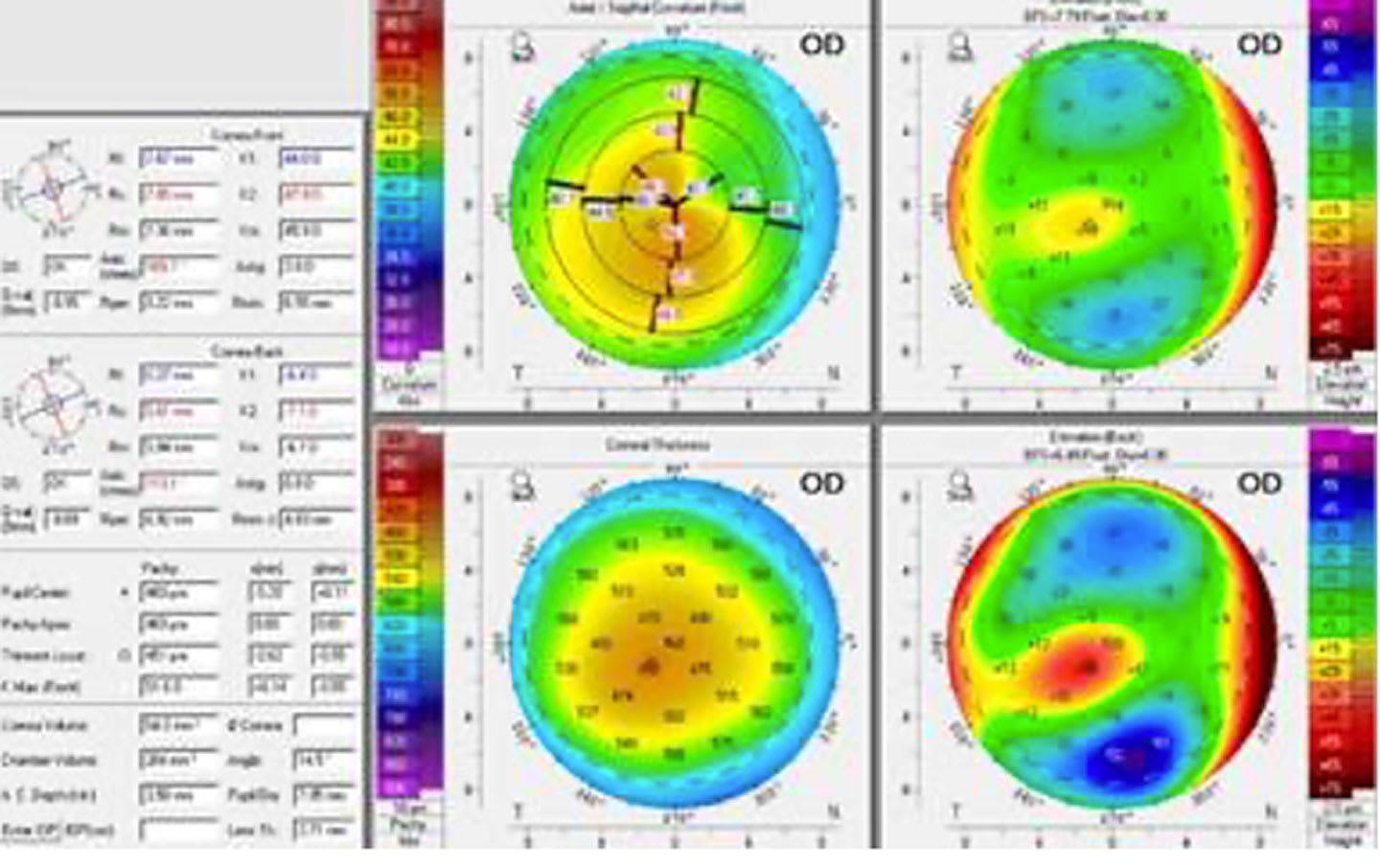
Recognizing the signs of corneal ectasia can help with prevention of vision loss, and may decrease the emotional impact and functional deficits that can follow.