Surgery confers survival benefit in De Novo metastatic soft tissue sarcoma patients with low Ki67 or low total lesion glycolysis: a combined PET/CT and clinicopathological analysis - Report - MDSpire
Advertisement
Surgery confers survival benefit in De Novo metastatic soft tissue sarcoma patients with low Ki67 or low total lesion glycolysis: a combined PET/CT and clinicopathological analysis
Clinical Report: Surgical Intervention Improves Survival in De Novo Metastatic STS
Overview
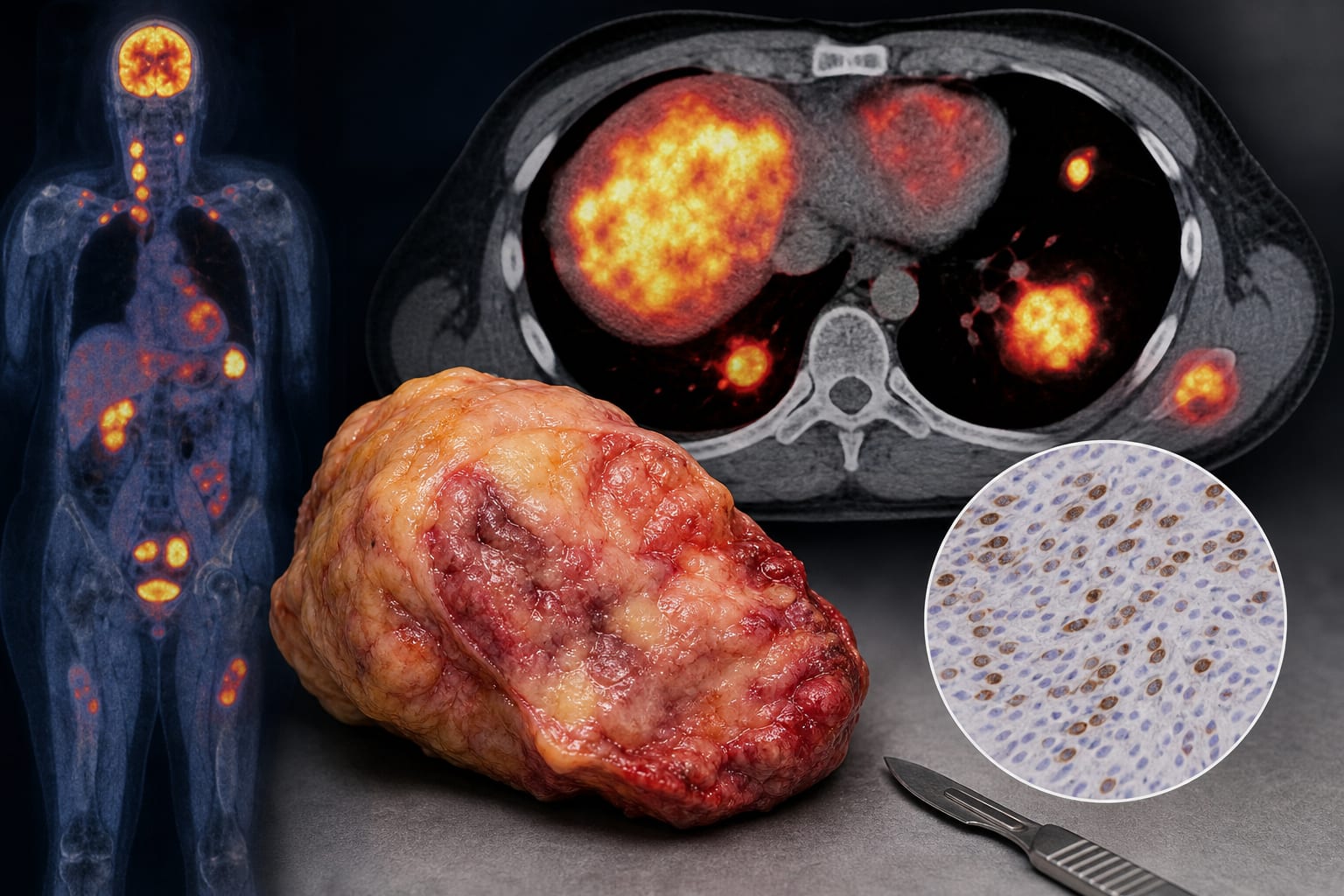
This study evaluates the prognostic value of ¹⁸F-FDG PET/CT metabolic parameters in patients with de novo metastatic soft tissue sarcoma (STS).
Background
Soft tissue sarcomas are rare but contribute significantly to cancer-related morbidity and mortality. The prognosis for patients with de novo metastatic STS remains poor, and treatment is primarily palliative. The role of surgical intervention in this context is controversial, with a lack of robust evidence to guide clinical decision-making.
Data Highlights
No numerical data or trial data provided in the source material.
Key Findings
Patients with de novo metastatic STS were analyzed for the prognostic value of ¹⁸F-FDG PET/CT metabolic parameters.
Low Ki67 and reduced total lesion glycolysis were identified as potential indicators for surgical intervention.
The study highlights the lack of validated criteria for selecting patients for primary tumor resection in metastatic STS.
Evidence for the benefit of primary tumor resection in metastatic STS is primarily derived from small, retrospective studies.
Further prospective, biomarker-driven clinical trials are needed to validate these findings.
Clinical Implications
The findings indicate that metabolic parameters from ¹⁸F-FDG PET/CT may help identify patients with de novo metastatic STS for surgical intervention.
Conclusion
Further research is necessary to establish definitive criteria for patient selection regarding surgical intervention in de novo metastatic STS.