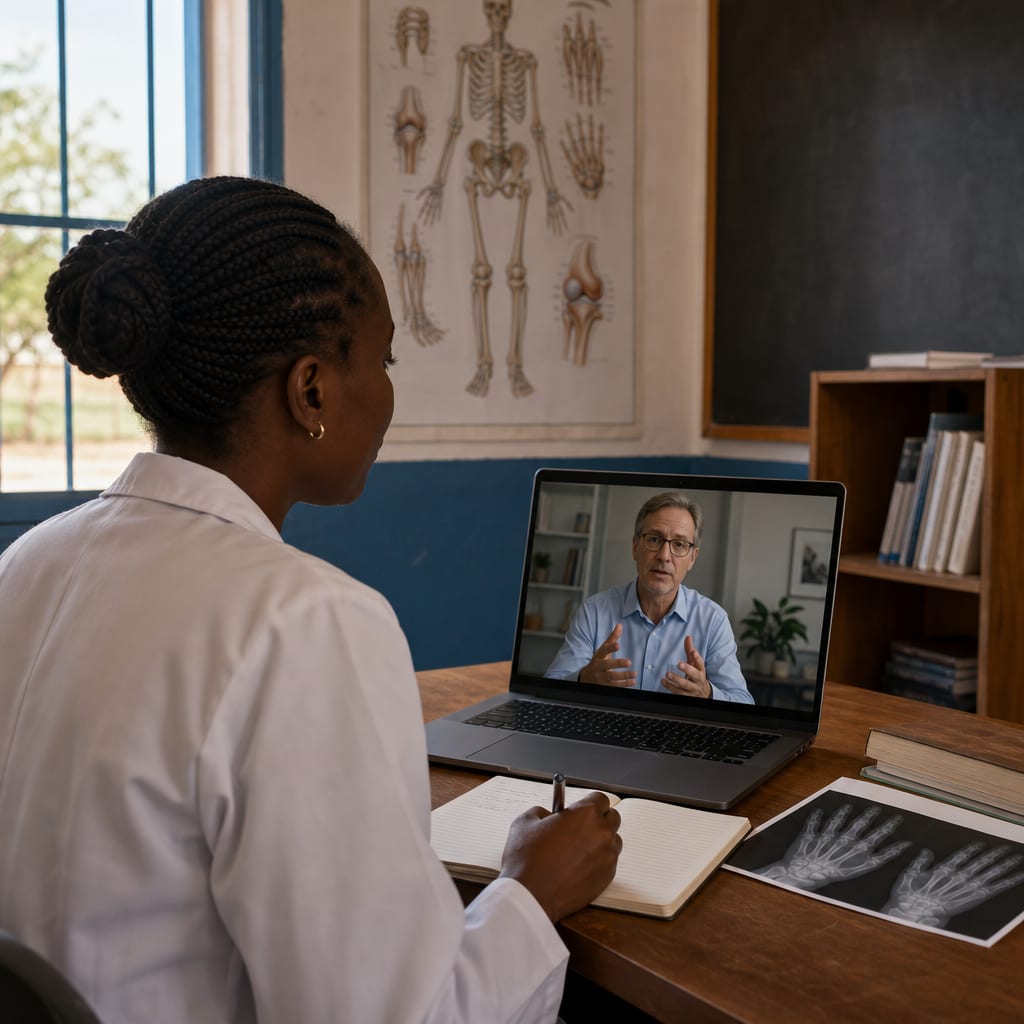
Clinical Report: Remote Mentorship in the Field of Rheumatology
Overview
This report highlights the transformative impact of remote mentorship on rheumatology training in sub-Saharan Africa, emphasizing its role in enhancing local capacity and research skills. The initiative aims to create a sustainable model for developing rheumatology expertise in the region.
Background
Rheumatological conditions, previously deemed rare in sub-Saharan Africa, are now recognized as significant health issues, necessitating improved specialist training and care. The region faces a critical shortage of rheumatologists, with only two specialists reported fifteen years ago. Addressing this gap through mentorship and capacity-building initiatives is essential for advancing rheumatology care in the context of local healthcare challenges.
Data Highlights
No numerical data provided in the source material.
Key Findings
Remote mentorship has been pivotal in expanding rheumatology specialist capacity in Kenya.
Mentorship relationships are sustained through technology, enabling ongoing support and development.
Case-based discussions via the Arthrheuma Society of Kenya platform enhance research methodology and clinical skills.
Targeted teaching programs by visiting specialists raise awareness and education among local physicians.
Extended fellowships abroad provide Kenyan trainees with hands-on experience in rheumatology departments.
Clinical Implications
Healthcare professionals in sub-Saharan Africa can leverage remote mentorship to enhance their clinical skills and research capabilities. This model fosters a self-sustaining system where local rheumatologists can train future specialists, ultimately improving patient care in the region.
Conclusion
The implementation of remote mentorship in rheumatology represents a significant advancement in addressing the specialist shortage in sub-Saharan Africa. By fostering local expertise, this initiative aims to improve the management of rheumatological conditions in the region.