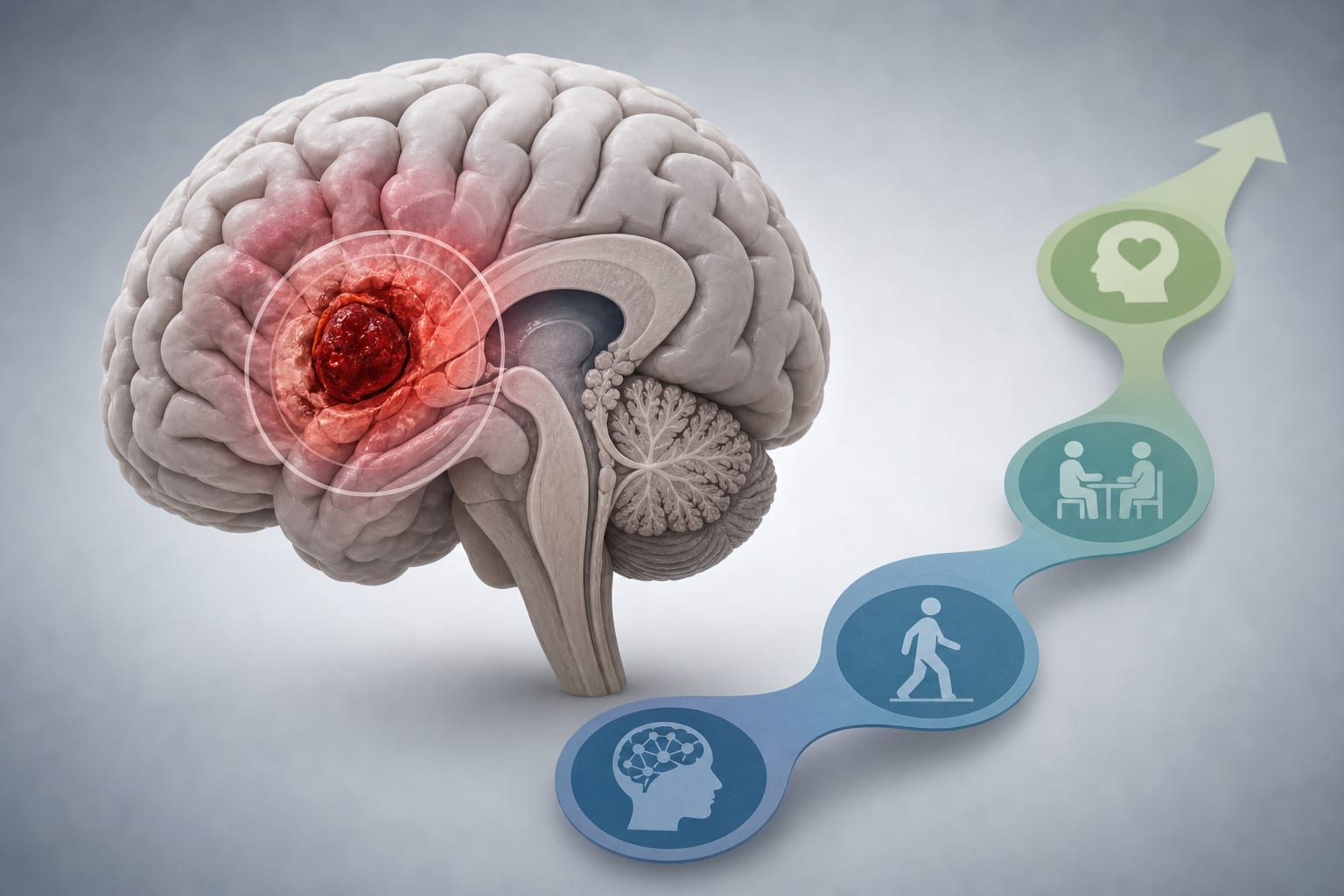
Esketamine for negative emotions and cognitive function in general anesthesia: a systematic review and meta-analysis
-
By
-
Xiaofan Yang
-
Jing Qin
-
Wenqing Xu
-
June 12, 2026
-
0 min
Clinical Report: The Impact of Esketamine on Postoperative Emotional Distress
Overview
This systematic review and meta-analysis evaluates the effects of esketamine on postoperative anxiety, depression, and cognitive function in patients undergoing general anesthesia. Findings indicate significant reductions in depressive and anxiety symptoms, while cognitive outcomes remain unclear due to high heterogeneity and low evidence certainty.
Background
Postoperative neuropsychiatric complications, including anxiety and depression, significantly affect surgical outcomes and recovery. With an aging population and increasing surgical procedures, addressing these complications is crucial. Esketamine, a novel treatment with rapid antidepressant properties, may offer a new approach to managing postoperative emotional distress.
Data Highlights
| Outcome | Standardized Mean Difference (SMD) | 95% Confidence Interval (CI) |
|---|---|---|
| Depressive Symptoms | -0.92 | [-1.39, -0.46] |
| Anxiety Symptoms | -1.23 | [-1.71, -0.75] |
| MMSE Cognitive Function | 0.22 | [-0.87, 1.30] |
| MMSE (after excluding outlier) | 0.65 | [0.39, 0.90] |
| MoCA Cognitive Function | 0.93 | [-0.99, 2.84] |
Key Findings
- Esketamine significantly reduced depressive symptoms (SMD = -0.92).
- Esketamine significantly reduced anxiety symptoms (SMD = -1.23).
- Cognitive outcomes showed high heterogeneity; MMSE results were significant after excluding an outlier.
- MoCA results remained non-significant with very low evidence certainty.
- The overall certainty of evidence for cognitive effects was rated very low.
Clinical Implications
The findings suggest that esketamine may be effective in reducing postoperative anxiety and depression, which are critical for recovery. However, the unclear cognitive benefits highlight the need for further research to establish its role in perioperative care.
Conclusion
Esketamine shows promise in managing postoperative emotional distress, but further high-quality studies are necessary to clarify its cognitive effects and optimal dosing.
Related Resources & Content
- BMC Psychiatry, 2026 -- Impact of Low-Dose Esketamine on Anxiety and Depression in Post-Surgical Breast Cancer Patients: A Double-Blind, Randomized Controlled Trial
- Critical Care, 2026 -- Continuous ketamine infusion for surgical patients in the intensive care unit: a systematic review and meta-analysis of randomized controlled trials with GRADE assessment
- Brain, 2026 -- Investigating the Cognitive Neuroscience Behind Ketamine's Effects on Major Depression
- Frontiers in Medicine — Desflurane combined with ciprofol or esketamine improves postoperative symptoms without compromising early neurocognitive recovery after intracranial aneurysm endovascular coiling
- Delirium Clinical Practice Guidelines - Delirium Central
- Effect of esketamine on postoperative depression and anxiety in patients undergoing cardiac valve surgery: A randomised, placebo-controlled, double-blinded clinical trial
- Interventions to prevent postoperative neurocognitive complications: an umbrella review of meta‐analyses of randomised controlled trials - PMC
- Efficacy and safety of esketamine for perioperative depression in patients undergoing elective surgery: A meta-analysis of randomized controlled trials - PubMed
- The impact of perioperative ketamine or esketamine on the subjective quality of recovery after surgery: a meta-analysis of randomised controlled trials - PubMed
- Frontiers | The effect of esketamine on postoperative delirium in patients undergoing general anesthesia: a systematic review and meta-analysis
- Effect of perioperative esketamine administration on the incidence of postoperative delirium: a systematic review and meta-analysis | BMC Anesthesiology | Springer Nature Link
- Efficacy and safety of esketamine in preventing perioperative neurocognitive disorders: a meta-analysis of randomized controlled studies - PMC
- Effect of small dose esketamine on perioperative neurocognitive disorder and postoperative depressive symptoms in elderly patients undergoing major elective noncardiac surgery for malignant tumors: A randomized clinical trial - PubMed
- Effects of esketamine on postoperative negative emotions and early cognitive disorders in patients undergoing non-cardiac thoracic surgery: A randomized controlled trial - PubMed
- DailyMed - SPRAVATO- esketamine hydrochloride solution
- SPRAVATO® (esketamine) approved in the U.S. as the first and only monotherapy for adults with treatment-resistant depression
This content is an AI-generated, fully rewritten summary based on a published scholarly article. It does not reproduce the original text and is not a substitute for the original publication. Readers are encouraged to consult the source for full context, data, and methodology.