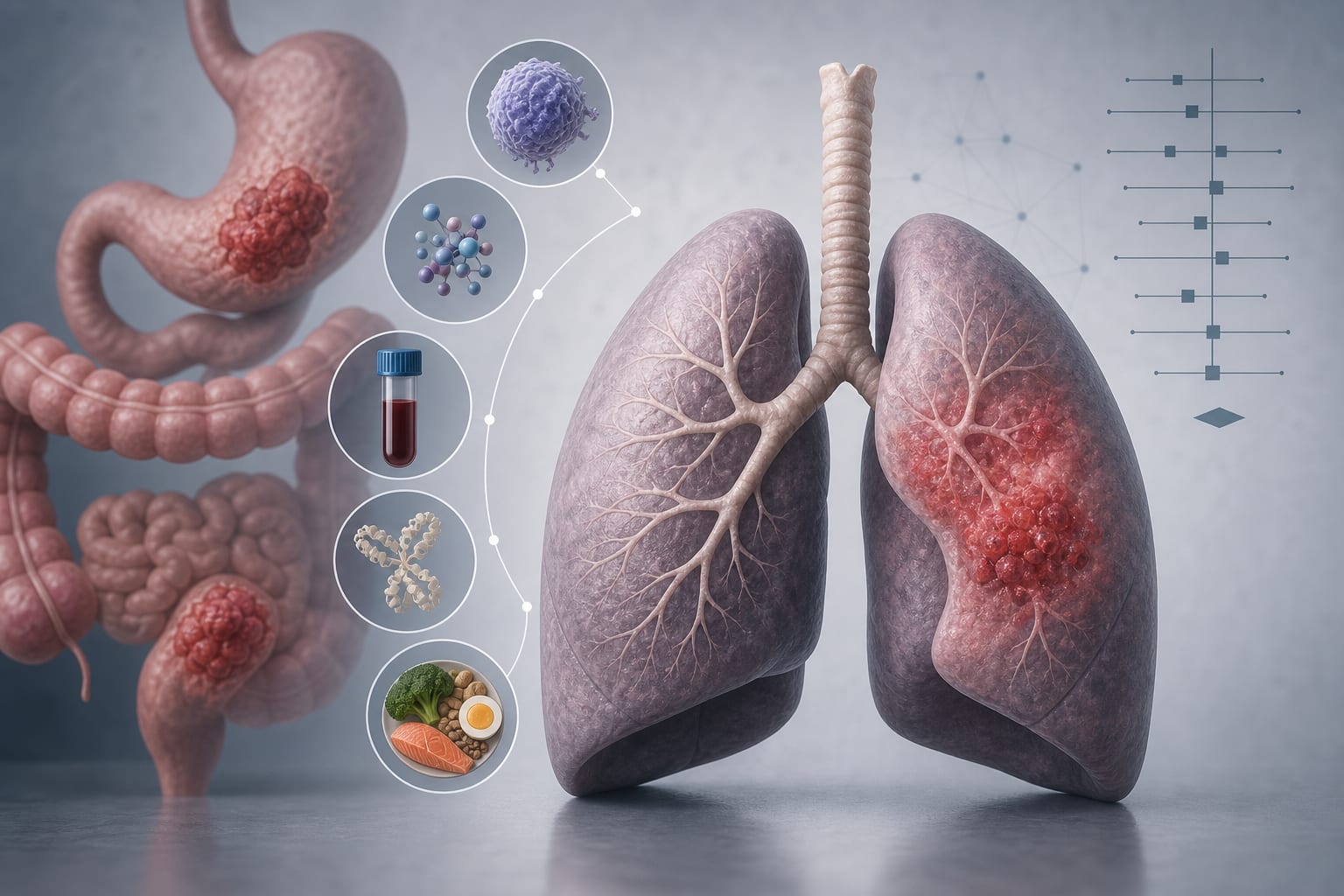
Improved detection of local tumor progression after ablation or resection of colorectal liver metastases using [18F]FDG-PET/contrast-enhanced CT versus contrast-enhanced CT alone: results from a Dutch prospective cohort - Report - MDSpire

Improved detection of local tumor progression after ablation or resection of colorectal liver metastases using [18F]FDG-PET/contrast-enhanced CT versus contrast-enhanced CT alone: results from a Dutch prospective cohort

  • By

  • O. D. Bijlstra

  • S. van Mossel

  • B. Boekestijn

  • M. C. Burgmans

  • E. L. van Persijn van Meerten

  • D. D. D. Rietbergen

  • S. Shahbazi Feshtali

  • R. J. Swijnenburg

  • F. H. P. van Velden

  • H. Koffijberg

  • L. F. de Geus-Oei

  • J. S. D. Mieog

  • July 11, 2026

  • 0 min

Share

Clinical Report: Enhanced Identification of Local Tumor Recurrence Following Ablation

Overview

This study evaluates the diagnostic value of adding [18F]FDG-PET/CT to standard follow-up imaging in patients with colorectal liver metastases (CRLM) after thermal ablation or hepatic resection.

Background

Colorectal cancer is the most common gastrointestinal malignancy, with liver metastases affecting a significant proportion of patients. Accurate detection of local tumor progression after treatment is critical. Current imaging modalities may yield false negatives, necessitating the exploration of enhanced imaging techniques like [18F]FDG-PET/CT.

Data Highlights

No numerical data or trial data provided in the source material.

Key Findings

  • Colorectal cancer is prevalent, with liver being the most common site of metastases.
  • Current imaging practices may lead to false negative results in detecting local tumor progression.
  • [18F]FDG-PET/CT combines metabolic and morphological imaging.
  • Current guidelines do not clearly define the role of [18F]FDG-PET/CT in postoperative follow-up.

Clinical Implications

The addition of [18F]FDG-PET/CT to follow-up protocols may enhance detection of local tumor recurrence in patients treated for CRLM.

Conclusion

[18F]FDG-PET/CT may provide advantages over conventional imaging in the follow-up of patients with colorectal liver metastases.

Related Resources & Content

  1. Various Authors, Journal of Gastroenterology, 2013 -- Utilization of 18F-fluorodeoxyglucose PET Imaging for Post-Treatment Evaluation of Malignant Liver Tumors
  2. ESMO, ESMO Clinical Practice Guideline for diagnosis, treatment and follow-up, 2026
  3. AHPBA, Assessment and treatment considerations for patients with colorectal liver metastases, 2025
  4. EANM, EANM procedure guidelines for tumour imaging, 2025
  5. Does Tumor Assessment 24 Hours After Radiofrequency Ablation Indicate Local Progression of Liver Metastases?
  6. Assessing Treatment Outcomes and Prognosis in Rectal Cancer: Findings from 18 FDG-PET/MRI Evaluations Following Neoadjuvant Therapy
  7. Techniques in Coloproctology — Analysis of T2-weighted imaging, apparent diffusion coefficient, and 18F-FDG PET histograms in rectal cancer following preoperative chemoradiotherapy
  8. Cost-effectiveness of [18F]FDG PET/CT in follow-up after thermal ablation
  9. Follow-up na lokale behandeling afstandsmetastasen - Richtlijn
  10. Metastatic colorectal cancer: ESMO Clinical Practice Guideline for diagnosis, treatment and follow-up☆
  11. Assessment and treatment considerations for patients with colorectal liver metastases: AHPBA consensus guideline and update for surgeons - ScienceDirect
  12. [18F]FDG PET/CT: EANM procedure guidelines for tumour imaging: version 3.0 - ScienceDirect
  13. Diagnostic value of Gd-EOB-DTPA-enhanced MRI versus contrast-enhanced CT for detecting liver metastasis in colorectal cancer: a systematic review and meta-analysis | BMC Gastroenterology | Springer Nature Link
  14. CEUS compared with CECT, MRI, and FDG-PET/CT for diagnosing CRC liver metastases: a diagnostic test accuracy systematic review and meta-analysis: Expert Review of Gastroenterology & Hepatology: Vol 18, No 9
  15. Thermal ablation versus surgical resection of small-size colorectal liver metastases (COLLISION): an international, randomised, controlled, phase 3 non-inferiority trial - ScienceDirect

Original Source(s)

Related Content