Effects of Tai Chi on pain, functional dysfunction, and sleep in patients with chronic nonspecific low back pain: a systematic review and meta-analysis - Report - MDSpire
Advertisement
Effects of Tai Chi on pain, functional dysfunction, and sleep in patients with chronic nonspecific low back pain: a systematic review and meta-analysis
Clinical Report: Impact of Tai Chi on Pain, Functional Impairment, and Sleep Quality
Overview
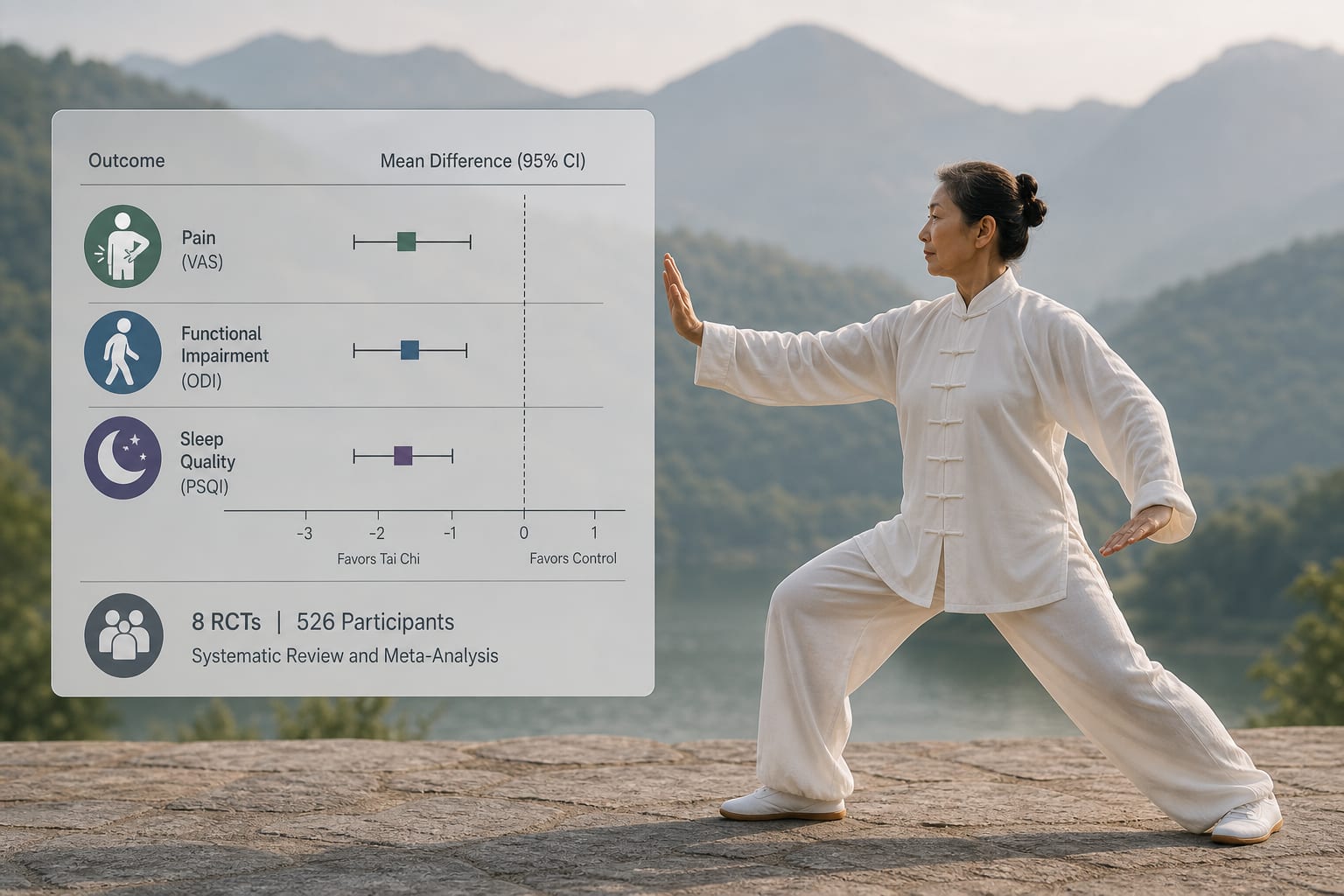
This systematic review and meta-analysis evaluated the effects of Tai Chi on pain, functional disability, and sleep quality in patients with chronic nonspecific low back pain (CNLBP). Results indicated significant reductions in pain and improvements in functional disability, while the impact on sleep quality was not statistically significant.
Background
Chronic nonspecific low back pain (CNLBP) is a prevalent condition that significantly affects mobility and quality of life. Current management strategies often involve pharmacological and physical therapies, which may have limitations and risks.
Data Highlights
Outcome Measure
Mean Difference (MD)
95% Confidence Interval (CI)
Pain (VAS)
-1.40
-2.41 to -0.40
Functional Disability (RMDQ)
-1.67
-2.75 to -0.59
Overall Functional Disability (SMD)
-0.51
-0.90 to -0.12
Sleep Quality (PSQI)
-0.18
-1.82 to 1.45
Key Findings
Tai Chi significantly reduced pain in patients with CNLBP, as indicated by VAS scores.
Improvements in functional disability were noted, with significant changes in RMDQ scores.
Overall functional disability showed a moderate effect size with Tai Chi intervention.
No significant effect was observed on ODI scores.
Improvements in sleep quality (PSQI scores) were not statistically significant.
Clinical Implications
Clinicians should be aware of the insufficient evidence regarding Tai Chi's impact on sleep quality.
Conclusion
Further high-quality research is needed to explore the effects of Tai Chi on sleep quality.