Clinical Report: Targeting RAS Pathways in Non-Small Cell Lung Cancer
Overview
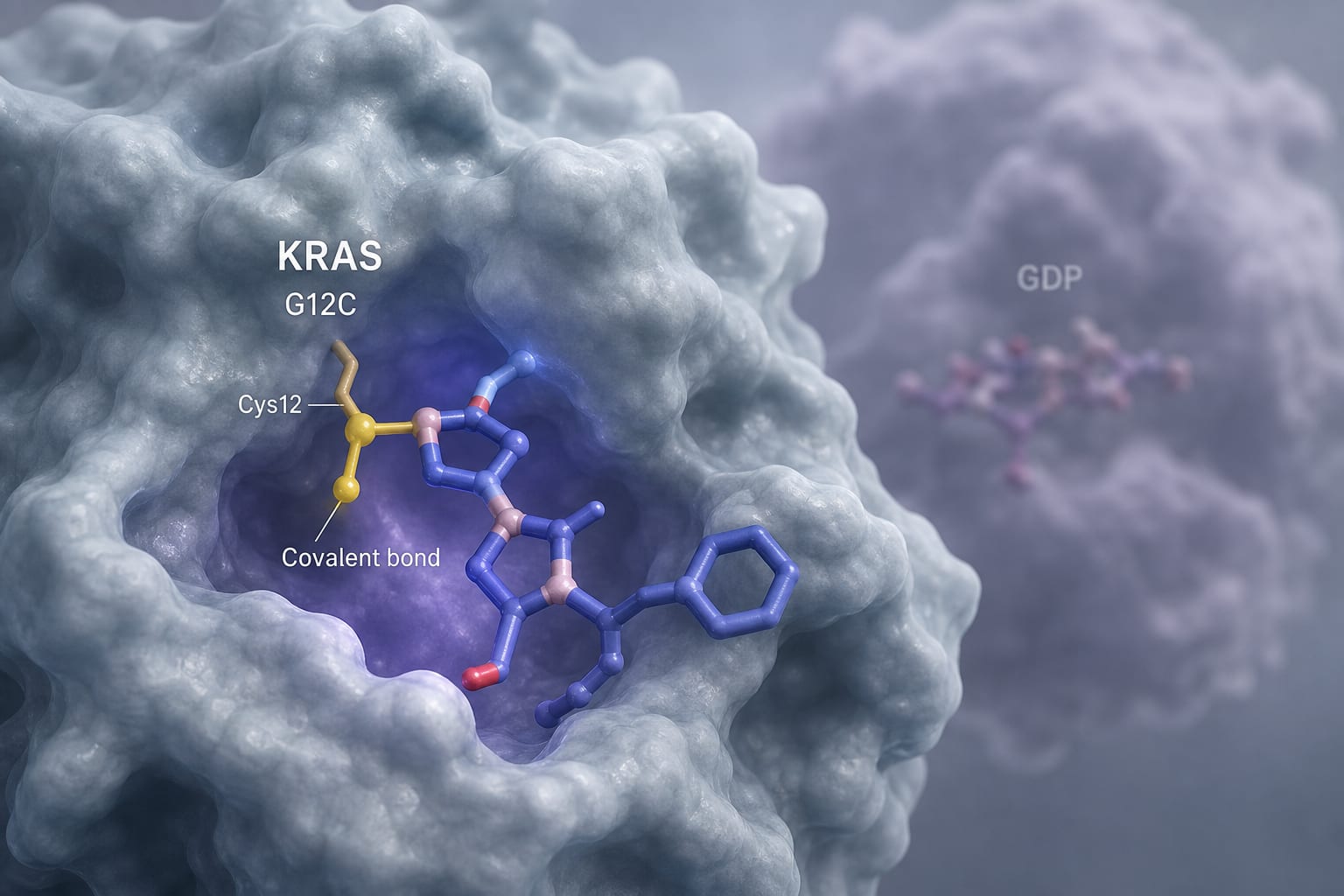
The review discusses the emergence of direct KRAS-targeted therapies for non-small cell lung cancer (NSCLC), particularly focusing on KRAS G12C inhibitors. It highlights the rapid development of various KRAS-targeting molecules.
Background
Oncogenic KRAS mutations are prevalent in NSCLC, occurring in up to 30% of patients, making them a critical target for therapeutic intervention. Recent advancements have led to the development of covalent KRAS G12C inhibitors.
Data Highlights
No specific numerical data or trial results were provided in the source material.
Key Findings
KRAS mutations are the most common driver event in NSCLC.
Direct targeting of KRAS has seen advancements, particularly with G12C inhibitors.
Multiple chemotypes for KRAS targeting are in clinical testing, extending beyond G12C alleles.
New classifications for KRAS-targeting molecules include pan-KRAS and pan-RAS inhibitors.
Combination therapies with conventional and novel treatments are being explored for KRAS-targeted strategies.
Clinical Implications
Clinicians should stay informed about ongoing trials and emerging therapies.
Conclusion
The review discusses the evolution of KRAS-targeted therapies in NSCLC.