The impact of prevalent primary cancers in melanoma patients on survival - Report - MDSpire
Coming Soon: Introducing MDSpire News. Learn more
Conexiant’s news site is now MDSpire News. Learn more

Influence of Existing Primary Cancers on Survival Outcomes in Melanoma Patients

  • By

  • Alessandra Buja

  • Stefano Guzzinati

  • Chiara Trevisiol

  • Claudio Palmeri

  • Marcello Di Pumpo

  • Paolo Del Fiore

  • Carlo Riccardo Rossi

  • Carmen Stocco

  • Pierfranco Conte

  • Manuel Zorzi

  • Simone Mocellin

  • September 14, 2026

Share

Clinical Report: Influence of Existing Primary Cancers on Survival Outcomes in Melanoma Patients

Overview

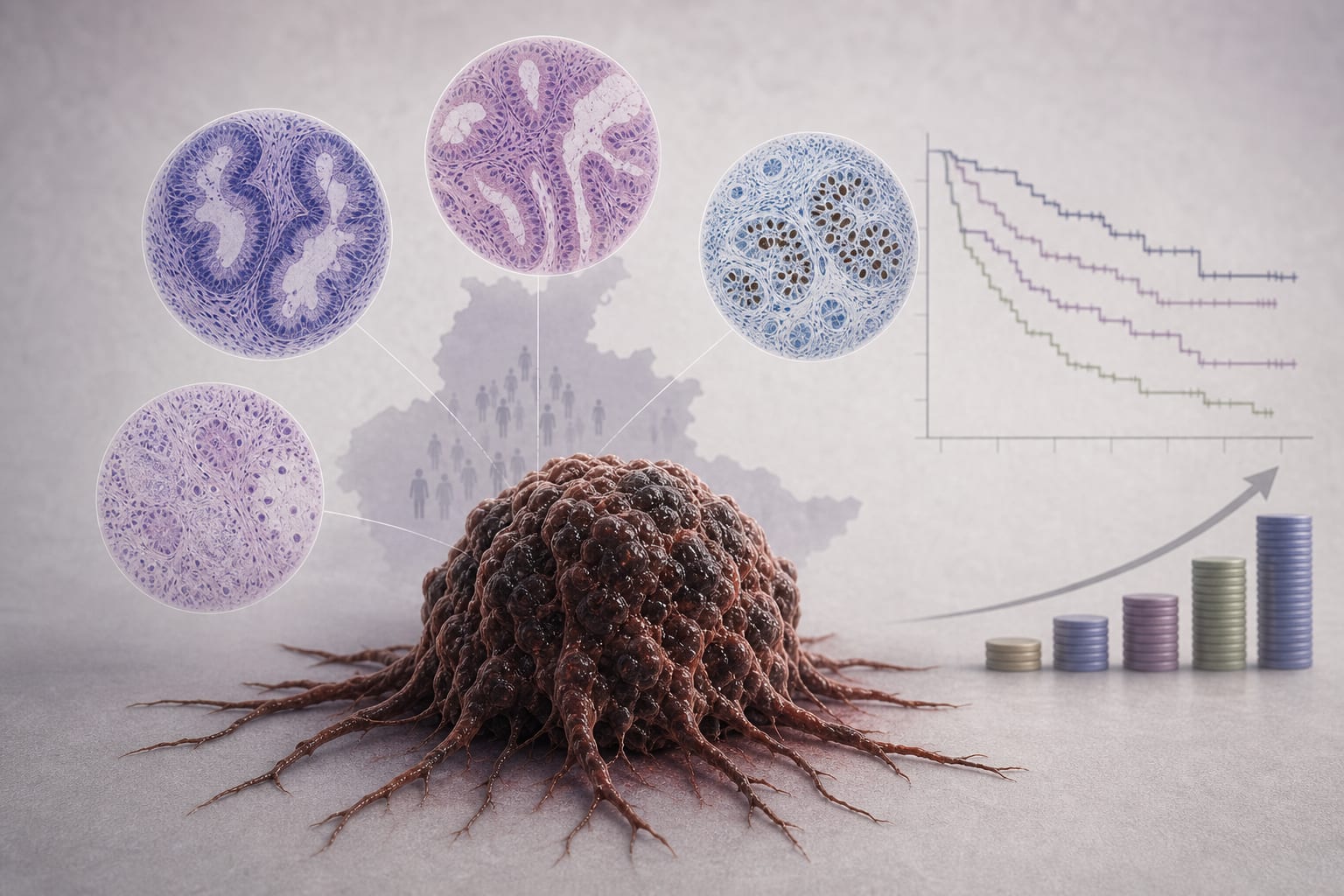
This study investigates the impact of prevalent primary cancers on survival outcomes and healthcare costs in melanoma patients.

Background

Cutaneous malignant melanoma (CM) is a significant public health issue, with rising incidence and mortality rates globally. Understanding the influence of preexisting malignancies on melanoma outcomes is crucial for optimizing patient management and resource allocation.

Data Highlights

CharacteristicValue
Patients with prevalent tumors134 (4.5%)
Most common additional cancer sitesProstate (30.2%), Breast (10.8%), Colon (7.9%), Kidney (7.2%)
All-cause mortality risk (univariate)HR 2.23 (95% CI 1.59–3.15; p<0.001)
All-cause mortality risk (adjusted)aHR 1.72 (95% CI 1.19–2.47; p=0.004)
Three-year average overall costs€30,698.34 (with prevalent tumors) vs €17,471.23 (without prevalent tumors)

Key Findings

  • 4.5% of melanoma patients had prevalent tumors.
  • Prevalent tumors were associated with older age, male sex, and higher comorbidity burden.
  • Prevalent tumors increased all-cause mortality risk (HR 2.23, p<0.001).
  • After adjusting for prognostic factors, the association with all-cause mortality remained significant (aHR 1.72, p=0.004).
  • Healthcare costs were significantly higher for patients with prevalent tumors.

Clinical Implications

The presence of prevalent primary cancers in melanoma patients is associated with increased mortality risk and higher healthcare costs.

Conclusion

Preexisting malignancies at the time of melanoma diagnosis significantly impact patient survival and healthcare costs.

Related Resources & Content

  1. American Journal of Epidemiology, 2023 -- Evaluating the Absolute Risk of a Second Primary Cancer Following Initial Melanoma Diagnosis: Insights from a Population-Based Study in Australia
  2. The ASCO Post, 2012 -- Cancer Survivors at Greater Risk for Cutaneous Melanoma
  3. MDSpire News, 2023 -- Second Primary Cancer Risk Shifts Over Time
  4. Long-Term Outcomes in Patients with Lymph Node-Positive Cutaneous Melanoma
  5. Cutaneous melanoma: ESMO Clinical Practice Guideline for diagnosis, treatment and follow-up
  6. Neoadjuvant Nivolumab and Ipilimumab in Resectable Stage III Melanoma
  7. Cause-specific Death Classification - SEER Recodes

Original Source(s)

Related Content