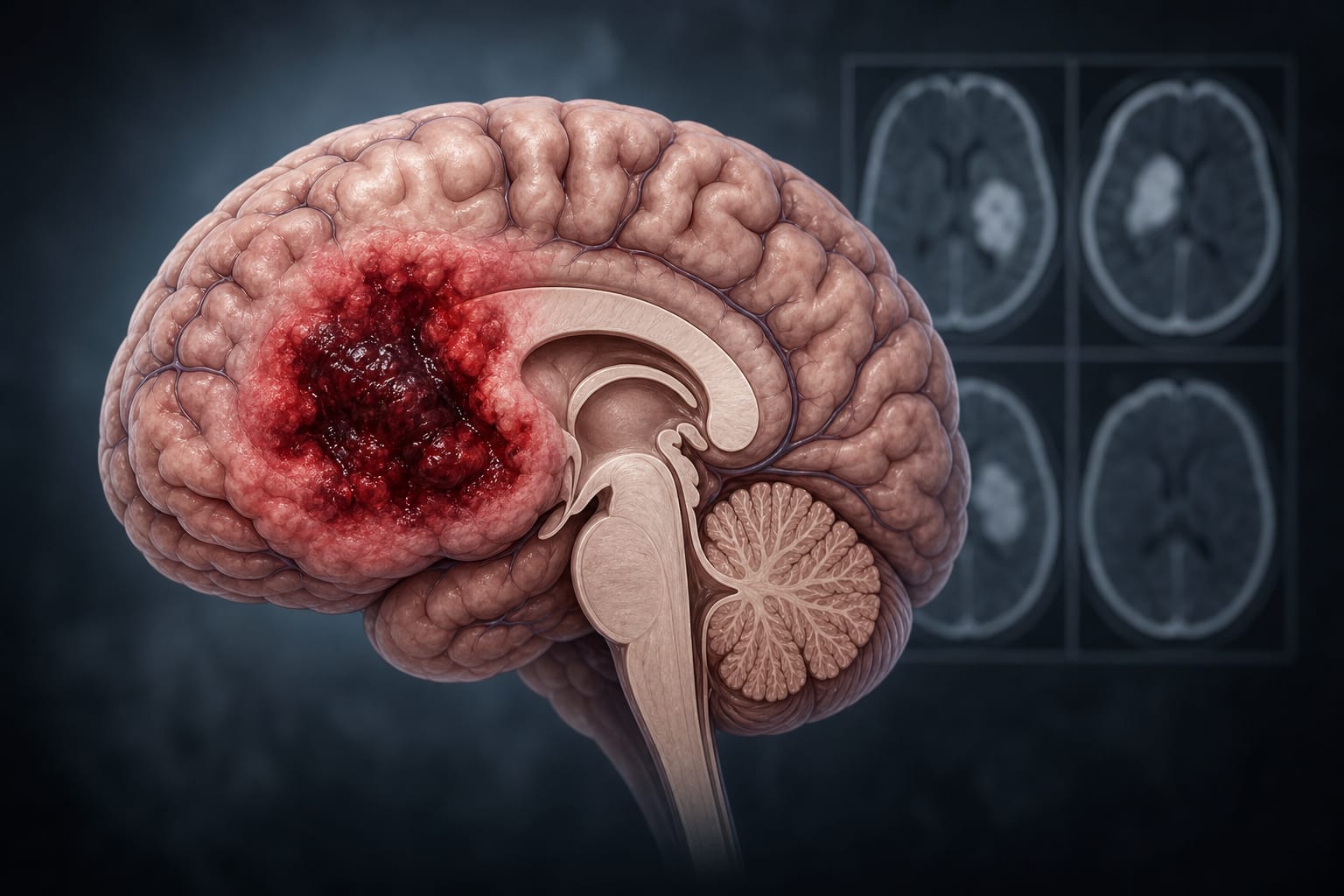
Impact of P2Y12 Inhibitors on Mortality Among Patients Admitted for Intracerebral Hemorrhage
Overview
This study investigates the clinical characteristics and outcomes of patients with intracerebral hemorrhage (ICH) who were receiving P2Y12 inhibitors, comparing stroke severity and in-hospital mortality across different antiplatelet regimens based on data from the AHA/ASA Get With The Guidelines–Stroke registry.
Background
P2Y12 inhibitors are widely used in managing various cardiovascular diseases, but their association with intracerebral hemorrhage (ICH) raises significant clinical concerns. Understanding the outcomes of patients experiencing ICH while on these medications is crucial.
Data Highlights
No numerical data provided in the source material.
Key Findings
P2Y12 inhibitors are associated with increased stroke severity in patients with ICH.
In-hospital mortality rates vary based on the type of antiplatelet therapy received prior to ICH.
The study utilized data from the AHA/ASA Get With The Guidelines–Stroke registry.
Patients on dual antiplatelet therapy (DAPT) were compared to those on monotherapy and no therapy.
Prior antiplatelet therapy was documented within 7 days before hospital admission.
Clinical Implications
The study highlights the need for careful evaluation of P2Y12 inhibitors in patients at risk for ICH, considering the potential for increased stroke severity and mortality.
Conclusion
The findings emphasize the importance of understanding the implications of P2Y12 inhibitor therapy in patients with ICH.
by Chen Jin, Ying Song, Brian Mac Grory, Jie-Lena Sun, Brooke Alhanti, Gregg C. Fonarow, Lee H. Schwamm, Kevin N. Sheth, Eric E. Smith, Steven R. Messé, Jeffrey L. Saver, Deepak L. Bhatt, Ying Xian
New findings from CREST-2 are providing important evidence on the role of carotid artery stenting (CAS) in patients with severe asymptomatic carotid stenosis — while underscoring the importance of operator experience, patient selection and procedural technique in achieving favorable outcomes.