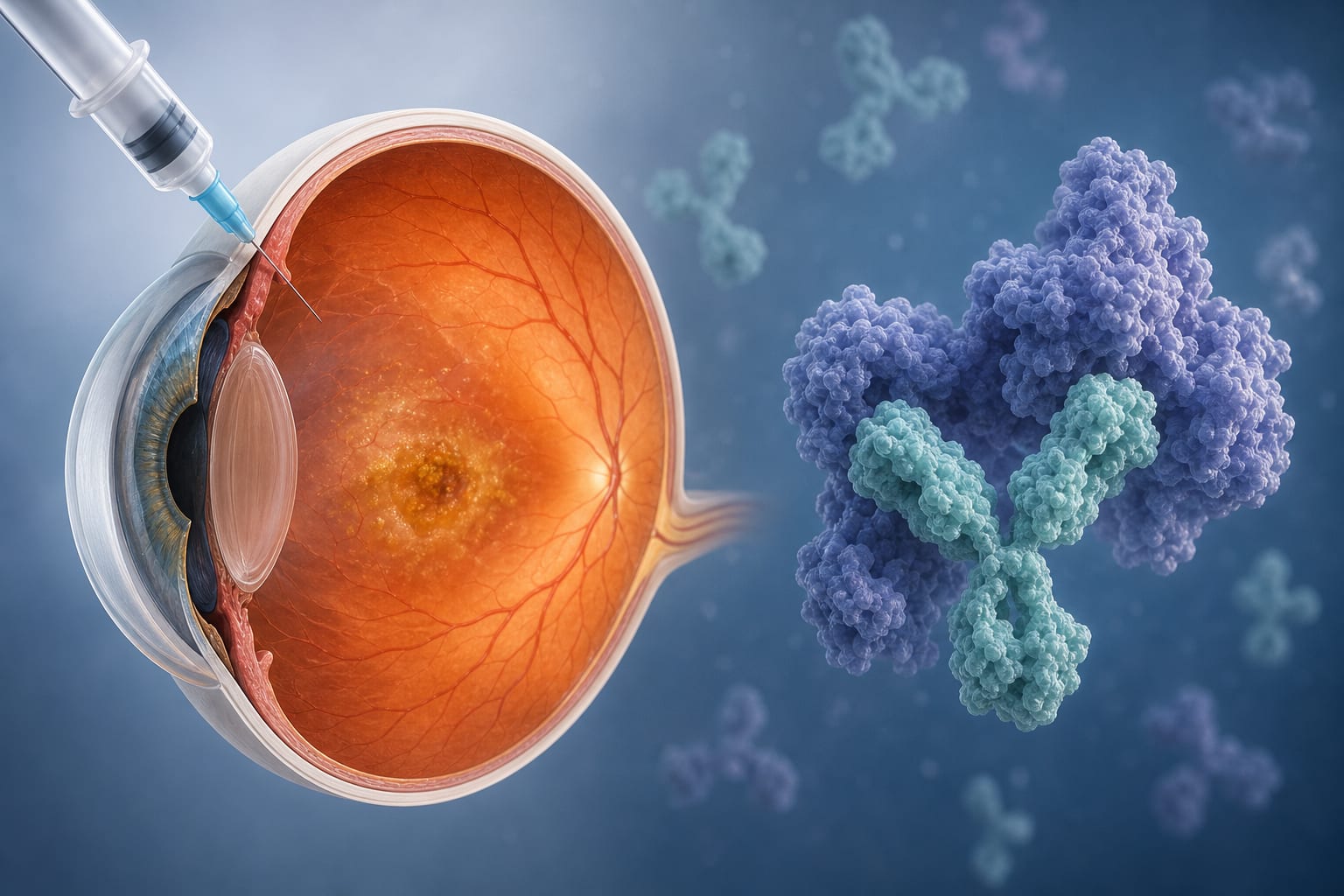
Clinical Report: Inhibition of Interleukin 6 Using Vamikibart for Treating UME
Overview
The phase 1 DOVETAIL study evaluated the safety and tolerability of Vamikibart, an IL-6 inhibitor, in patients with uveitic macular edema (UME). Results indicated that Vamikibart may provide a promising alternative to traditional therapies, with no significant adverse effects reported. The study involved X participants (insert actual number).
Background
Uveitic macular edema (UME) is a significant cause of vision loss in noninfectious uveitis, often resistant to standard treatments. Current therapies, including corticosteroids and immunomodulators, have limitations such as systemic side effects and inadequate control of edema. Statistics show that X% of patients experience vision loss due to UME (insert actual statistics). The exploration of targeted therapies like IL-6 inhibitors is crucial for improving patient outcomes.
Data Highlights
Parameter
Results
Administration Frequency
Every 4 weeks
Dosage Groups
0.25 mg, 1 mg, 2.5 mg
Study Duration
July 2019 - November 2023 (referring to part 4 of the DOVETAIL study)
Key Findings
Vamikibart is a first-in-class intravitreal IL-6 inhibitor with a half-life of approximately 7 to 7.5 days.
No sustained intraocular pressure elevations or new cataracts were reported in the DOVETAIL trial.
Participants received Vamikibart as monotherapy for UME secondary to noninfectious uveitis, with X participants in each dose group (insert actual numbers).
Three dose groups were evaluated: 0.25 mg, 1 mg, and 2.5 mg.
The study was conducted at 8 sites across the US, adhering to ethical guidelines.
Clinical Implications
Vamikibart presents a potential new treatment option for UME, particularly for patients who do not respond adequately to existing therapies. Its favorable safety profile may reduce the risk of complications associated with traditional corticosteroid treatments. However, clinicians should consider potential limitations such as X (insert any known limitations).
Conclusion
The DOVETAIL study suggests that Vamikibart may be a safe and effective therapy for UME, warranting further investigation in larger trials to confirm its efficacy, particularly in terms of X (insert specific aspects of efficacy).
by Sumit Sharma, Phoebe Lin, Allen Hu, Eric B. Suhler, Meike Pauly-Evers, William Holmes, Zeinab Barekati, Daniela Willen, Lachlan Macgregor, Laura Steeples, Zdenka Haskova, Derrick Feenstra, David Silverman, Benedicte Passemard, Sascha Fauser, Marina Mesquida