Digital self-management programme for pain, fatigue and faecal incontinence in inflammatory bowel disease: cost-effectiveness analysis of the IBD-BOOST randomised controlled trial - Report - MDSpire
Conexiant’s news site is now MDSpire News. Learn more
Advertisement
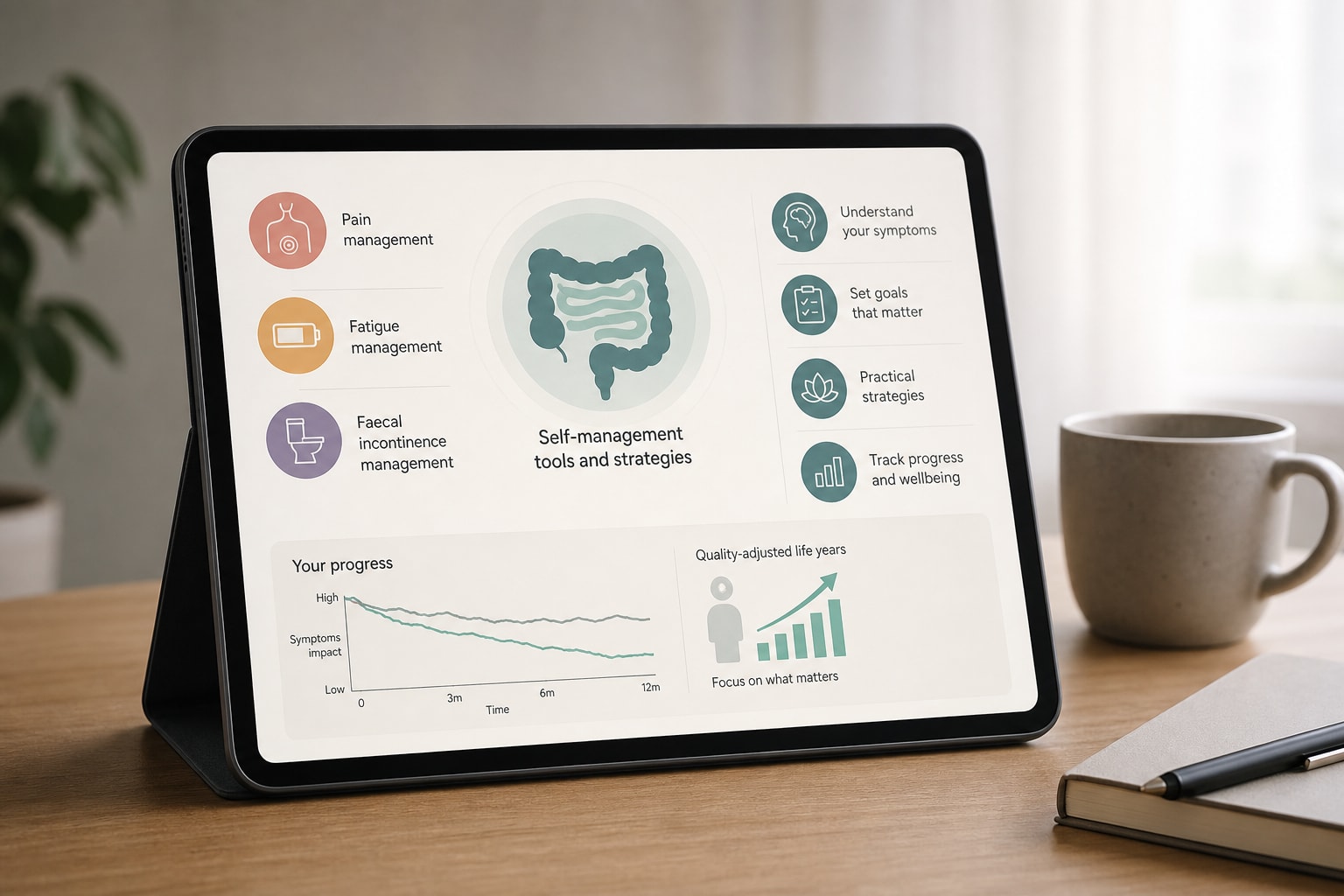
Cost-Effectiveness Evaluation of the IBD-BOOST Digital Self-Management Intervention for Pain, Fatigue, and Faecal Incontinence in Patients with Inflammatory Bowel Disease: Results from a Randomised Controlled Trial
Cost-Effectiveness Evaluation of the IBD-BOOST Digital Self-Management Intervention
Overview
The IBD-BOOST intervention demonstrated a significant increase in quality-adjusted life years (QALYs) while also reducing healthcare costs over a 12-month period.
Background
Inflammatory bowel disease (IBD) affects a significant portion of the population, with many patients experiencing persistent symptoms such as pain, fatigue, and faecal incontinence despite optimal medical treatment. These symptoms can severely impact quality of life and lead to increased healthcare costs.
Data Highlights
Outcome
IBD-BOOST
Care as Usual
QALYs gained
0.016 (95% CI 0.002 to 0.030)
N/A
Healthcare cost savings
−£304.66 (−803.51 to 194.18)
N/A
Out-of-pocket cost savings
−£39.48 (−388.09 to 309.12)
N/A
Cost per QALY (health services perspective)
−£28,633 (95% CI −51,555 to 18,764)
N/A
Cost per QALY (societal perspective)
−£33,568 (−64,421 to 26,198)
N/A
Key Findings
The IBD-BOOST intervention resulted in an increase of 0.016 QALYs per participant over 12 months.
Cost savings of -£304.66 were observed for healthcare costs associated with the intervention.
Out-of-pocket costs and time off work were reduced by -£39.48 with the intervention.
The cost per QALY gained was estimated at -£28,633 from a health services perspective.
From a societal perspective, the cost per QALY gained was estimated at -£33,568.
Clinical Implications
The findings suggest that the IBD-BOOST digital self-management intervention may be a valuable addition to the management of IBD symptoms, particularly for pain, fatigue, and faecal incontinence. Clinicians may consider integrating such interventions into standard care to enhance patient outcomes while potentially reducing costs.
Conclusion
The IBD-BOOST intervention appears to be a cost-effective approach for improving the quality of life in patients with IBD experiencing persistent symptoms. Further research may be warranted to explore its long-term benefits and implementation in clinical practice.
by Chris Roukas, Laura Miller, Fionn Cléirigh Büttner, Thomas Hamborg, Vladimir Sergeevich Gordeev, Vari Wileman, Richard C G Pollok, Sonia Saxena, Rona Moss-Morris, Ailsa Hart, James O Lindsay, Christine Norton, Borislava Mihaylova
The company adds $300 million to its Puerto Rico biologics site as Pfizer reports Phase 3 myeloma data, J&J advances a dual-pathway IBD antibody, and BioNTech streamlines production