Clinical Report: Influence of Kimura-Takemoto Atrophy Staging on H. pylori Eradication
Overview
This study evaluates the impact of gastric atrophy staging on the success of H. pylori eradication. It finds that patients with open-type atrophy had an eradication rate of 42.3%, while those with closed-type atrophy had an eradication rate of 83.6%.
Background
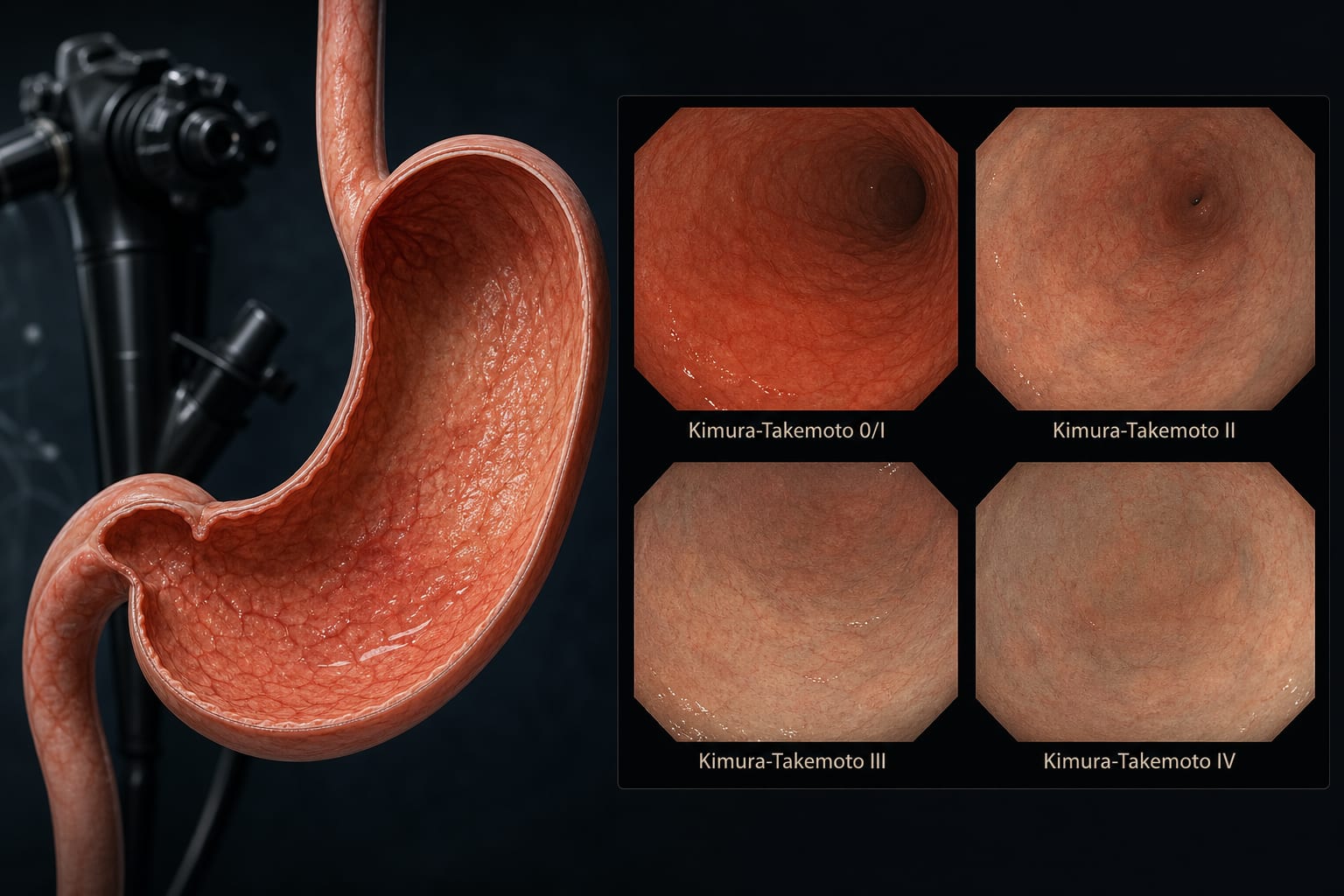
Helicobacter pylori infection is a major risk factor for various gastrointestinal diseases, including gastric cancer. The degree of gastric mucosal atrophy, assessed by the Kimura-Takemoto classification, has been linked to treatment outcomes in H. pylori eradication.
Data Highlights
Group
Eradication Rate
Open-type Atrophy
42.3% (11/26)
Closed-type Atrophy
83.6% (107/128)
Key Findings
The overall eradication rate was 76.6% (118/154) among patients.
Patients with open-type atrophy had an eradication rate of 42.3%.
Closed-type atrophy patients had an eradication rate of 83.6%.
Open-type atrophy was independently associated with eradication failure (OR = 8.287).
Multivariate analysis adjusted for confounders such as body weight and age.
Clinical Implications
Clinicians should consider the Kimura-Takemoto classification when determining treatment regimens for H. pylori eradication. For patients with open-type atrophy, alternative treatment strategies may be necessary to improve eradication success.
Conclusion
The study highlights the importance of gastric atrophy staging in predicting H. pylori eradication outcomes.