Clinical Report: Anxiety and Depression Following Stroke: Prevalence, Mechanisms, Management
Overview
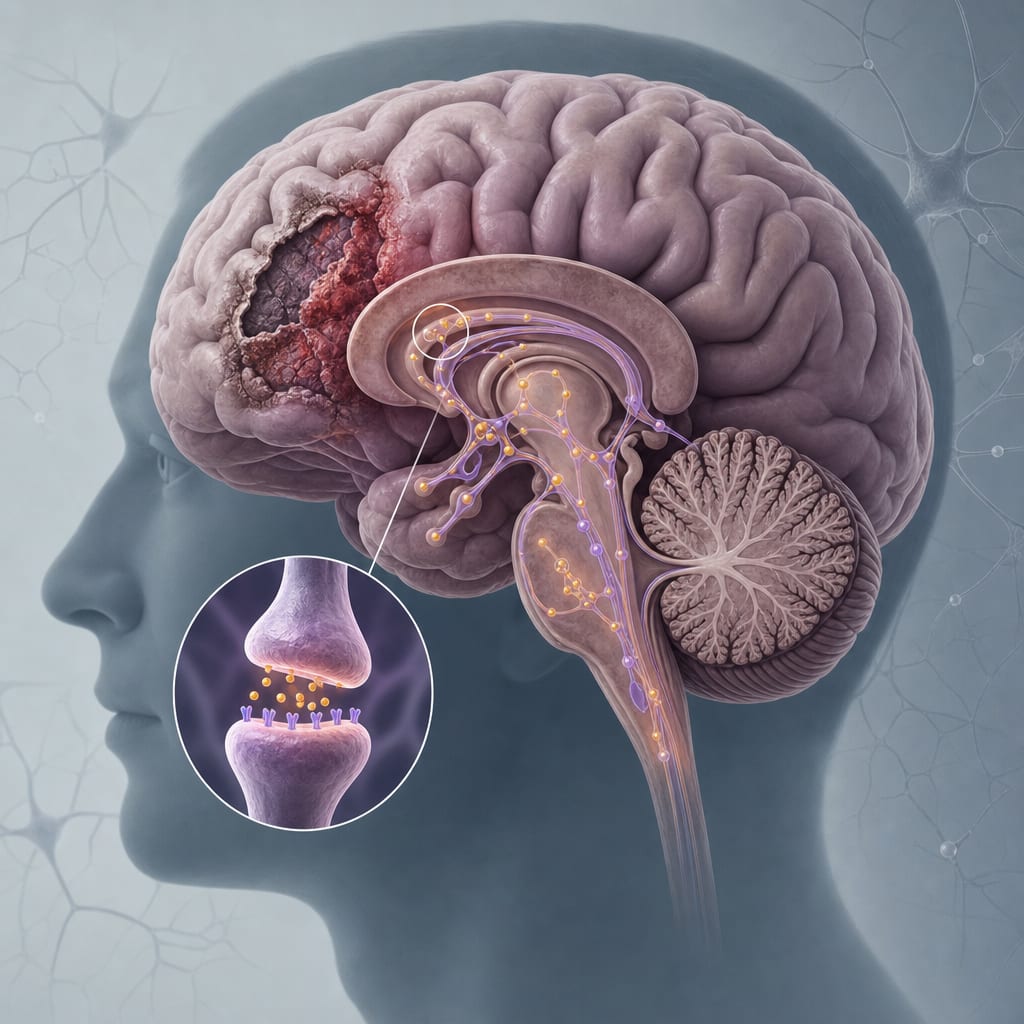
Poststroke anxiety and depression (PSAD/PSAnx) are prevalent emotional disorders that significantly affect recovery and quality of life in stroke survivors. Their complex pathogenesis involves neurobiological, cognitive, and social factors, necessitating comprehensive management strategies.
Background
Stroke is a leading cause of disability and mortality, with a substantial number of survivors experiencing poststroke mood disorders (PSMDs) such as anxiety and depression. These disorders are associated with delayed recovery, decreased daily functioning, and increased mortality risk, highlighting the need for timely identification and intervention. Understanding the multifactorial nature of PSMDs is crucial for developing effective treatment strategies.
Data Highlights
Approximately one third of stroke patients develop depressive symptoms, while anxiety prevalence ranges from 20 to 30 percent. The interplay of cognitive impairments and emotional disorders creates a vicious cycle that complicates recovery.
Key Findings
Poststroke mood disorders (PSMDs) significantly impact functional recovery and quality of life.
Neurobiological factors, including neurotransmitter imbalances and neuroinflammatory responses, contribute to PSAD/PSAnx.
Psychological and social factors, such as lifestyle changes and insufficient support, exacerbate emotional disorders.
Pharmacological treatments, particularly SSRIs and SNRIs, are effective for moderate to severe cases of PSAD/PSAnx.
Nonpharmacological interventions, including rehabilitation and psychological therapies, can enhance emotional well-being.
Future research should focus on high-quality trials and multimodal interventions to optimize recovery.
Clinical Implications
Healthcare professionals should prioritize the screening and management of poststroke mood disorders as part of routine rehabilitation. A combination of pharmacological and nonpharmacological strategies may provide the best outcomes for emotional health and functional recovery in stroke survivors.
Conclusion
Addressing poststroke anxiety and depression through comprehensive, individualized interventions is essential for improving recovery and quality of life in stroke survivors. Ongoing research is needed to refine treatment approaches and enhance patient outcomes.