Clinical Report: Impact of Surgical Technique on Opioid Prescription Patterns
Overview
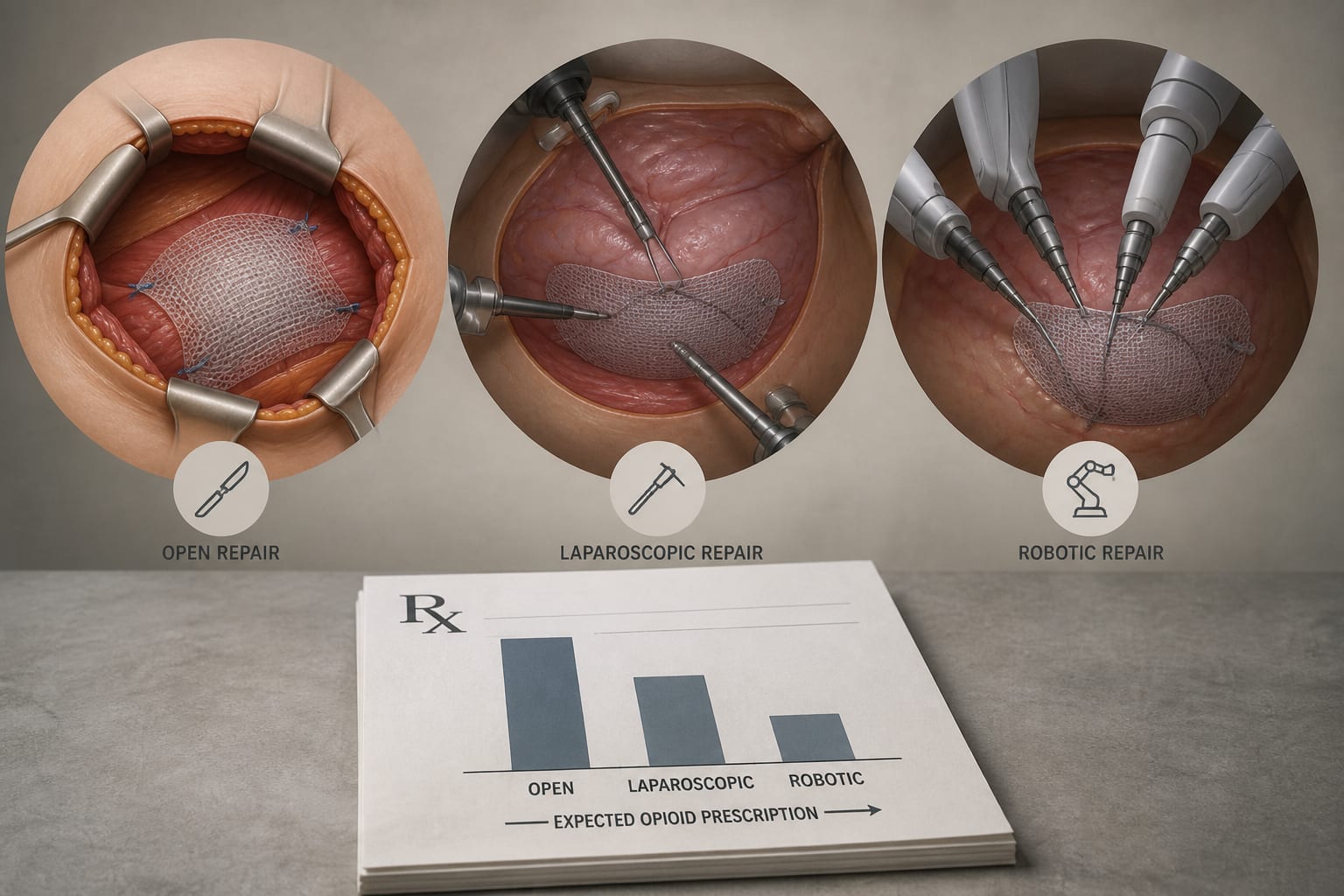
This study evaluates the association between surgical approach and opioid prescription fills following outpatient ventral hernia repair.
Background
Prolonged opioid use after surgery poses significant risks, including dependence and overdose. With over 610,000 ventral hernia repairs performed annually in the U.S., understanding opioid prescribing patterns is crucial.
Data Highlights
No numerical data provided in the source material.
Key Findings
Prolonged opioid use develops in 1.7–6.5% of adults after surgery.
Greater initial opioid prescriptions are linked to higher risks of persistent use.
Robotic-assisted ventral hernia repair (RVHR) may lead to lower opioid fills compared to laparoscopic approaches.
Multimodal analgesia strategies can reduce opioid use after ventral hernia repairs.
Prescribed opioid amounts often exceed actual consumption.
Clinical Implications
Clinicians should consider surgical approach when prescribing opioids post-ventral hernia repair, as techniques like RVHR may reduce the need for opioids. Implementing multimodal analgesia can further minimize opioid exposure and its associated risks.
Conclusion
The study underscores the importance of evaluating surgical techniques in relation to opioid prescribing patterns to enhance postoperative care and reduce the risk of long-term opioid use.