Prevalence and risk factors of hyperuricemia and gout in patients with type 2 diabetes mellitus: a systematic review and meta-analysis - Report - MDSpire
Conexiant’s news site is now MDSpire News. Learn more
Advertisement
Global Prevalence and Associated Risk Factors of Hyperuricemia and Gout in Individuals with Type 2 Diabetes Mellitus: A Systematic Review and Meta-Analysis
Clinical Report: Global Prevalence and Associated Risk Factors of Hyperuricemia and Gout
Overview
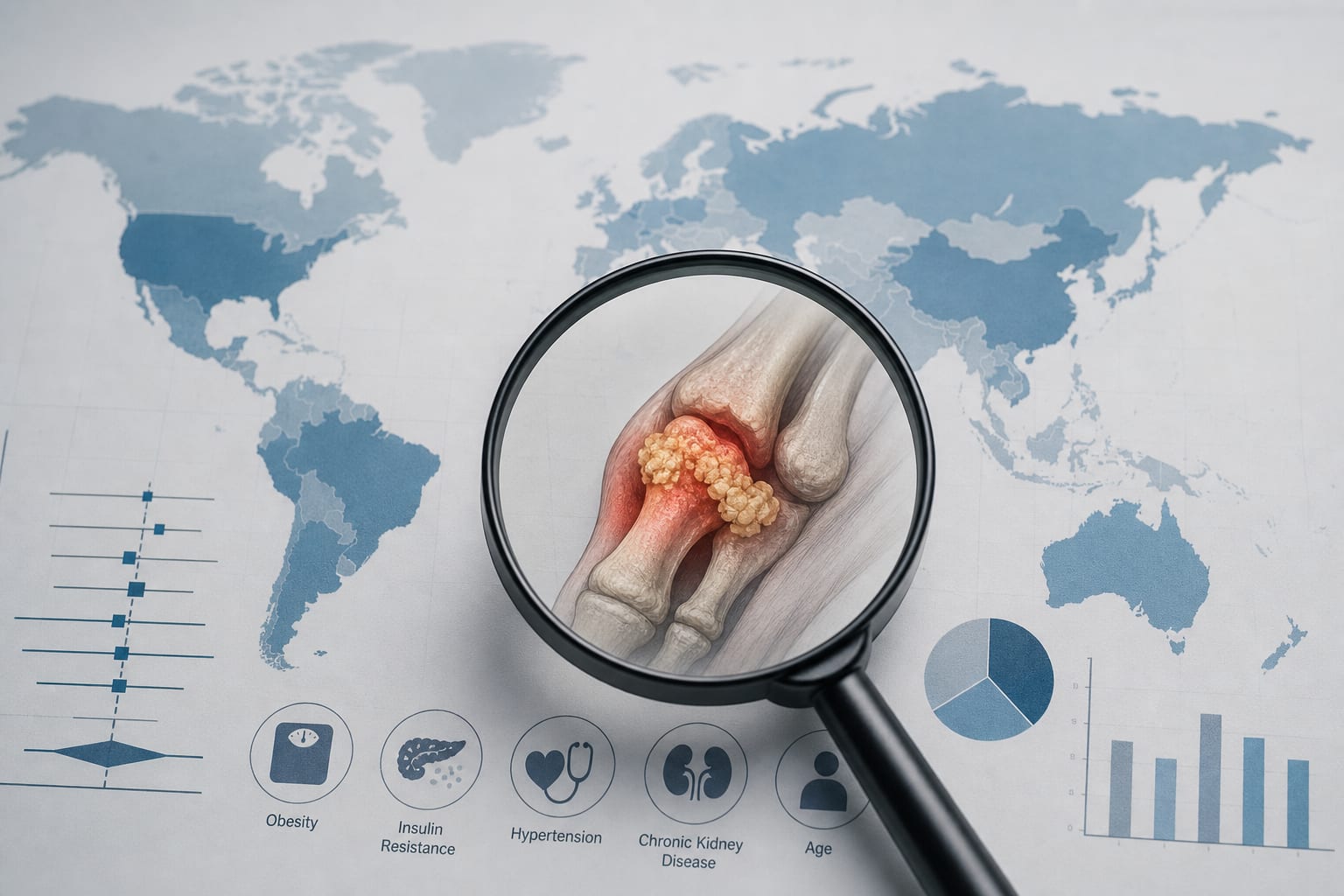
This systematic review and meta-analysis estimates the global prevalence of hyperuricemia (HUA) and gout in patients with type 2 diabetes mellitus (T2DM), finding a pooled prevalence of 22.0% for HUA and 6.0% for gout. Key risk factors identified include impaired renal function, obesity, dyslipidemia, hypertension, metabolic syndrome, and alcohol consumption.
Background
Type 2 diabetes mellitus (T2DM) is a prevalent metabolic disease that significantly impacts global health. Hyperuricemia and gout are common comorbidities in T2DM patients. Understanding the prevalence and risk factors for these conditions is crucial.
Data Highlights
Condition
Pooled Prevalence
95% Confidence Interval
Hyperuricemia
22.0%
20.1-24.0%
Gout
6.0%
4.4-7.5%
Key Findings
The pooled prevalence of hyperuricemia in T2DM patients is 22.0%.
The pooled prevalence of gout in T2DM patients is 6.0%.
Geographic region significantly affects the prevalence of hyperuricemia, with the highest rates in Africa and North America.
Risk factors for hyperuricemia include impaired renal function, obesity, dyslipidemia, hypertension, metabolic syndrome, and alcohol consumption.
Male sex is a significant risk factor for gout.
Elevated HbA1c is inversely associated with hyperuricemia.
Clinical Implications
Routine serum uric acid monitoring and early screening for high-risk individuals should be integrated into the clinical management of T2DM. Identifying and addressing risk factors can help mitigate the complications associated with hyperuricemia and gout.
Conclusion
The findings indicate the prevalence of hyperuricemia and gout in T2DM patients.
Manufacturers would be required to notify the FDA of GRAS determinations under a proposed rule, while HHS and USDA also submitted the first proposed federal definition of ultra-processed foods for final review.
Guideline recommends screening, diagnosis, positive airway pressure therapy, and postpartum reassessment while highlighting the very low certainty of available evidence.