Venous Thromboembolism and Secondary Outcomes of Bleeding and Mortality in Patients with Gliomas: A Multicenter Cohort Study - Report - MDSpire

Venous Thromboembolism and Secondary Outcomes of Bleeding and Mortality in Patients with Gliomas: A Multicenter Cohort Study

  • By

  • Veiga, Viviane Cordeiro

  • Yamada, Camilla A. F.

  • Clara, Carlos Afonso

  • Santos, Jéssica Carolina Andrade

  • Milano, Breno Gray

  • Matias, Danielli Almeida

  • Melo, Pedro Hortêncio Saboia da Escossia

  • Batistella, Gabriel Novaes de Rezende

  • Cavalcanti, Alexandre Biasi

  • Viola, Fabiana Spillari

  • Levy, Ana Carolina

  • Santos, Silvana Soares

  • Fittipaldi, Carolina

  • Pinto, Mauro Bráulio da Rosa

  • Oliveira, Daniela Galvão Barros

  • Vieira, Thiago Santos

  • Moraes, Flavia Regina

  • Ostolin, Thatiane Lopes Valentim Di Paschoaele

  • Belucci, Talita Rantin

  • Chaddad-Neto, Feres

  • Baeta, Alex Machado

  • Neville, Iuri Santana

  • Peres, Stela Verzinhasse

  • April 30, 2026

  • 0 min

Share

Clinical Report: Incidence of Venous Thromboembolism in Glioma Patients

Overview

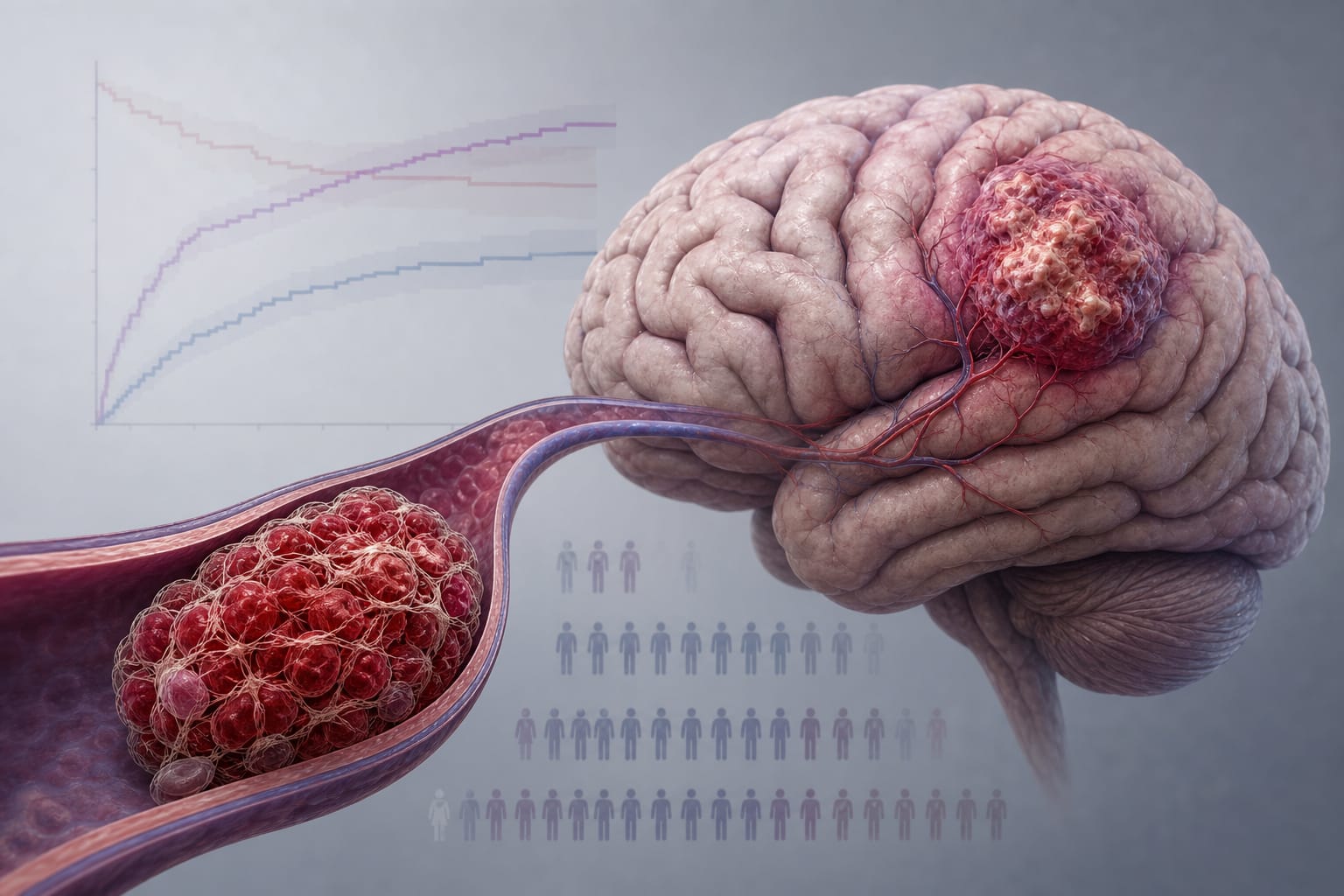
This study reports a 12-month cumulative incidence of venous thromboembolism (VTE) of 11.8% and bleeding of 4.7% in glioma patients. Additionally, it identifies significant predictors of VTE, bleeding, and mortality, emphasizing the need for individualized risk assessment in this population.

Background

Venous thromboembolism (VTE) is a prevalent complication in patients with central nervous system tumors, particularly gliomas, leading to increased morbidity and mortality. Understanding the incidence and risk factors associated with VTE and bleeding in glioma patients is crucial for improving patient management and outcomes. This study provides valuable insights into the clinical implications of VTE in glioma patients, highlighting the importance of tailored thromboprophylaxis strategies.

Data Highlights

{'format': 'Ensure the table is visually clear and accessible.'}

Key Findings

{'context': 'Add explanations for how these findings impact treatment decisions.'}

Clinical Implications

Clinicians should be vigilant in monitoring glioma patients for VTE and bleeding, particularly those with prior VTE or on corticosteroids. Individualized risk stratification is essential to optimize management and improve patient outcomes, especially in the context of prolonged hospitalization and postoperative care.

Conclusion

The findings underscore the high incidence of VTE in glioma patients and the multifactorial nature of associated risks for bleeding and mortality. Tailored approaches to thromboprophylaxis and patient management are warranted to mitigate these risks.

Related Resources & Content

  1. Journal of Neuro-Oncology, 2024 -- Factors Influencing Surgical Outcomes in Hemorrhagic Brain Metastases
  2. Journal of Neuro-Oncology, 2017 -- Incidence of Venous Thromboembolism and Intracranial Hemorrhage Following Craniotomy for Primary Malignant Brain Tumors
  3. Journal of Neuro-Oncology, 2022 -- Surgical Resection Involving Ventricular Access Linked to Leptomeningeal Spread in Glioblastoma Patients
  4. Journal of Neuro-Oncology, 2021 -- Anticoagulant Use for Atrial Fibrillation in Patients with Glioblastoma or Brain Metastases
  5. NCCN Guidelines Cancer and VTE
  6. Intracranial Hemorrhage With Direct Oral Anticoagulants vs Low-Molecular-Weight Heparin in Brain Tumors: A Review and Meta-Analysis
  7. Timing, safety, and efficacy of initiating anticoagulation in intracranial surgery: a systematic review and meta-analysis

Original Source(s)

Related Content