Metachronous cholangiocarcinoma following pancreaticoduodenectomy and the potential role of a migrated pancreaticojejunal stent: a case report and review of the literature - Report - MDSpire
Advertisement
Metachronous cholangiocarcinoma following pancreaticoduodenectomy and the potential role of a migrated pancreaticojejunal stent: a case report and review of the literature
Subsequent cholangiocarcinoma after pancreaticoduodenectomy: a case study
Background
Metachronous cholangiocarcinoma following pancreaticoduodenectomy is a rare but significant complication that complicates patient management. The Whipple procedure is the standard treatment for periampullary neoplasms. Understanding these risks is crucial for ongoing patient surveillance and management strategies.
Data Highlights
No numerical data or trial data was provided in the source material.
Key Findings
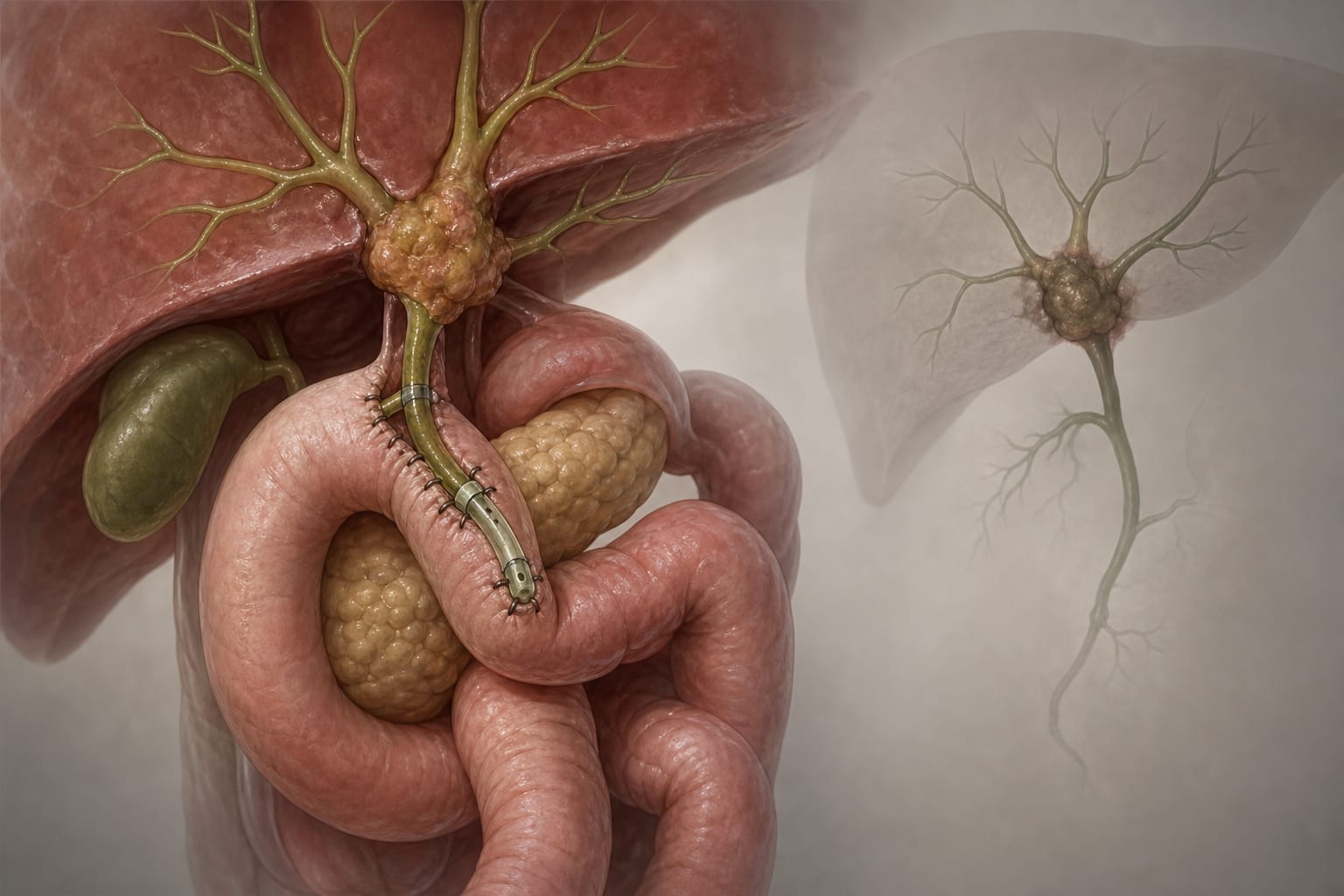
A 62-year-old male developed hilar cholangiocarcinoma 9 years after a Whipple procedure.
The patient had a history of a duodenal papillary villous tubular adenoma with moderate dysplasia.
Imaging revealed a hepatic hilar mass and intrahepatic biliary dilation, leading to a diagnosis of poorly differentiated cholangiocarcinoma.
Migrated internal pancreaticojejunostomy stent was identified during intraoperative exploration, potentially contributing to carcinogenesis.
Immunohistochemical analysis indicated a sporadic origin of the cholangiocarcinoma.
Clinical Implications
Healthcare professionals should consider the possibility of second primary malignancies in patients with late-onset biliary obstruction after pancreaticoduodenectomy.
Conclusion
This case highlights potential complications associated with indwelling surgical stents in patients post-pancreaticoduodenectomy.