The glucose-6-phosphatase system in cancer: from endoplasmic reticulum glucose-6-phosphate flux to stemness, immune escape, and therapeutic vulnerability - Report - MDSpire
Advertisement
The glucose-6-phosphatase system in cancer: from endoplasmic reticulum glucose-6-phosphate flux to stemness, immune escape, and therapeutic vulnerability
Clinical Report: The Role of the Glucose-6-Phosphatase System in Cancer
Overview
The glucose-6-phosphatase (G6Pase) system is implicated in cancer biology, influencing tumor behavior through its regulation of glucose-6-phosphate dynamics. Elevated G6Pase activity in certain cancers correlates with aggressive phenotypes, while its loss in liver and kidney tissues leads to metabolic disruption.
Background
Understanding the G6Pase system is crucial as it plays a significant role in glucose homeostasis and cancer metabolism. The system's components are emerging as potential biomarkers and therapeutic targets across various cancers.
Data Highlights
No numerical data or trial data available in the source material.
Key Findings
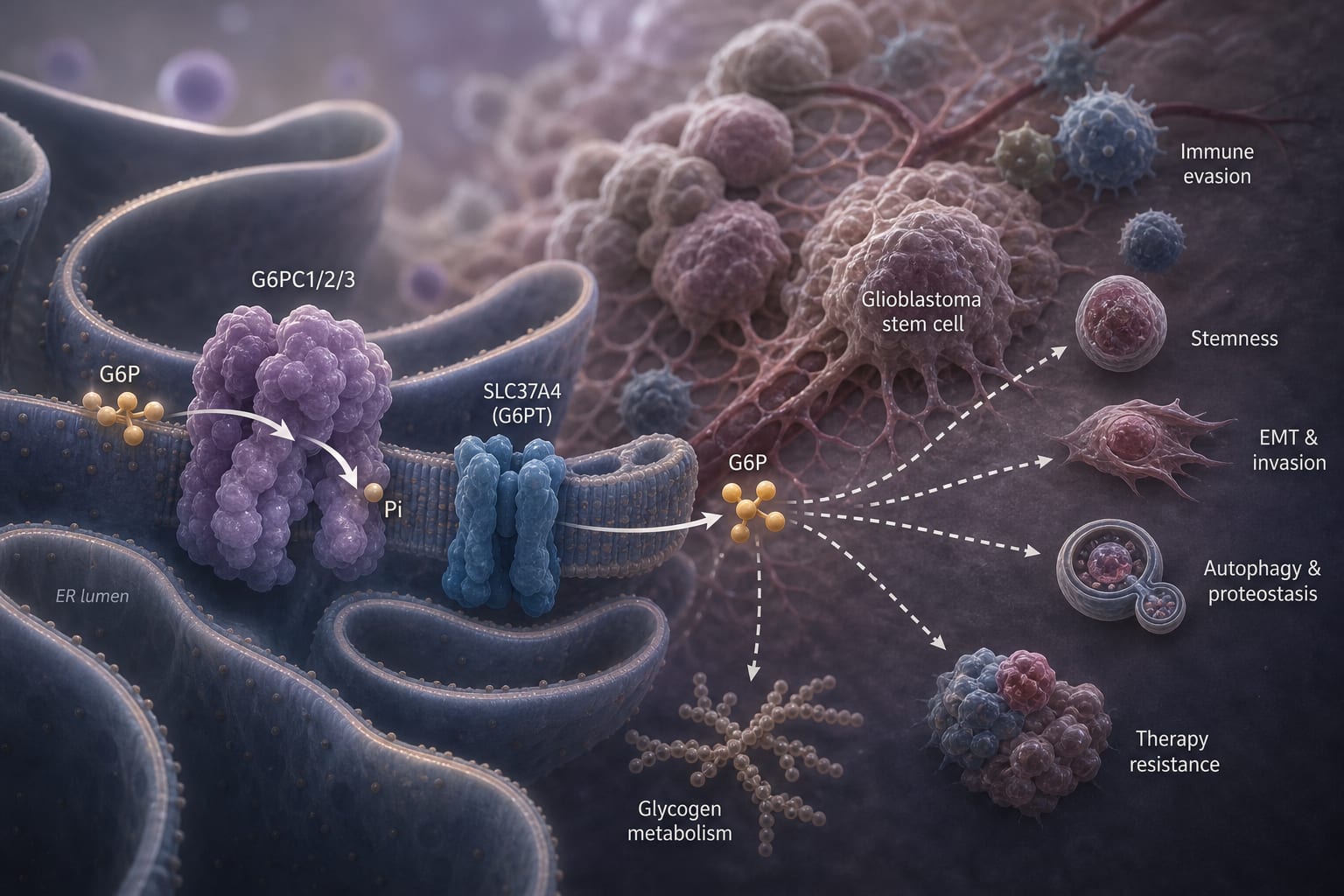
The G6Pase system regulates intracellular glucose-6-phosphate (G6P) partitioning, impacting cancer cell metabolism.
Elevated G6Pase activity is associated with aggressive cancer phenotypes in non-gluconeogenic tumors.
Loss of G6PC in liver and kidney tissues leads to metabolic disruption and dedifferentiation.
Components of the G6Pase system may serve as biomarkers and therapeutic targets in oncology.
Pharmacological and genetic interference with G6PT/SLC37A4 affects glioma cell survival and migration.
Clinical Implications
The findings highlight the metabolic roles of G6P dynamics in tumor behavior and treatment responses.
Conclusion
The G6Pase system represents a critical intersection of metabolism and cancer biology.