Clinical Report: Aural Fullness Due to Reactive Lymphoid Hyperplasia
Overview
This case report details a 58-year-old male with persistent aural fullness and hearing loss caused by reactive lymphoid hyperplasia at the right eustachian tube orifice. The findings emphasize the importance of accurate diagnosis to avoid misdiagnosis of benign lesions as malignant.
Background
Reactive lymphoid hyperplasia (RLH) is a benign condition that can occur in rare anatomical sites such as the eustachian tube orifice. Most neoplastic lesions in this region are malignant, leading to potential misdiagnosis and overtreatment. Understanding RLH is crucial for clinicians to differentiate it from more serious conditions like nasopharyngeal carcinoma.
Data Highlights
Clinical Feature
Details
Patient Age
58 years
Symptoms Duration
5 months
Mass Size
1.0 cm × 1.4 cm
Histopathology Result
Chronic mucosal inflammation with RLH
Key Findings
A 58-year-old male presented with aural fullness and hearing loss.
Initial diagnosis was otitis media with effusion, but symptoms persisted.
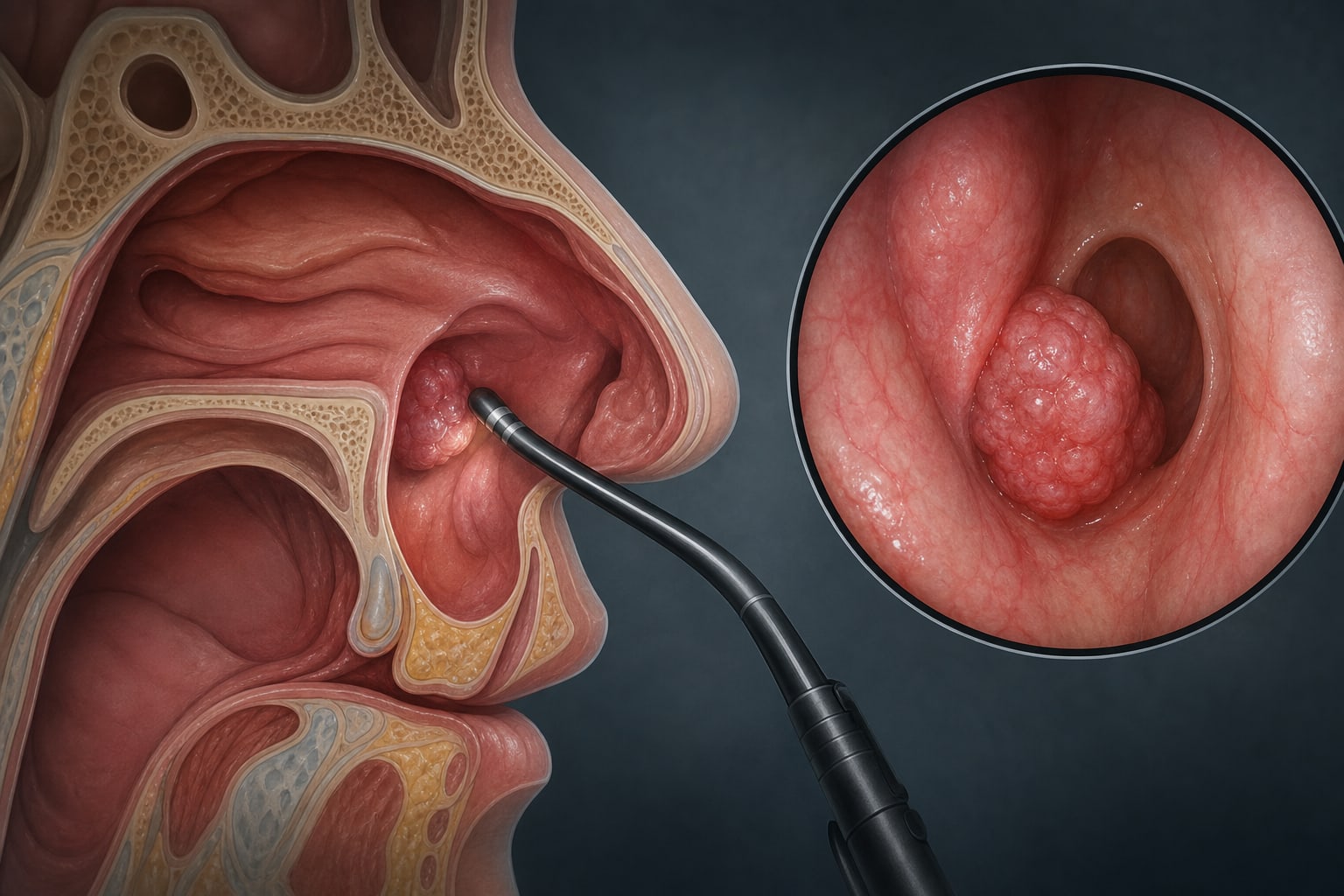
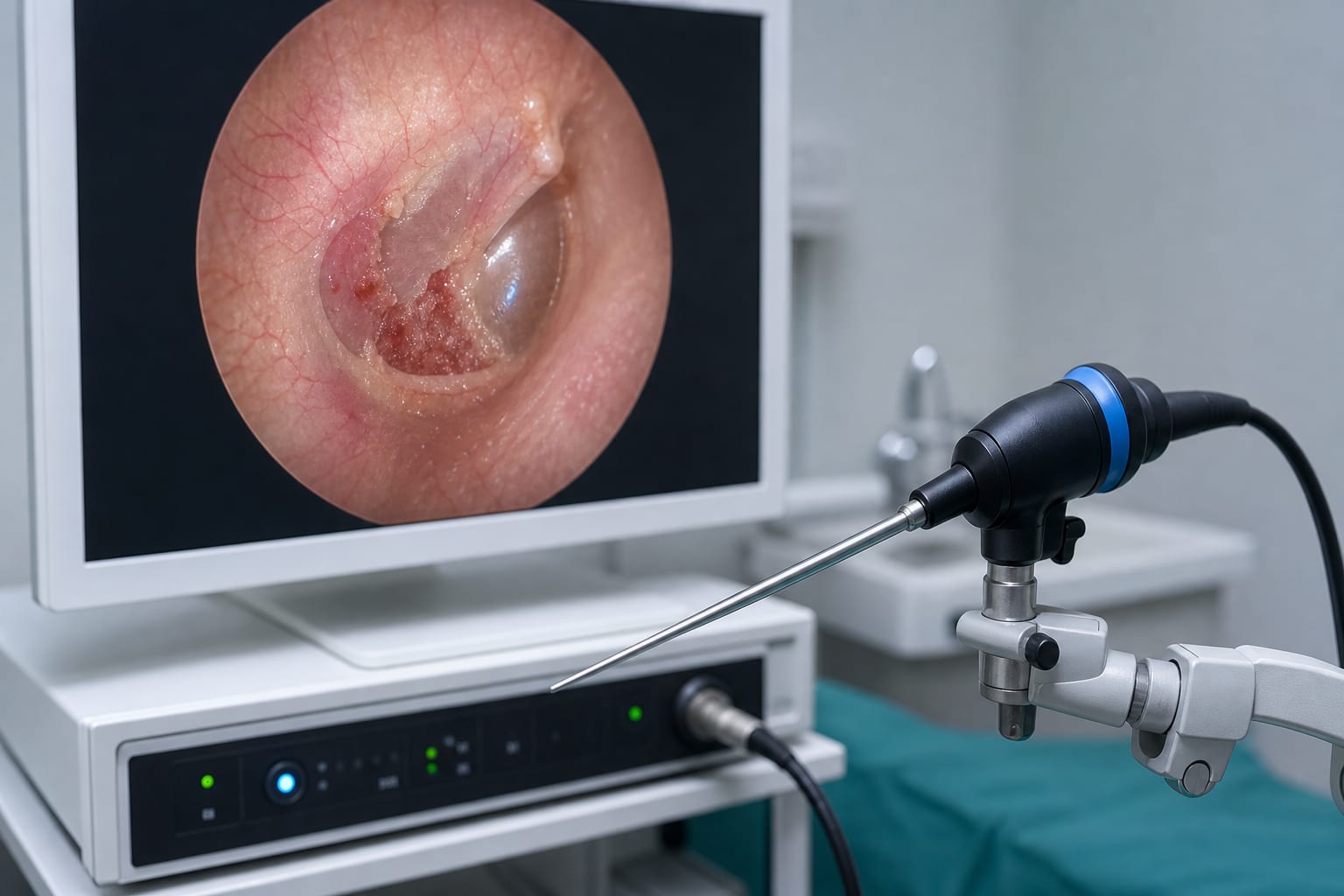
Nasal endoscopy revealed a neoplastic lesion at the right eustachian tube orifice.
Histopathological examination confirmed benign lymphoid hyperplasia without malignant cells.
Comprehensive evaluation and pathological confirmation are essential to avoid misdiagnosis.
Clinical Implications
Clinicians should consider reactive lymphoid hyperplasia in patients presenting with aural fullness and hearing loss, especially in the context of eustachian tube dysfunction. Accurate diagnosis through imaging and histopathology is vital to prevent unnecessary treatments.
Conclusion
This case highlights the importance of recognizing benign lesions like RLH at the eustachian tube orifice to avoid misdiagnosis and overtreatment. Comprehensive evaluation is essential for appropriate management.