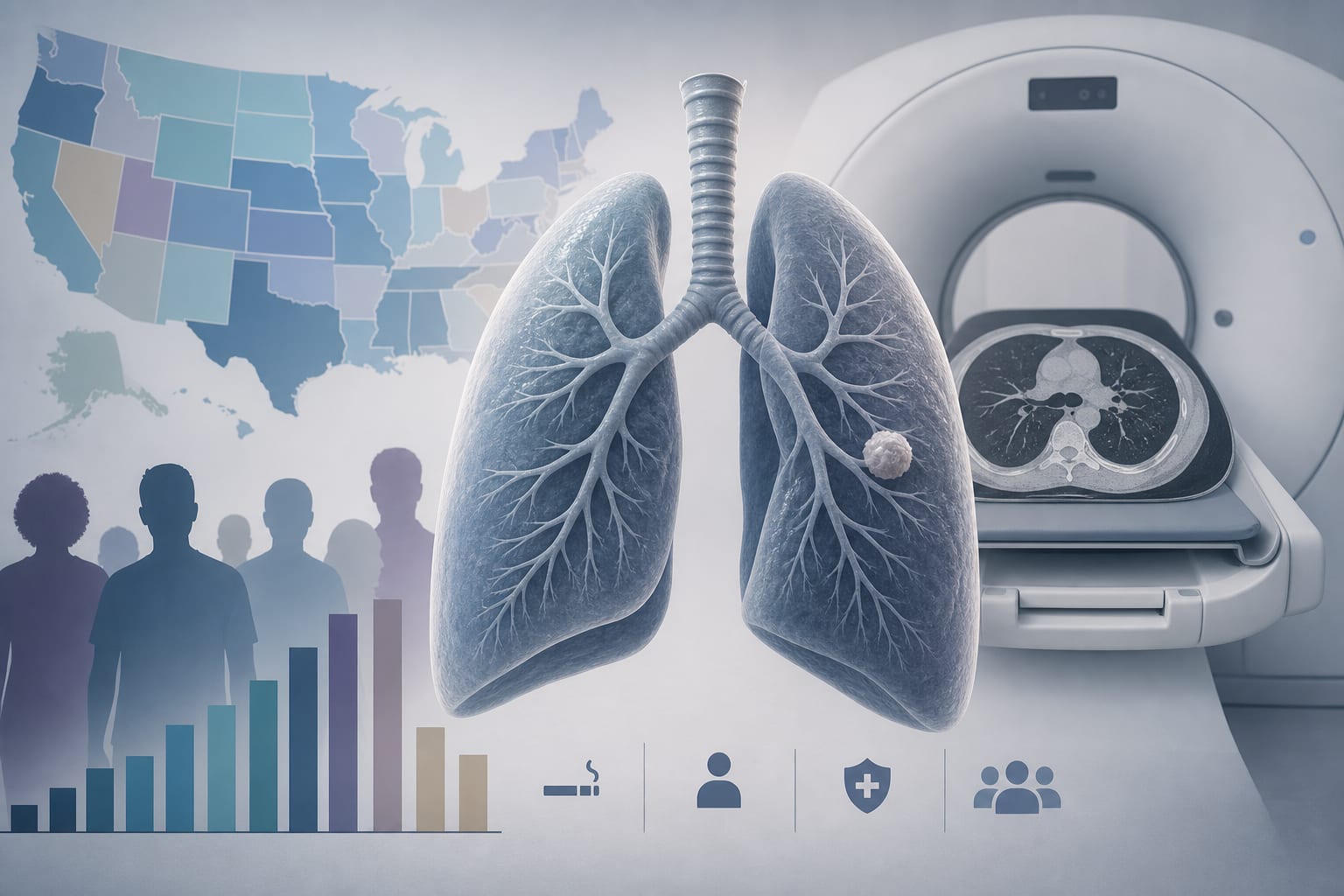
Clinical Report: Trends and Prevalence of Lung Cancer Screening in 2024
Overview
In 2024, 24.49% of eligible adults were up-to-date with lung cancer screening, reflecting a 6% increase since 2022. Screening prevalence varied significantly by age and insurance type, with notable disparities among racial and ethnic groups.
Background
Lung cancer remains a leading cause of cancer-related morbidity and mortality in the United States. The USPSTF recommends annual lung cancer screening for high-risk individuals, yet uptake has historically been low. Understanding current trends in screening prevalence is crucial for addressing barriers and improving outcomes.
Data Highlights
Group
UTD Prevalence 2024
Change from 2022
Overall
24.49%
+6.00 pp
Aged 50-54
11.32% to 15.84%
+4.52 pp
Aged 75-79
31.20%
Not specified
Military Insurance
Higher than Private
+15.69 pp
Uninsured
Lower than Private
No change
Key Findings
24.49% of eligible adults were UTD on lung cancer screenings in 2024.
UTD prevalence increased by 6.00 percentage points since 2022.
Prevalence varied significantly by age, from 11.32% in ages 50-54 to 31.20% in ages 75-79.
Individuals with military-related insurance had a significantly higher UTD prevalence compared to those with private insurance.
No change in UTD prevalence was observed among uninsured individuals or specific racial/ethnic groups.
Clinical Implications
The findings highlight the need for targeted outreach to improve lung cancer screening rates, particularly among underserved populations. Understanding the disparities in screening uptake can inform strategies to enhance access and education regarding lung cancer screening.
Conclusion
The increase in lung cancer screening prevalence in 2024 indicates progress, yet significant disparities remain that require attention to ensure equitable access to screening.