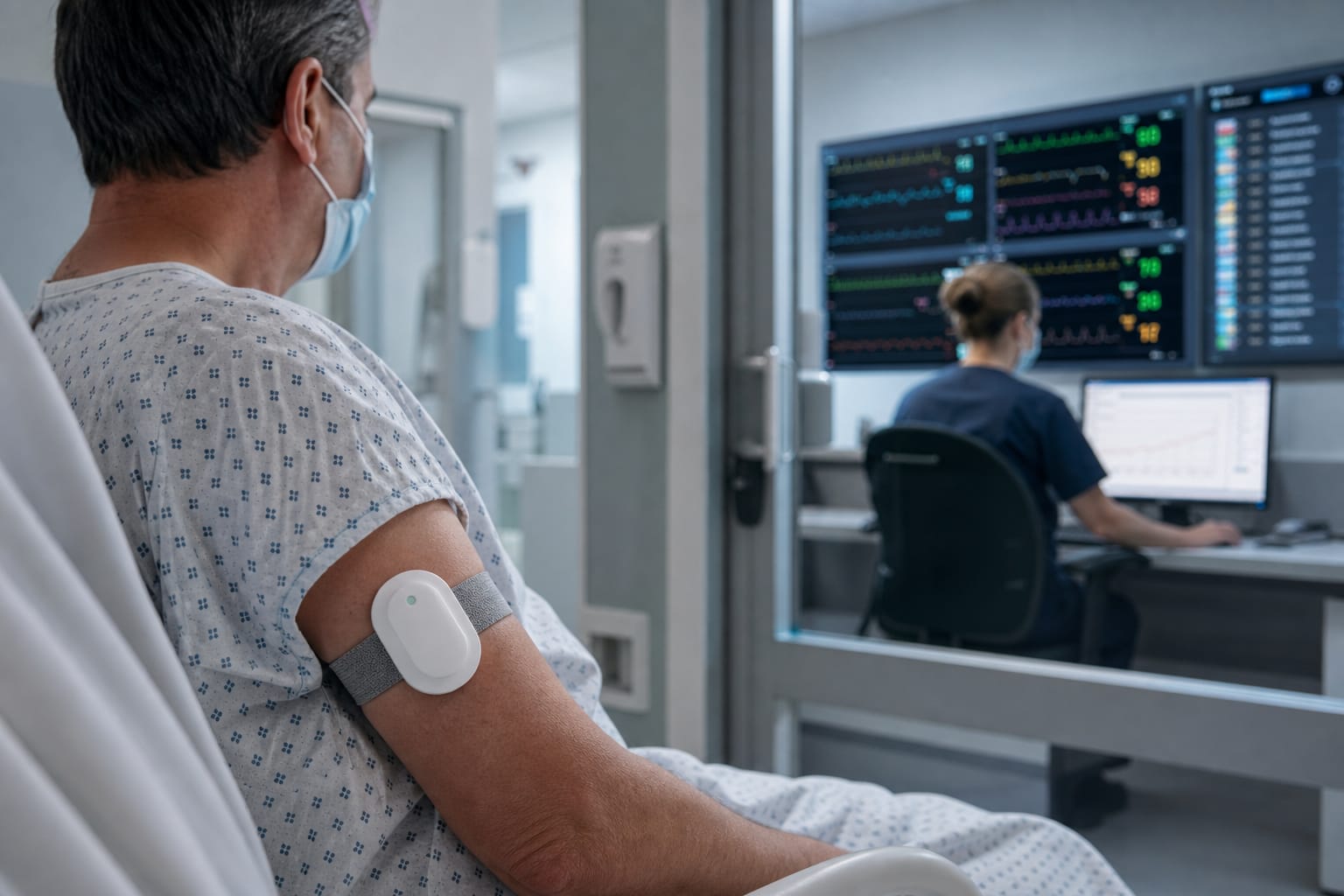
Clinical Evaluation of a Real-Time Wearable System for Monitoring In-Hospital Ambulatory Patients With COVID-19: Retrospective Data Study - Report - MDSpire
Advertisement
Clinical Evaluation of a Real-Time Wearable System for Monitoring In-Hospital Ambulatory Patients With COVID-19: Retrospective Data Study
Clinical Report: Assessment of a Real-Time Wearable Monitoring System for In-Hospital Ambulatory COVID-19 Patients
Overview
This study evaluates the physiological patterns of vital signs in hospitalized COVID-19 patients using a wearable monitoring system.
Background
The COVID-19 pandemic has highlighted the need for continuous monitoring of hospitalized patients to detect deterioration early. Traditional monitoring methods faced challenges due to isolation protocols and the risk of virus transmission.
Data Highlights
No numerical data or trial data was provided in the source material.
Key Findings
42% of hospitalized COVID-19 patients required ventilatory support or died in hospital.
Wearable monitoring systems were deployed to support nurses in managing high-risk patients during the pandemic.
The study linked continuous vital sign data with early warning scores from electronic patient records.
Implementation of the wearable system was accelerated in response to COVID-19 safety concerns.
Clinical Implications
The findings suggest that wearable monitoring systems could enhance the management of hospitalized COVID-19 patients by providing continuous vital sign data. Understanding the impact of these systems on nursing practices may inform future implementations in clinical settings.
Conclusion
The study underscores the potential role of wearable monitoring systems in improving patient safety and monitoring in hospital settings during the COVID-19 pandemic.