Improving Home Care Safety Among Informal Caregivers Through Immersive Digital Simulation: Secondary Analysis of 3 Coordinated Intervention Studies - Report - MDSpire
Advertisement
Improving Home Care Safety Among Informal Caregivers Through Immersive Digital Simulation: Secondary Analysis of 3 Coordinated Intervention Studies
Clinical Report: Enhancing Safety in Home Care for Informal Caregivers
Background
The transition of care for individuals with chronic illnesses from institutional settings to home environments is a growing trend, driven by cost-containment policies and patient preferences. Informal caregivers, often family members, play a crucial role in this care model but frequently lack the necessary training, leading to challenges in both caregiver well-being and patient safety. Addressing these gaps through effective training interventions is essential as the demand for long-term care continues to rise.
Data Highlights
No numerical data was provided in the source material.
Key Findings
Informal caregivers are increasingly responsible for complex care tasks without structured training.
Simulation-based training has shown significant benefits in improving caregiver self-efficacy and perceived security in performing care tasks.
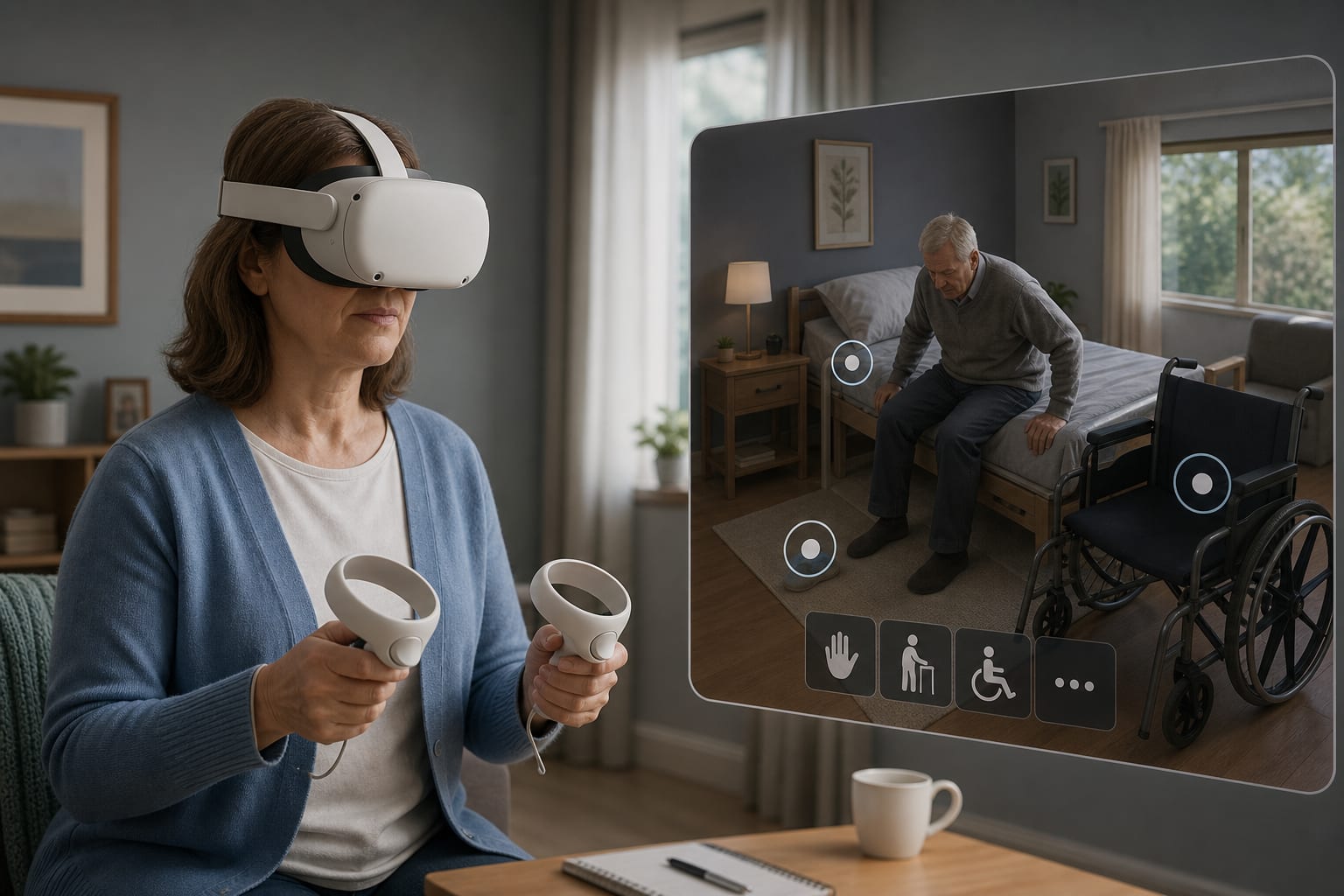
Immersive technologies, such as virtual reality, enhance caregiver engagement and motivation in training programs.
Effective training interventions typically combine theoretical instruction with hands-on practice and feedback.
There is a need for more comprehensive studies addressing the emotional and psychological support needs of informal caregivers.
Clinical Implications
There is a critical need for structured educational approaches to support caregivers in managing complex care tasks at home.
Conclusion
The use of immersive digital simulation presents a potential avenue for enhancing the training of informal caregivers, addressing both their educational needs and the safety of the care provided.
by José Joaquín Mira, Clara Pérez-Esteve, Eva Gil-Hernández, Almudena Arroyo-Rodríguez, Jesús María Aranaz-Andrés, Purificación Ballester, Irene Carrillo