Clinical Report: A Four-Decade Analysis of Oncology Research Publications in Bahrain
Overview
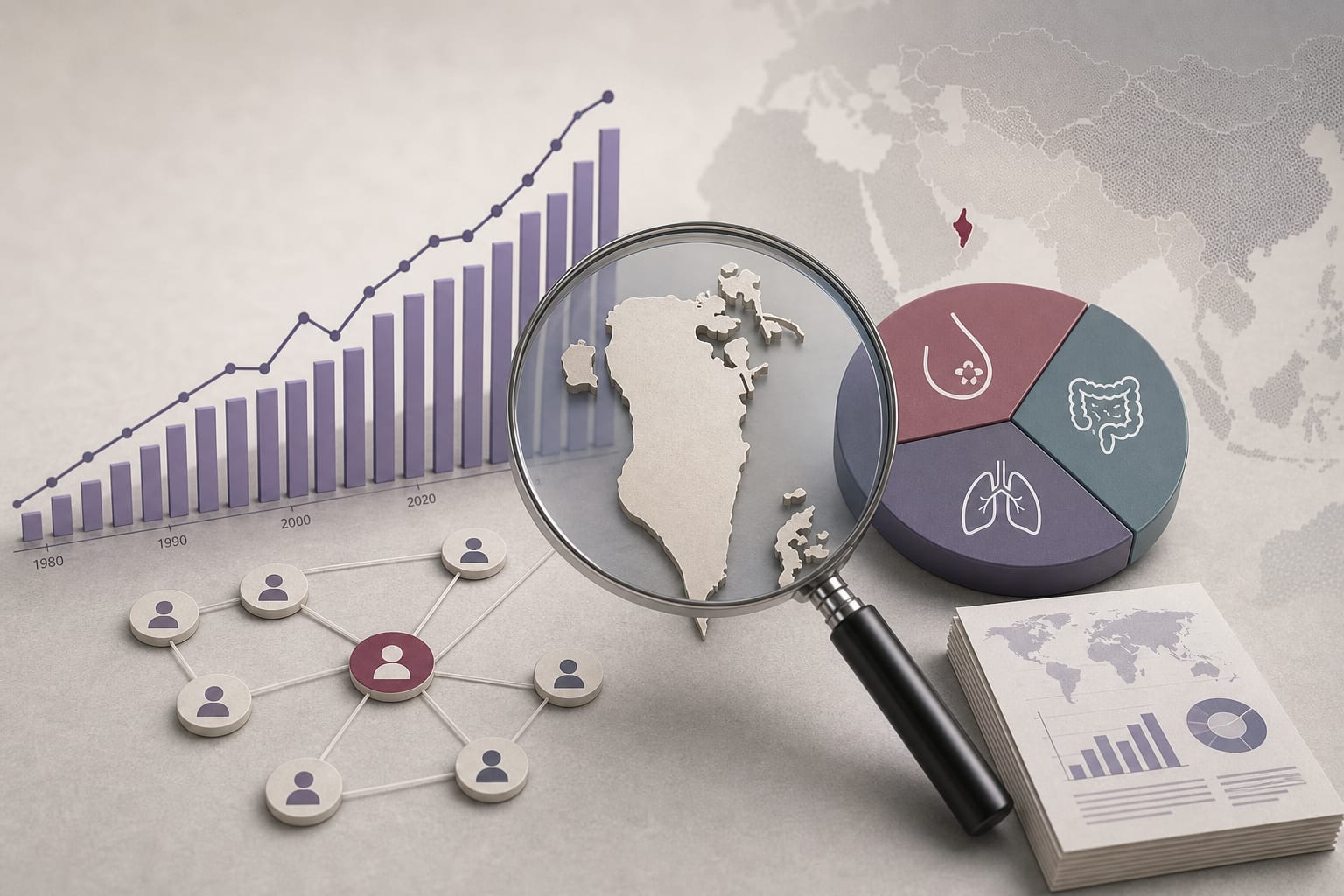
Bahrain's oncology research output has increased significantly over four decades, with a notable rise in publications since 2010. The analysis highlights the predominance of descriptive study designs and identifies gaps in research on high-burden cancers.
Background
Bahrain has the highest age-standardized cancer incidence among Gulf Cooperation Council (GCC) countries, making the mapping of its oncology research output crucial for addressing public health challenges. The increase in cancer cases necessitates a comprehensive understanding of local research efforts to inform policy and funding priorities.
Data Highlights
Year
Number of Publications
1981
1
2010-2024
77.7% of total publications
2024
66
2011-2024
502 total publications
Key Findings
First indexed paper appeared in 1981; significant output increase after 2010.
Articles constituted 69.3% of publications, while reviews made up 21.7%.
Salmaniya Medical Complex was the leading institution for first-author output.
66.7% of papers had Bahraini first authorship, with 65.3% conducted exclusively in Bahrain.
Breast cancer was the most studied site-specific cancer at 23.3%.
Journal quality improved post-2010, with increased Q1/Q2 representation.
Clinical Implications
The findings indicate a need for targeted funding and capacity building in oncology research, particularly for high-burden cancers like lung cancer. Enhanced collaboration and diverse study designs may improve research outcomes and address local cancer challenges.
Conclusion
Bahrain's oncology research has expanded significantly, yet gaps remain in addressing high-burden cancers. A nationally aligned research agenda is essential for effective cancer control.