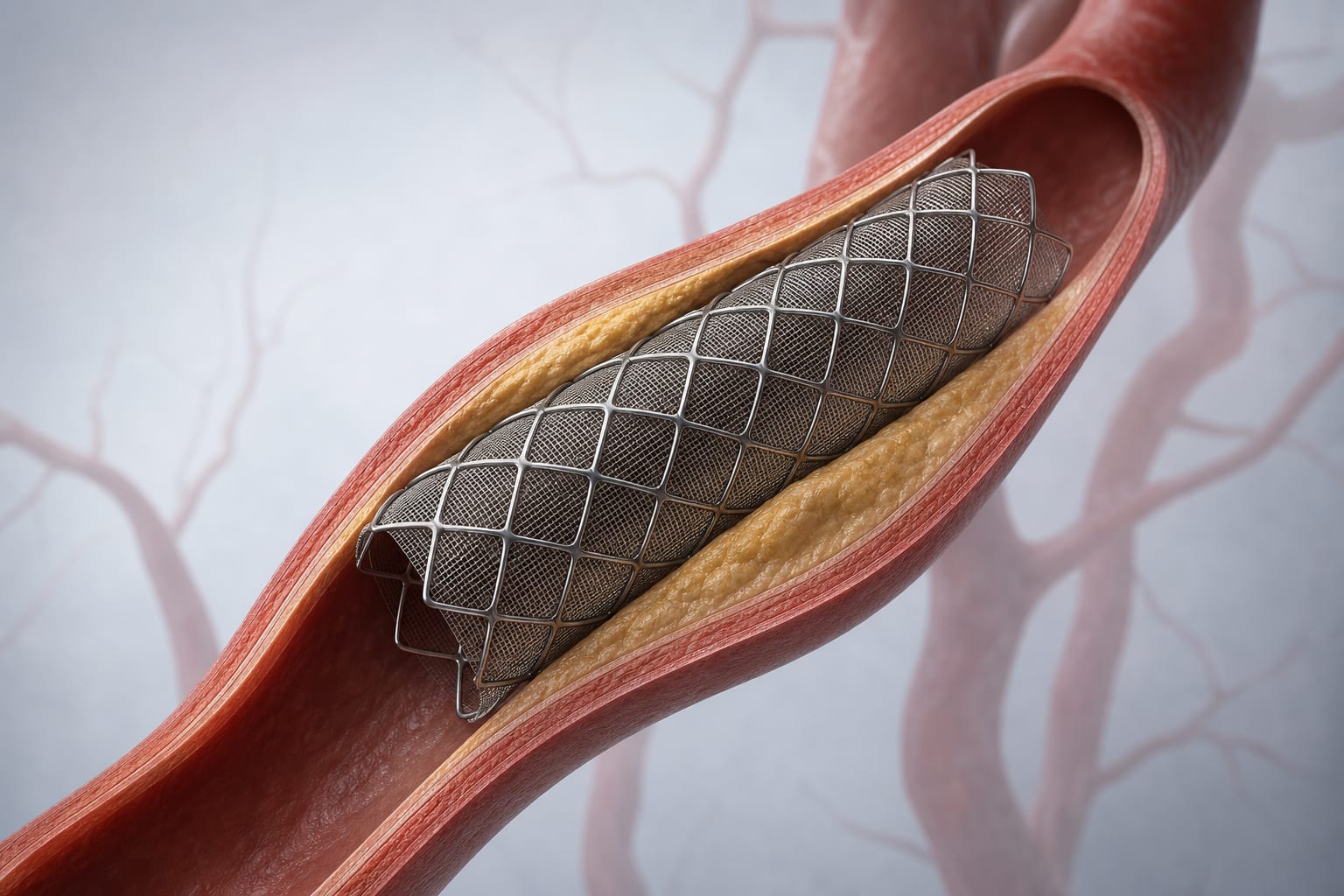
Clinical Report: A Decade of European Insights on Roadsaver Carotid Stenting
Background
Carotid artery stenosis is a significant risk factor for stroke, and endovascular treatment options like carotid artery stenting (CAS) are increasingly utilized. The introduction of dual-layer micromesh stents, such as the Roadsaver, aims to minimize embolic risks. Understanding the efficacy of these newer stent technologies is crucial.
Data Highlights
No numerical data was provided in the source material regarding outcomes such as stroke incidence, death rates, or restenosis rates.
Key Findings
The DLMM Roadsaver stent is designed to improve plaque coverage and reduce embolic potential.
It features a low-profile design that enhances deliverability in complex vascular anatomies.
The systematic review evaluated the 30-day incidence of stroke and death, and the 12-month in-stent restenosis rate.
Comparative analysis with first-generation stents was a primary focus of the meta-analysis.
Clinical evaluations support the effectiveness of the Roadsaver stent in challenging anatomical cases.
Clinical Implications
Ongoing assessment of stent performance is essential.
Conclusion
Further investigation into the Roadsaver stent's outcomes is necessary.