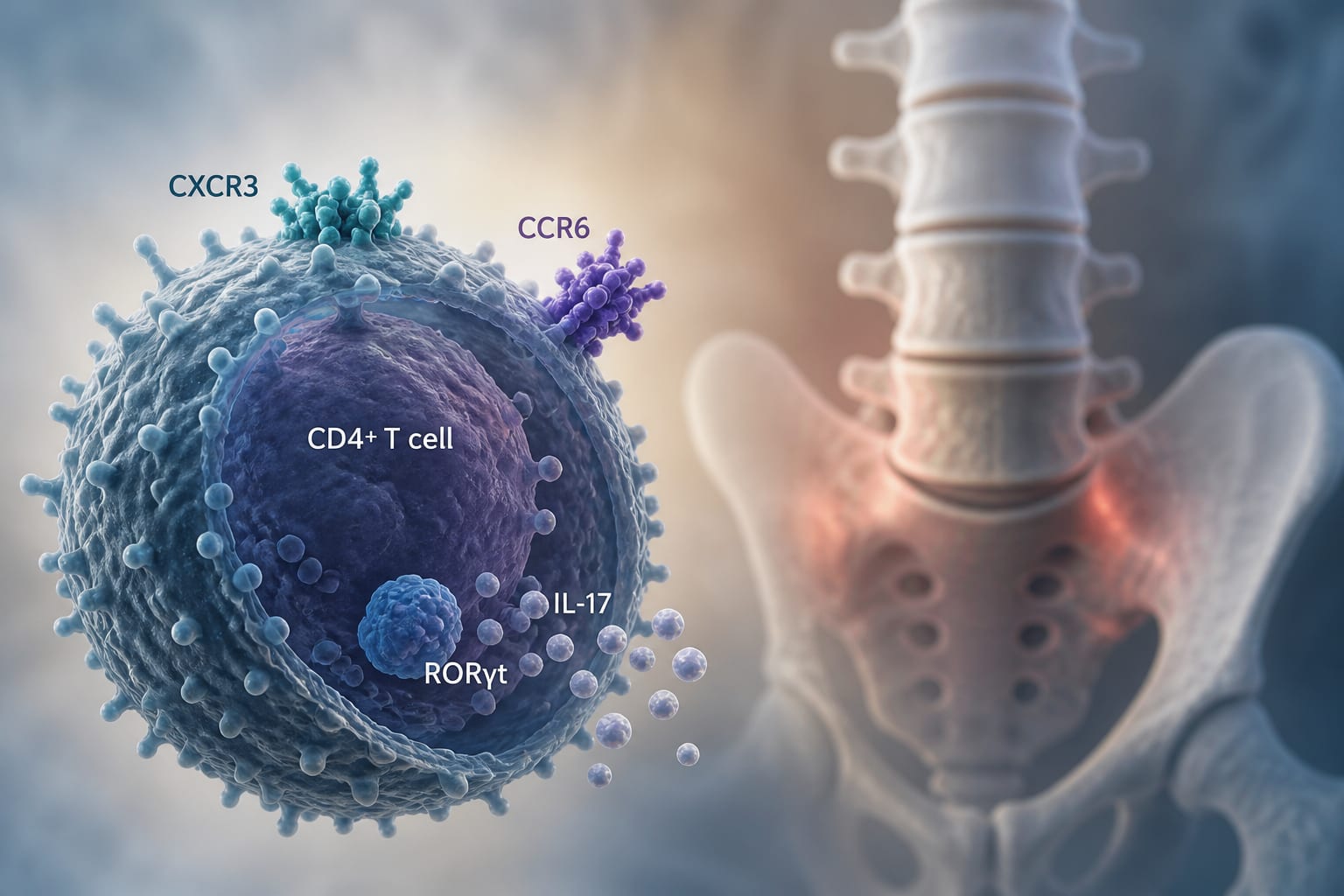
Reduction of CXCR3+CCR6+ CD4+ T Cells and IL-17+ RORγt+ CD4+ T Cells During Secukinumab Treatment Identifies Patients With Axial Spondyloarthritis Responsive to Subsequent Biologic Therapy - Report - MDSpire
Conexiant’s news site is now MDSpire News. Learn more
Advertisement
Decreased Levels of CXCR3+CCR6+ CD4+ T Cells and IL-17+ RORγt+ CD4+ T Cells During Secukinumab Therapy Correlate with Responsiveness to Subsequent Biologic Treatments in Axial Spondyloarthritis Patients
Decreased Levels of CXCR3+CCR6+ CD4+ T Cells During Secukinumab Therapy
Overview
This study investigates the correlation between decreased levels of specific CD4+ T cells during secukinumab therapy and the responsiveness to subsequent biologic treatments in axial spondyloarthritis patients.
Background
Axial spondyloarthritis (axSpA) is a chronic inflammatory disease that often requires biologic therapies to manage symptoms. A significant proportion of patients do not respond adequately to these treatments.
Data Highlights
No numerical data or trial data provided in the source material.
Key Findings
Secukinumab nonresponders exhibited higher expression of type 1 interferon-regulated genes compared to responders.
Increased allograft inflammatory factor 1 may drive heightened type 1 interferon signatures in nonresponders.
Immunologic changes during secukinumab therapy could indicate potential responses to subsequent biologic treatments.
Response definitions included a ≥50% reduction in BASDAI or a >1.1 decrease in BASDAS, based on established criteria.
Clinical Implications
Understanding the immunologic alterations during secukinumab therapy may assist in predicting patient responses to subsequent biologic treatments.
Conclusion
The study discusses immunologic markers that may inform treatment strategies in axial spondyloarthritis.
A systematic review of more than 2.3 million patients found that women and men had different patterns of postoperative complications and recovery, with age and implant strategy modifying observed differences.
Achievable goals, activity tracking, and social support are among the strategies JAMA researchers recommend for patients with chronic medical conditions.